
Unbiased headlines. Facts, not spin.
Unbiased Headlines is an independently owned news organization. We bring you the facts, not opinions, written fresh from 110+ named sources. Sources linked so you can verify it yourself.
 politics
Major Story (8/10)
Event date: August 29, 2026 ·
Justice Department Pursues Swalwell, Comey, Omar and Election Cases a Week Before Nov. 3 Midterms
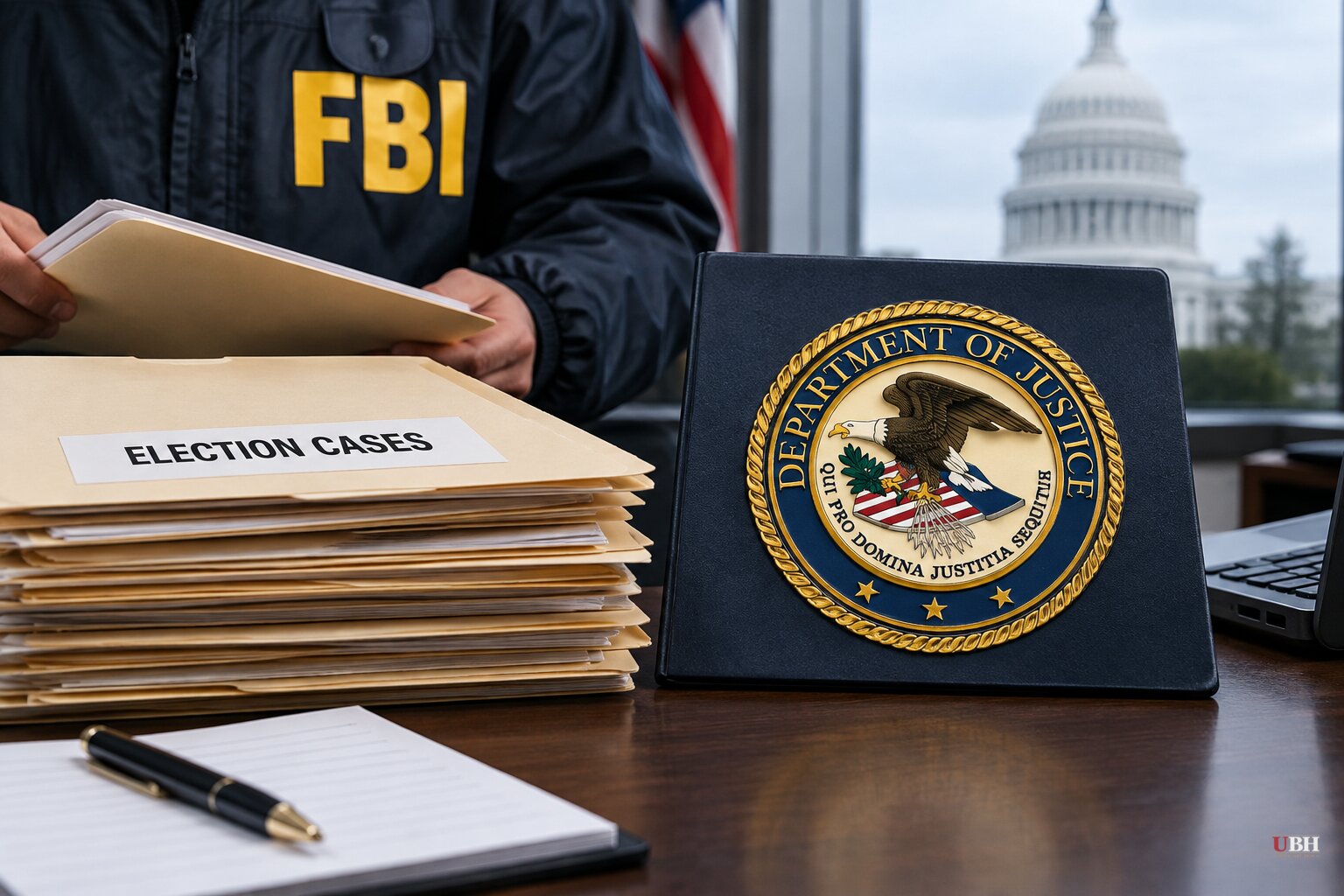
The Justice Department has stacked up politically charged actions in the final days before the Nov. 3 midterms. FBI agents raided a California home on Tuesday, Oct. 27, as part of an investigation into former Rep. Eric Swalwell, a Democrat who resigned from Congress earlier this year.
The day before, it emerged that the DOJ is seeking for a third time to prosecute former FBI Director James Comey. Before that, agents searched the Washington-area home of Rep. Ilhan Omar, D-Minn., apparently as part of a probe into her family's immigration process roughly 30 years ago.
Neither Swalwell nor Omar has been charged with a crime. Both deny wrongdoing.
The list of cases
Last week the DOJ also charged two former FBI officials, Nikki Floris and Bradley Benavides, over allegedly downplaying their involvement in probes of Hunter Biden. Both deny wrongdoing, as does Comey.
Then there is Alaska. The department filed a preemptive suit that could block certification of the U.S. Senate result if Democrat Mary Peltola narrowly beats incumbent Republican Sen. Dan S. Sullivan. The DOJ objects to a similarly named candidate, Dan J. Sullivan, appearing on the ballot. The Alaska Supreme Court has already considered that question.
Trump told reporters he was the one who told the DOJ to "do it" on the Alaska filing.
The Washington Post reports that Attorney General Todd Blanche has spent the run-up to the election stumping at the Republican convention in Texas and at rallies for Trump-aligned candidates in New York and North Carolina.
The timing dispute
Trump critics say the pattern amounts to weaponizing the justice system. They point to the DOJ's custom of avoiding conspicuous action within 60 days of an election, so it does not appear to be influencing the outcome. There are exceptions, such as stopping a planned crime or preventing destruction of evidence. It is not clear that any apply to the current cases.
The other side of that argument comes from National Review commentary, which calls the 60-day rule "mythical" and says Omar's supporters should "work on a defense to the immigration fraud allegations, if there are any, not squawk about the timing." The same piece concedes the Trump administration is waging lawfare, but argues that "the fact that a prosecution is politicized does not mean it is meritless." It also says a criminal case against Omar on immigration fraud is time-barred, and that the DOJ appears to be using criminal process to pursue a civil aim: stripping her citizenship. That is the writer's theory. The DOJ has not announced such a goal.
Omar is pushing back on leaks to Trump-friendly outlets that have described the investigation in varying ways. She is not expected to be in electoral trouble in her heavily Democratic district.
Election administration
On Monday, Oct. 26, federal authorities arrested more than two dozen people in California under a sweep dubbed Operation Protect the Vote. The DOJ says all are lawful permanent residents, not citizens, who illegally registered or voted. They face charges including false statements on naturalization applications and fraudulent voter registrations.
Before that sweep, the DOJ had charged about 90 people with election misconduct this year, 50 of them for allegedly voting as noncitizens. More than 227 million people were registered to vote in 2024. The figures show noncitizen voting is being prosecuted. They do not show it is large enough to change an election result, and no such case has been presented.
The department also sued California last week to stop it from counting mail ballots from about 20,000 people it calls "likely" noncitizens until their status is confirmed. California officials were given a 48-hour deadline to review a password-protected thumb drive with the names. They did not meet it. California's secretary of state says the administration has offered no evidence for the claim. California mails ballots to all registered voters. The DOJ has also warned that local election workers who knowingly process ballots from noncitizens could face investigation and prosecution.
In Georgia, the DOJ confirmed it will send monitors to six counties: Chatham, Bibb, Cobb, DeKalb, Fulton and Gwinnett. Monitoring itself is not new, and prior administrations of both parties have done it. All six counties voted for the Democratic presidential nominee in the last three elections.
Southern District of Georgia U.S. Attorney Meg Heap said, "We are committed to maintaining public trust and instilling the public's confidence in our democratic institutions." Democrats see something else. State Rep. Anne Allen Westbrook called the department "a Trump vengeance machine," and Savannah Mayor Van Johnson said Chatham is on a DOJ "hit list."
Ty Cobb, a former White House lawyer under Trump, said on CNN that the DOJ is attacking "election mechanisms on every front." Cobb called the California suit and the monitors "pretextual" and claimed observers are being sent in numbers three times greater than ever before. He said they are there "to try to develop a reason for Trump to declare an emergency." The DOJ has not endorsed that characterization, and Cobb offered no evidence of an emergency plan.
What comes next
The Alaska filing is the item with direct consequences for the outcome. If Peltola-Sullivan is close, a pending federal suit over certification would be waiting on the result. The DOJ has not said how it would proceed if the race is decided by a wide margin. Monitors arrive in Georgia in the coming days, and the Nov. 3 vote follows within a week.
Sources used for this briefing
7 links from 7 independent newsrooms (syndicated copies of the same report count once)
These are the sources it draws on, linked so you can verify.


