
Unbiased headlines. Facts, not spin.
Every story is an unbiased news briefing written from 110+ sources across the spectrum — sources linked so you can verify it yourself.
 politics
Low Interest (3/10)
June 19, 2026 at 12:54 PM
politics
Low Interest (3/10)
June 19, 2026 at 12:54 PM
Juneteenth at 161: What the Holiday Actually Commemorates, and Why the Debate Never Fully Settled
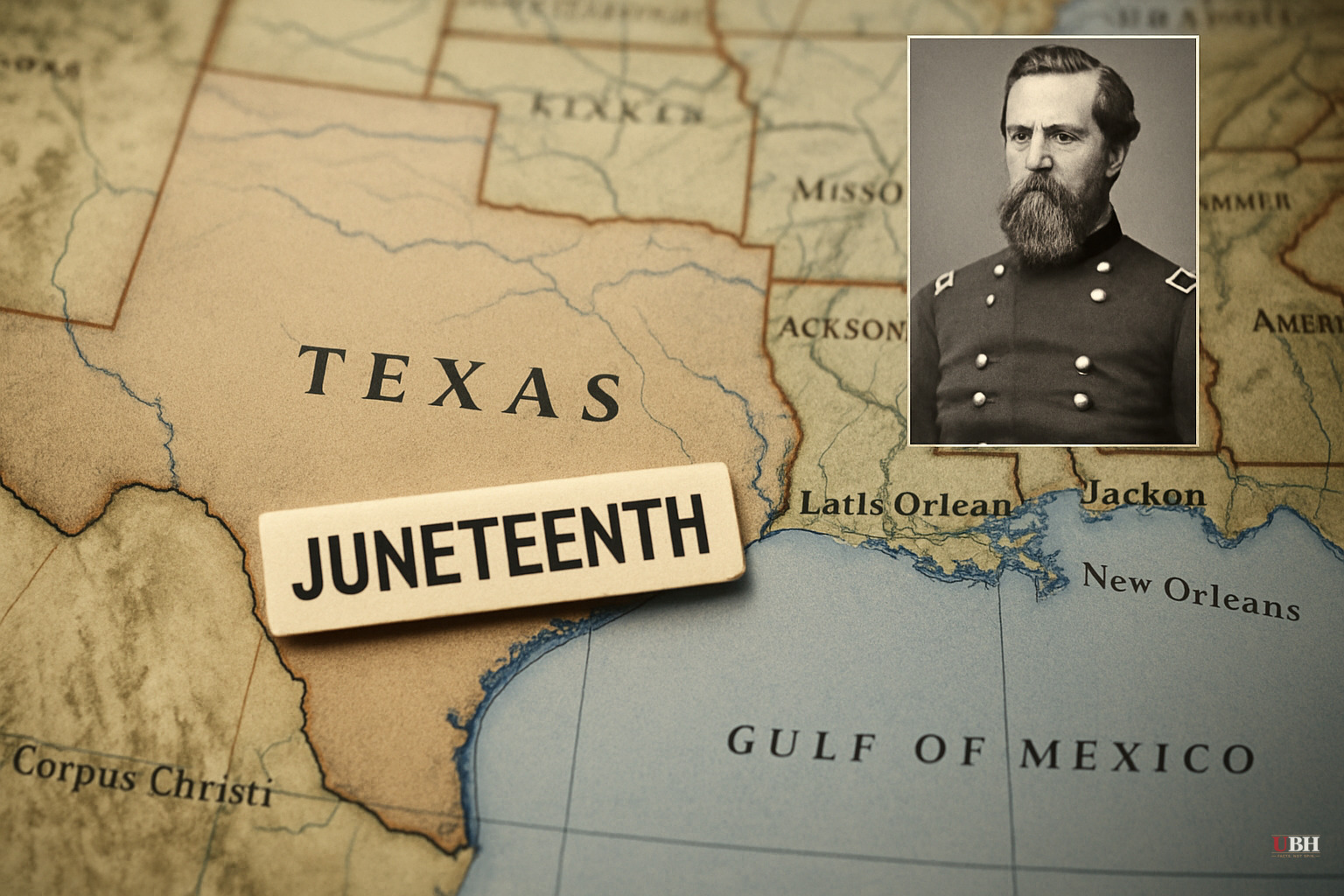
What Happened on June 19, 1865
Maj. Gen. Gordon Granger announced the end of the war in Galveston, Texas, and with it, the end of chattel slavery. That was June 19, 1865, more than two years after President Abraham Lincoln had signed the Emancipation Proclamation.
The delay wasn't conspiracy. The Emancipation Proclamation, effective January 1, 1863, applied only to Confederate states still in rebellion and could only be enforced where Union forces had control. Texas, the last Confederate state to surrender, simply hadn't been reached yet. When Granger's announcement came, it was a practical enforcement moment, not a new legal act.
As Reason noted in its analysis of the holiday's history, nothing on the legal ledger changed that specific day. Abolition wasn't codified into the Constitution until the 13th Amendment was ratified a few months later. Citizenship required the 14th Amendment. Black men's right to vote required the 15th Amendment. And formal voting rights protections against Jim Crow disenfranchisement took nearly another century after that.
So the holiday marks a real but incomplete moment.
The Conservative Case Against, and Why It Doesn't Hold
The strongest objection worth engaging comes from a strain of conservative thought that frames Juneteenth as a cultural wedge rather than a historical commemoration. Then-Rep. Matt Rosendale (R-Mont.) voted against the 2021 federal holiday designation, arguing that "the Left" had invented Juneteenth "in order to continually make Americans feel bad and convince them that our country is evil."
That's a real concern some Americans share in good faith. There is a legitimate version of this worry: that some educators and activists use American historical failures not to show where the country fell short of its own stated ideals, but to argue the ideals themselves are fraudulent. That framing does exist. It deserves pushback.
But Juneteenth predates contemporary culture-war politics by well over a century. It was celebrated in Texas and then more broadly from there. In 2004, President George W. Bush issued a formal statement on the date, calling it recognition of "the progress America has made in ensuring that our Nation lives up to our founding principles of liberty, equality, and justice." That description comes from an American President from the Republican Party framing the holiday in explicitly pro-founding terms.
When Congress voted in 2021 to make Juneteenth a federal holiday, it passed overwhelmingly. That margin doesn't reflect a party-line culture war push.
The Declaration's Unfinished Business
Next month, the country will mark the 250th anniversary of the Declaration of Independence, signed July 4, 1776. Thomas Jefferson wrote that "all men are created equal." Jefferson also owned slaves. John Adams, another founder and the second President, signed the Alien and Sedition Acts into law, criminalizing dissent barely a decade after the First Amendment was ratified.
The founders wrote ideals they themselves couldn't consistently honor. The country has spent two and a half centuries working toward them. Juneteenth fits inside that arc.
Celebrating June 19, 1865, is consistent with taking the Declaration seriously. It marks the day the words "all men are created equal" got one step closer to meaning something enforceable for the last group of Americans still legally excluded from them.
What Remains Unresolved
The 2021 federal holiday designation settled the legal question. What it didn't settle is how the holiday gets taught and commemorated in practice.
Schools, employers, and local governments make different choices about how to frame the day as a Black American celebration, an American freedom celebration, or a starting point for broader discussions about systemic inequality. Those aren't the same thing, and the differences matter. Critics like Rosendale are wrong that the holiday itself is an invention designed to shame Americans. But they aren't wrong that how any holiday gets deployed in classrooms and civic culture can diverge sharply from what the historical event actually was.
History doesn't give you a clean option. That 250,000 people in Texas were held in bondage more than two years after a presidential order said they were free is what happened. That on June 19, 1865, they weren't anymore is fact. Whether that prompts pride in American progress, grief over the delay, or both depends on the individual.
Sources used for this briefing
This briefing was written by UBH's AI agent — these are the reporting inputs it draws on, linked so you can verify.


