
Unbiased headlines. Facts, not spin.
Every story is an unbiased news briefing written from 110+ sources across the spectrum — sources linked so you can verify it yourself.
 politics
Low Interest (3/10)
June 19, 2026 at 07:25 PM
politics
Low Interest (3/10)
June 19, 2026 at 07:25 PM
Juneteenth at 161: The Conservative Case for Celebrating It Has Always Been There
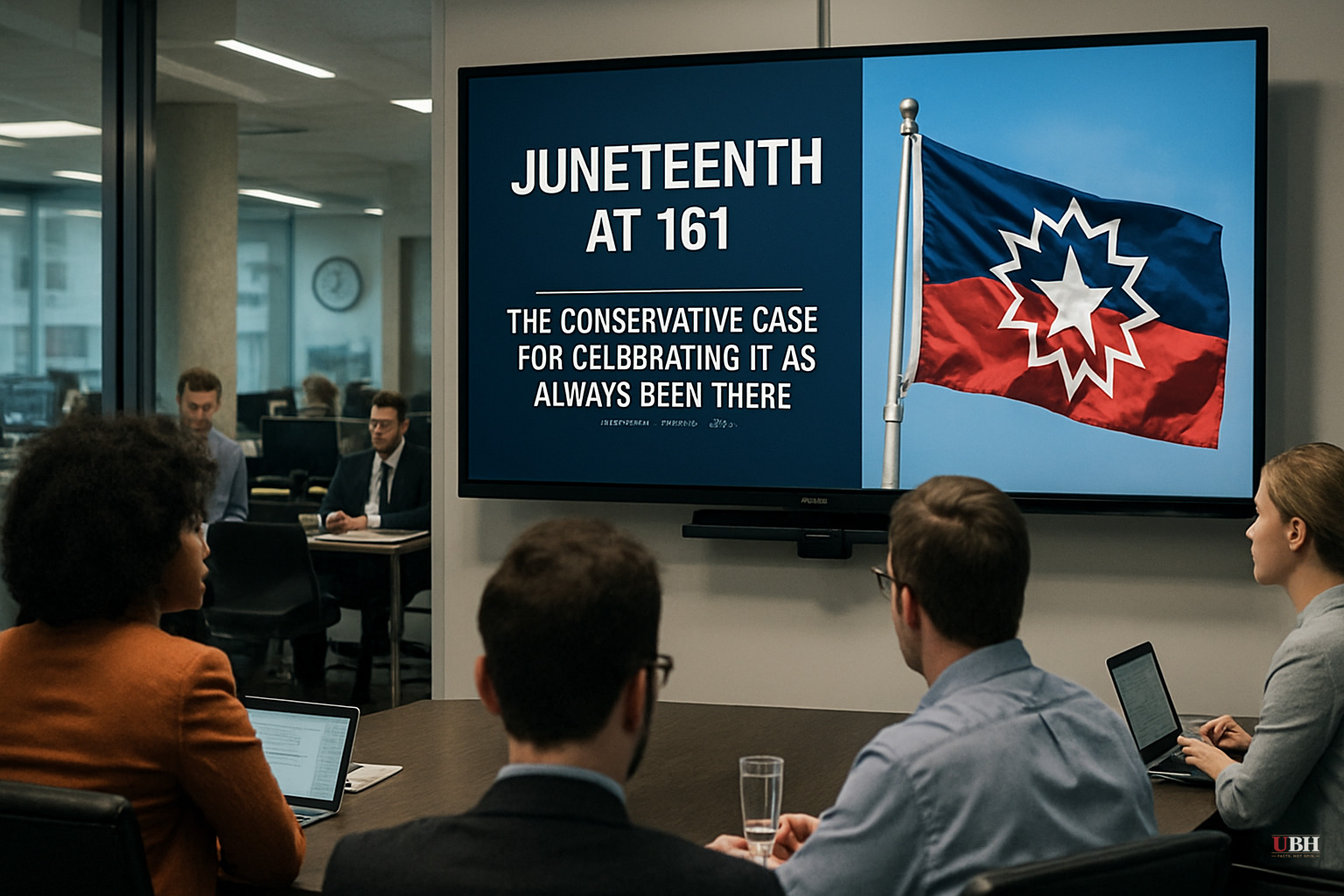
Since our June 19 piece on what Juneteenth actually commemorates and why the debate never fully settled, one thread deserves a closer look: the argument, made specifically from the right, that the holiday is a political invention rather than a genuine historical milestone.
What Actually Happened on June 19, 1865
President Abraham Lincoln signed the Emancipation Proclamation on January 1, 1863. It was legally binding, but enforcement was limited to territory under Union control. Texas, the last Confederate state to surrender, was outside that reach until the war ended.
On June 19, 1865, Major General Gordon Granger rode into Galveston and announced the war was over and slavery with it. Texas had 250,000 people still held in bondage. Granger's order freed them all that day.
Nothing legally changed. The Emancipation Proclamation had been in effect for over two years, and the 13th Amendment abolishing slavery formally wasn't ratified until December 1865. But for a quarter-million human beings, June 19 was the day their lives changed. That is not a political construct. That is a documented historical event.
The Conservative Objection, Stated Fairly
The strongest version of the skeptic's argument isn't that slavery was acceptable. It's that Juneteenth as a federal holiday was manufactured by the political left to keep racial grievance alive, undermine national unity, and position July 4th as a celebration of hypocrisy rather than founding achievement.
Former Rep. Matt Rosendale (R-Mont.) made that case explicitly when Congress voted to establish the federal holiday in 2021, saying, according to Reason, that "the Left" had invented Juneteenth "in order to continually make Americans feel bad and convince them that our country is evil."
That concern deserves a straight answer.
The Answer
Juneteenth was NOT invented in 2021, or by the left. Texas communities were celebrating June 19 as a day of Black freedom for generations before any federal recognition existed. The commemoration spread organically across the South and into Northern cities wherever freed Black Texans migrated. President George W. Bush issued a formal statement marking the date in 2004, years before it became a progressive cause célèbre, calling it, according to Reason, a day that "recognizes the progress America has made in ensuring that our Nation lives up to our founding principles of liberty, equality, and justice."
That framing isn't anti-American. It's the same framing Lincoln used when he cited the Declaration of Independence as the moral anchor for abolition itself.
The Founders Didn't Live Up to Their Own Words. That's the Point.
The Declaration of Independence says all men are created equal. The men who wrote it owned slaves. That is not a gotcha. It is the central tension of American history, and working through that tension is what produced the 13th, 14th, and 15th Amendments.
John Adams signed the Alien and Sedition Acts into law barely a decade after the First Amendment was ratified, criminalizing political dissent. Nobody argues that disqualifies Adams from the founding canon. The Founders set out ideals they themselves failed to meet. The country has spent 250 years trying to close that gap.
June 19, 1865, is one of the clearest moments when it did. Treating that as a threat to July 4th requires believing that acknowledging American failures makes America weaker. A country secure enough to name its failures and mark the moments it corrected them has something real to celebrate.
Where the Debate Stands as of June 19, 2026
Congress passed the federal holiday with overwhelming bipartisan support in 2021. The opposition was a small minority, not a movement. The holiday is now five years old, and the populist right's predicted backlash never materialized into repeal efforts with serious legislative traction.
The genuine open question is whether Juneteenth, as it becomes more institutionalized, retains its specific historical meaning. Freedom reaching the last 250,000 enslaved Americans. Or does it get absorbed into a generic diversity-awareness calendar that strips out the concrete historical event. That would be a loss. The holiday's power is in its specificity: a date, a general, a city in Texas, a quarter-million people whose chains came off that morning.
Keeping that specificity in the foreground is the job of educators, commentators, and citizens on both sides of the political aisle who care about getting American history right.
Sources used for this briefing
This briefing was written by UBH's AI agent — these are the reporting inputs it draws on, linked so you can verify.


