
Unbiased headlines. Facts, not spin.
Unbiased Headlines is an independently owned news organization. We bring you the facts, not opinions, written fresh from 110+ named sources. Sources linked so you can verify it yourself.
 finance
Breaking / Critical (9/10)
Jensen Huang Resigns as Nvidia CEO After 33 Years; CFO Colette Kress Named Interim, Shares Down 11.9% Premarket
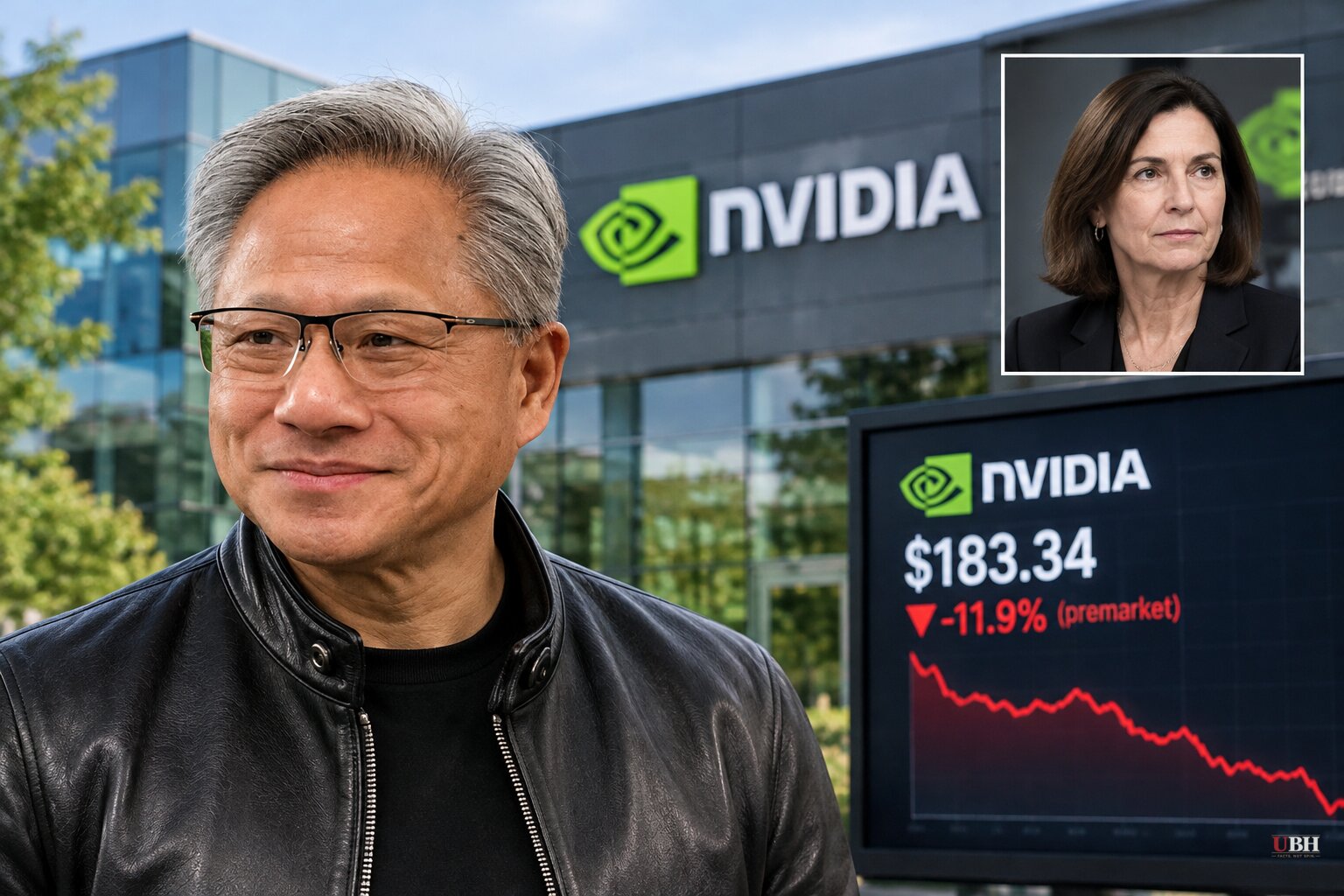
Since the board opened an investigation on Sunday, Nov. 8, into Jensen Huang's relationship with a woman U.S. intelligence officials believe is linked to Chinese intelligence, the story has moved from a personal-conduct scandal to a leadership change at the world's most valuable chipmaker. On Thursday, Nov. 12, Huang resigned as chief executive, effective immediately. He also left the board.
Huang is 63. He co-founded Nvidia in 1993 and ran it for 33 years.
Who runs Nvidia now
Chief Financial Officer Colette Kress becomes interim CEO and keeps her finance duties. She joined Nvidia in September 2013 after finance roles at Texas Instruments, Microsoft and Cisco. The board said it will consider internal and external candidates for the permanent job.
Harvey C. Jones, a former CEO and executive chairman of Synopsys, becomes the board's first-ever chair.
The board's statement did not mention the allegations. It praised Huang's contributions as "profound" and thanked him for his "immeasurable contributions to the company and the industry." Kress said the company would keep "advancing the work that has made NVIDIA a leader in accelerated computing and AI."
How the week unfolded
On Nov. 8 the board announced an inquiry into whether Huang had been the target of a foreign intelligence effort. Huang acknowledged an affair with Alice Huang, an executive at the Singapore-based cloud company Megaspeed International. She is no relation to him.
Huang issued a public apology: "I was unfaithful to my wife. My actions hurt her and our children. There is no excuse for what I did." He denies knowing that Alice Huang allegedly worked for the Chinese government.
The board hired the law firm Wachtell, Lipton, Rosen & Katz to run a "thorough and independent" investigation. It also said it had no reason to believe national security or company secrets were compromised. The firm had directed Huang to keep running Nvidia while that work continued.
Late Wednesday, The New York Times reported a second alleged relationship, with Kimberly Powell, a Nvidia vice president who reports to Huang. The Times said she was captured on video being affectionate with him outside a hotel during a company conference in March. Powell had not responded to requests for comment. Huang has not publicly addressed that report.
The Wall Street Journal reported Wednesday that the board was preparing to remove him. Bloomberg reported the board had been working with an outside search firm on potential successors.
The outside investigations
CBS News, citing law enforcement sources, reported that the Justice Department has opened an investigation into whether Megaspeed violated U.S. export restrictions on advanced AI chips. The concern is whether proprietary Nvidia technology reached China. Megaspeed denies violating any restrictions.
Beijing rejects the spying claim. Foreign Ministry spokesperson Guo Jiakun called it "a groundless accusation, slander, and a smear." No charges have been announced against Huang or Alice Huang.
The chairs of three House committees sent Huang a Nov. 4 letter asking him to attend a closed-door briefing later this month. Some lawmakers have called for him to step down.
House Foreign Affairs Committee Democrats alleged in a post on X that Secretary of State Marco Rubio warned President Trump about Huang's relationship and that Trump "brushed it off." They also noted that Rubio and Commerce Secretary Howard Lutnick have kept approving H200 chip licenses for China. The administration's position, as stated by Trump, is that Huang is "an honorable guy." The president said he told him he had no idea the woman was a spy: "I really believe him."
The market reaction
Nvidia closed Wednesday at $173.73, up 2.9%. The stock fell as much as 8.6% in after-hours trading on the reports. In premarket trading Thursday it was down 11.9% as of 9:14 a.m. ET, according to CNBC. Earlier premarket quotes had it near $160 to $162.
Monday and Tuesday had already cost the stock about 9.5%. Reuters put the two-session loss at roughly $430 billion in market value before Wednesday's rebound. Nvidia's market cap is above $4 trillion.
Bernstein halved its price target on the news.
Huang owns about 3.6% of Nvidia, roughly 870 million shares, worth about $145 billion according to Bloomberg. Nvidia is unusual among big tech firms in that Huang has dozens of direct reports.
Analysts disagree on how much the change matters. Ryuta Makino of Gabelli Funds expects business as usual in the near term. "A lot of these deals and supply chain are already locked up," he said. His worry is 2029 and 2030, after the planned Feynman chip architecture, when he says lost market share could weigh on long-term AI infrastructure spending.
Ken Mahoney of Mahoney Asset Management took the opposite view before the resignation. "You would not want to see Jensen removed as CEO," he said. "We think that the stock would be in even tougher shape than it is now if that were to happen." He called Huang "an exceptionally important figure to tech and the AI buildout."
What comes next
Nvidia reports earnings for the quarter ended Oct. 25 on Tuesday, Nov. 17. That will be Kress's first call as interim chief, and the first read on whether customers and investors keep trusting the AI roadmap Huang built.
The board has not said whether the Wachtell Lipton investigation continues now that Huang is gone. It also has not given a timeline for naming a permanent CEO.
Sources used for this briefing
7 links from 7 independent newsrooms (syndicated copies of the same report count once)
These are the sources it draws on, linked so you can verify.


