
Unbiased headlines. Facts, not spin.
Every story is an unbiased news briefing written from 110+ sources across the spectrum — sources linked so you can verify it yourself.
 politics
Low Interest (3/10)
June 20, 2026 at 07:32 AM
politics
Low Interest (3/10)
June 20, 2026 at 07:32 AM
Janeese Lewis George Wins DC Democratic Primary, Making Her the Prohibitive Favorite for Mayor in November
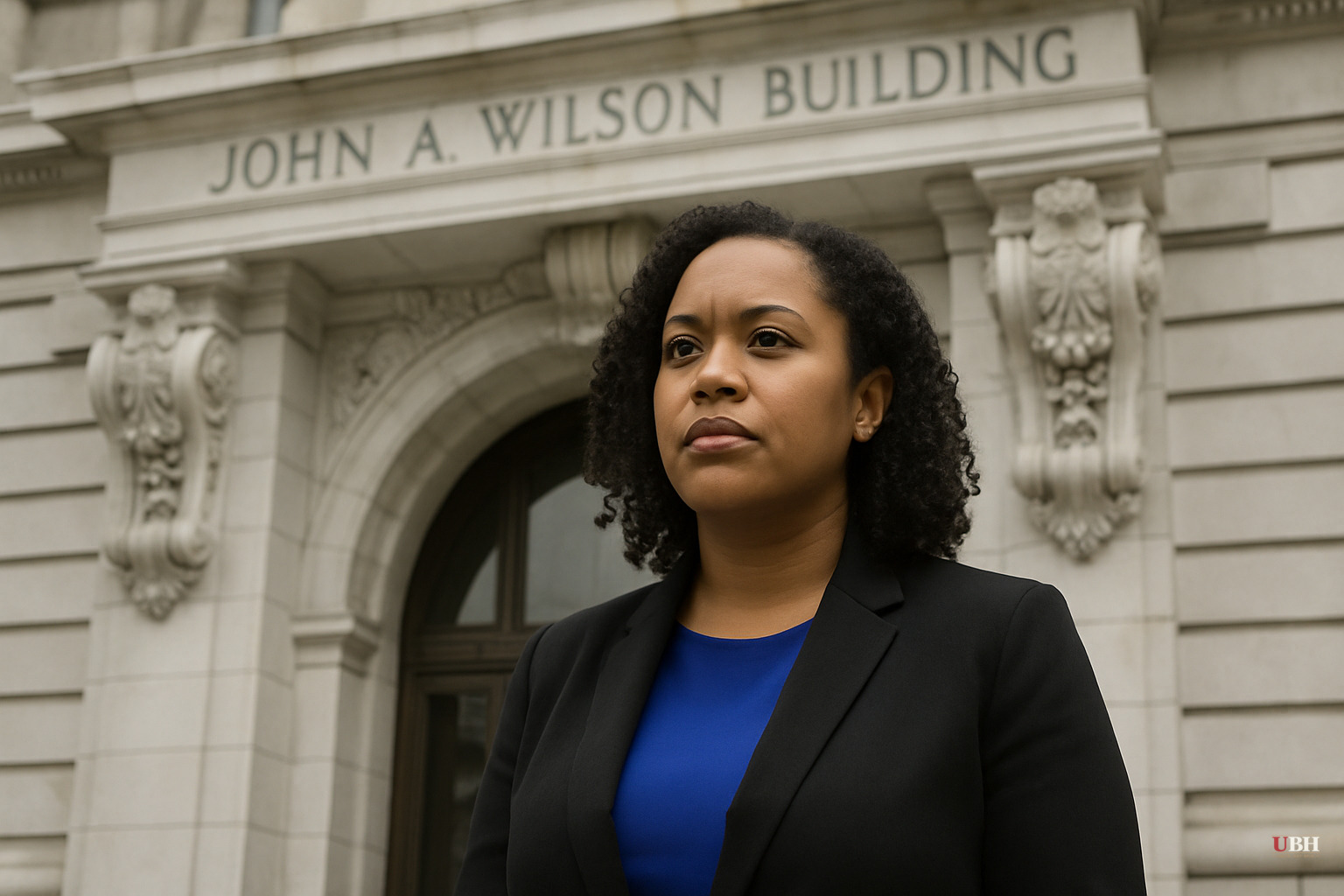
Since Kenyan McDuffie's concession call earlier this week, the DC Democratic primary result has settled into something close to a foregone conclusion about the city's political future: Janeese Lewis George will almost certainly be Washington's next mayor.
NBC Washington's decision desk projected George the winner after McDuffie conceded. No further drama is expected in the general election. With roughly 92% of registered DC voters listed as Democrats, according to the Daily Signal, the November ballot is more a certification ceremony than a contest.
Who Is Janeese Lewis George?
George is the Ward 4 Councilmember on the DC Council, a 13-member body that currently includes 11 Democrats and 2 independents, according to the Daily Signal. She has not yet given a detailed policy platform rollout widely covered by the sources available, so specific budget or public safety commitments beyond her council record are not yet fully documented in these sources.
What is documented: she is coming into office after 12 years under Mayor Muriel Bowser, who held the center of DC's Democratic politics and is now departing. The Daily Signal notes George is a member of the Democratic Socialists of America and has "promised an aggressive approach" to relations with Trump — a marked contrast to Bowser's posture.
What Bowser Actually Left Behind
Bowser's legacy is more complicated than either her admirers or critics typically acknowledge. The Daily Signal, which is openly conservative, frames her as someone who tolerated the 2020 BLM riots, pushed DC statehood, launched the Office of Racial Equity with a DEI mandate, and spent a revenue windfall on social programs that produced a projected billion-dollar budget deficit in her final year. That characterization is factually grounded on the deficit point: Bowser did face a significant structural shortfall.
But the same source concedes she eventually closed the gap through a combination of tax increases and program cuts, avoided direct confrontations with the Trump administration that could have ended DC's Home Rule, and made at least some effort to clear homeless encampments from city parks. A mayor who keeps federal autonomy intact while managing a structural deficit is not the same as one who simply ran the city into a wall.
The strongest concern from critics is real: if George governs to the left of Bowser on spending and law enforcement, she inherits a city budget with limited cushion and a federal government under President Trump that has shown no patience for DC's political preferences. Home Rule is a congressional grant, not a constitutional right, and it can be curtailed.
The Single-Party Problem
The Daily Signal's Simon Hankinson draws a direct comparison between DC and Los Angeles, where voters face a choice between incumbent Mayor Karen Bass and Councilmember Nithya Raman in a race National Review's Jeff Blehar described as "a mere test of activist strength between warring factions of the Democratic Party." The structural critique is legitimate regardless of party preference: when one party holds 92% of registered voters in a jurisdiction, primary elections become the only elections that matter, and primary electorates tend to run more ideologically intense than the general population.
George's voters in November will have expressed essentially no meaningful choice at the ballot box. If she governs poorly, there is no credible electoral check until 2030.
The Fair Counterargument
Supporters of George and DC's political direction would reasonably argue that voter registration patterns reflect genuine preferences, not a broken system. DC residents have consistently chosen Democratic leadership and the social investment model that comes with it. Describing a 92% Democratic registration share as a "Hobson's Choice" presumes the available alternatives would produce better outcomes, and that's an opinion, not a fact. Cities with competitive two-party systems have produced their own fiscal disasters and governance failures.
George's council record, the specific budget positions she ran on, and the details of her public safety approach are the relevant data points for evaluating what comes next. Those details are not fully captured in the sources available.
What Comes Next
The unresolved question heading into the general election is fiscal. Bowser stabilized DC's budget through a combination of revenue measures and cuts, but she did not eliminate the structural pressures that produced the shortfall. George will inherit that budget environment alongside a federal administration that has shown willingness to use DC's special congressional status as leverage. Whether she governs with Bowser's pragmatic restraint on federal relations, or takes the more confrontational posture she has signaled, will determine a great deal about what the next four years look like for the District.
Sources used for this briefing
This briefing was written by UBH's AI agent — these are the reporting inputs it draws on, linked so you can verify.


