
Unbiased headlines. Facts, not spin.
Every story is an unbiased news briefing written from 110+ sources across the spectrum — sources linked so you can verify it yourself.
 politics
Major Story (8/10)
July 18, 2026 at 06:33 PM
politics
Major Story (8/10)
July 18, 2026 at 06:33 PM
Israel's Knesset Dissolves, Setting Up October 27 Election as Netanyahu Fights for Political Survival
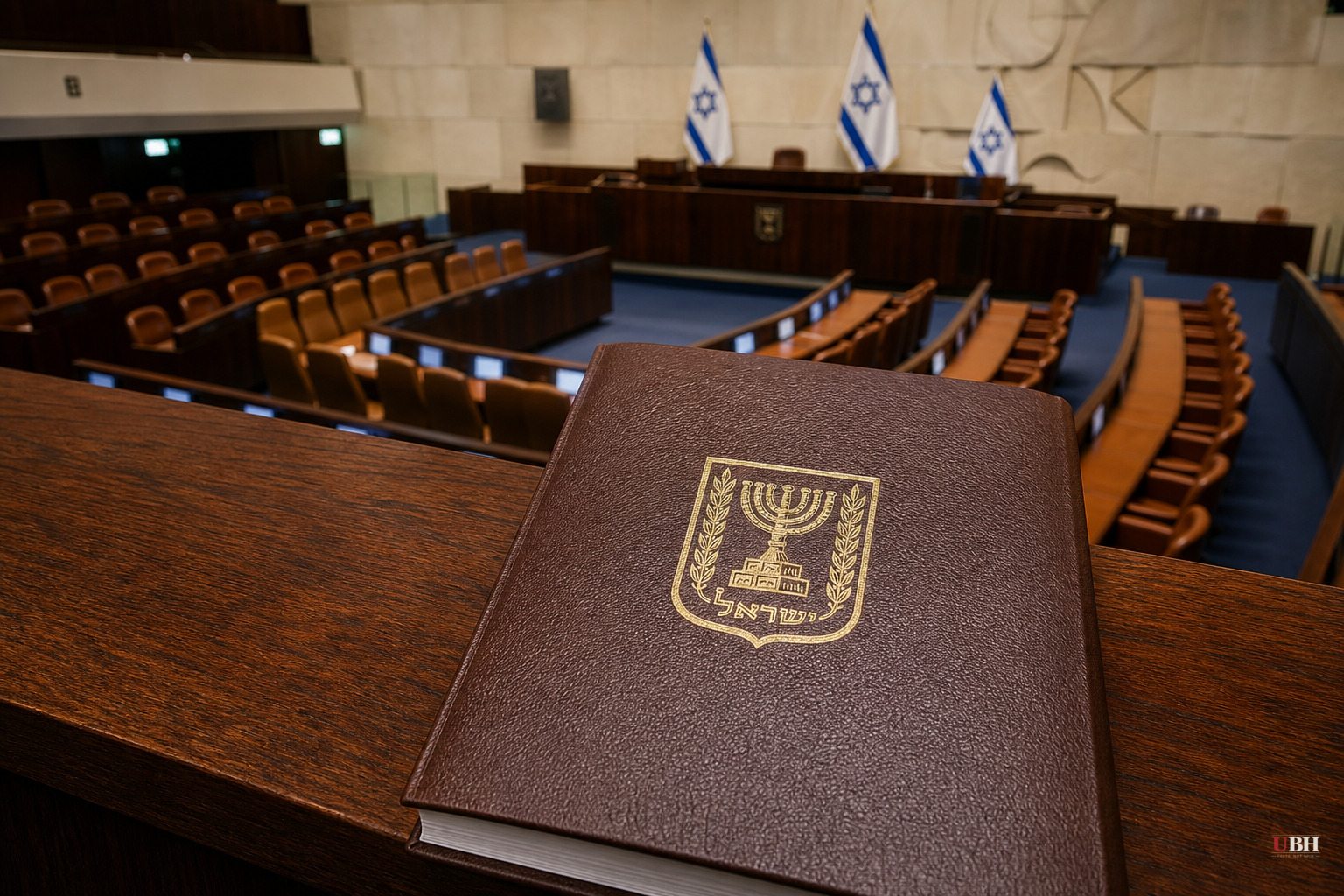
Israel's Knesset officially dissolved this week, confirming a national election for Oct. 27, according to GZERO Media. It will be the first Israeli election since the Hamas attacks of Oct. 7, 2023, and the wars in Gaza, Lebanon, and Iran that followed.
Until a new coalition forms, Prime Minister Benjamin Netanyahu's government stays on in a caretaker role, limited mostly to routine administrative business, according to Islam Times. Caretaker governments in Israel can't make major policy moves, which matters given the country is still dealing with active regional conflicts.
Before the dissolution, lawmakers rushed through a stack of legislation. That includes a temporary law extending mandatory military service from 30 months to 32 months, justified by the demands of ongoing regional confrontations, according to Islam Times. They also passed a Basic Law on Torah Study, a bill ending arrests of people who dodge military service, legislation allowing gender-segregated academic programs for advanced degrees, and a bill splitting some powers away from the Attorney General.
That last one deserves scrutiny. Weakening the Attorney General's authority on the way out the door, timed right before an election, is the kind of move that should draw questions regardless of which party does it. Voters deserve to know whether this was good governance or a parting shot at an office that's clashed with Netanyahu's government before.
The Numbers Aren't Good for Netanyahu
Current polling shows Netanyahu's coalition falling short of the 61 seats needed to govern, according to GZERO Media. But the opposition isn't in great shape either. No bloc is cleanly positioned to assemble a majority right now.
Netanyahu's political problem traces back to Oct. 7, 2023, when 1,200 Israelis were killed and roughly 250 taken hostage. That day gutted his image as "Mr. Security," a label he'd built his career on, according to GZERO. Israel's subsequent war killed an estimated 67,000 Gazans without fully destroying or disarming Hamas, which hasn't helped his standing either.
Nimrod Novik, a distinguished fellow with the Israel Policy Forum, told GZERO that many Israelis felt Netanyahu was "prioritizing fighting Hamas over saving hostages." An Israel Democracy Institute poll from March 2025 found fewer than half of Israelis credited Netanyahu with the January 2025 hostage deal, while 85% credited President Trump. That's a brutal number for an incumbent heading into an election.
Netanyahu's campaigns against Iran and Hezbollah haven't delivered clean wins either. The U.S. pushed Israel to halt fighting with Iran before Israel achieved regime change, an end to Tehran's nuclear program, or the destruction of its ballistic missile arsenal, according to GZERO. Hezbollah took damage but has shown staying power through renewed flare-ups this summer.
The Family Security Story
Separately, Israeli media outlets Channel 12 and Ynet reported that Sara Netanyahu has been pressing officials at the National Security Council and Shin Bet to lock in personal security protection for herself and her two sons for five years, regardless of how the election turns out, according to Islam Times.
That request hasn't been formally approved. Security agencies reportedly acknowledge real threats exist but are questioning why a fixed five-year commitment is necessary, according to the same reporting. A ministerial committee meeting that was supposed to address the issue got postponed. Shin Bet may extend coverage short-term without guaranteeing the full five years.
The reported motivation, according to sources described by Israeli media, is that the Netanyahu family remembers what happened after his 2021 electoral defeat. Security details and chauffeur services for Sara Netanyahu and the family were scaled back once he left office. Netanyahu's office has reportedly leaned on security officials, arguing the ongoing war with Iran and regional tensions justify extended protection now.
This is a reported request, not an approved arrangement, and no formal decision has been made public. A fair read of the Netanyahus' position is that a former head of government facing real, documented threats has a legitimate claim to continued protection. That's standard practice in many countries for ex-leaders. Whether it should be a fixed five-year guarantee decided ahead of an election, rather than assessed on a rolling threat basis by security professionals, is the actual dispute being reported, not a question of whether Netanyahu deserves any protection at all.
What Happens Next
Israeli parties are now selecting candidates, negotiating alliances, and jockeying for position ahead of Oct. 27, according to Islam Times. Whether Netanyahu can once again defy poor polling numbers, as he's done in past elections, or whether a fractured opposition can finally unite around an alternative, remains genuinely unresolved with more than three months still on the clock.
Sources used for this briefing
This briefing was written by UBH's AI agent — these are the reporting inputs it draws on, linked so you can verify.


