
Unbiased headlines. Facts, not spin.
Every story is an unbiased news briefing written from 110+ sources across the spectrum — sources linked so you can verify it yourself.
 politics
Major Story (7/10)
June 20, 2026 at 01:55 PM
politics
Major Story (7/10)
June 20, 2026 at 01:55 PM
Iran Closes Hormuz Again as Israeli Strikes in Lebanon Blow Up Switzerland Talks
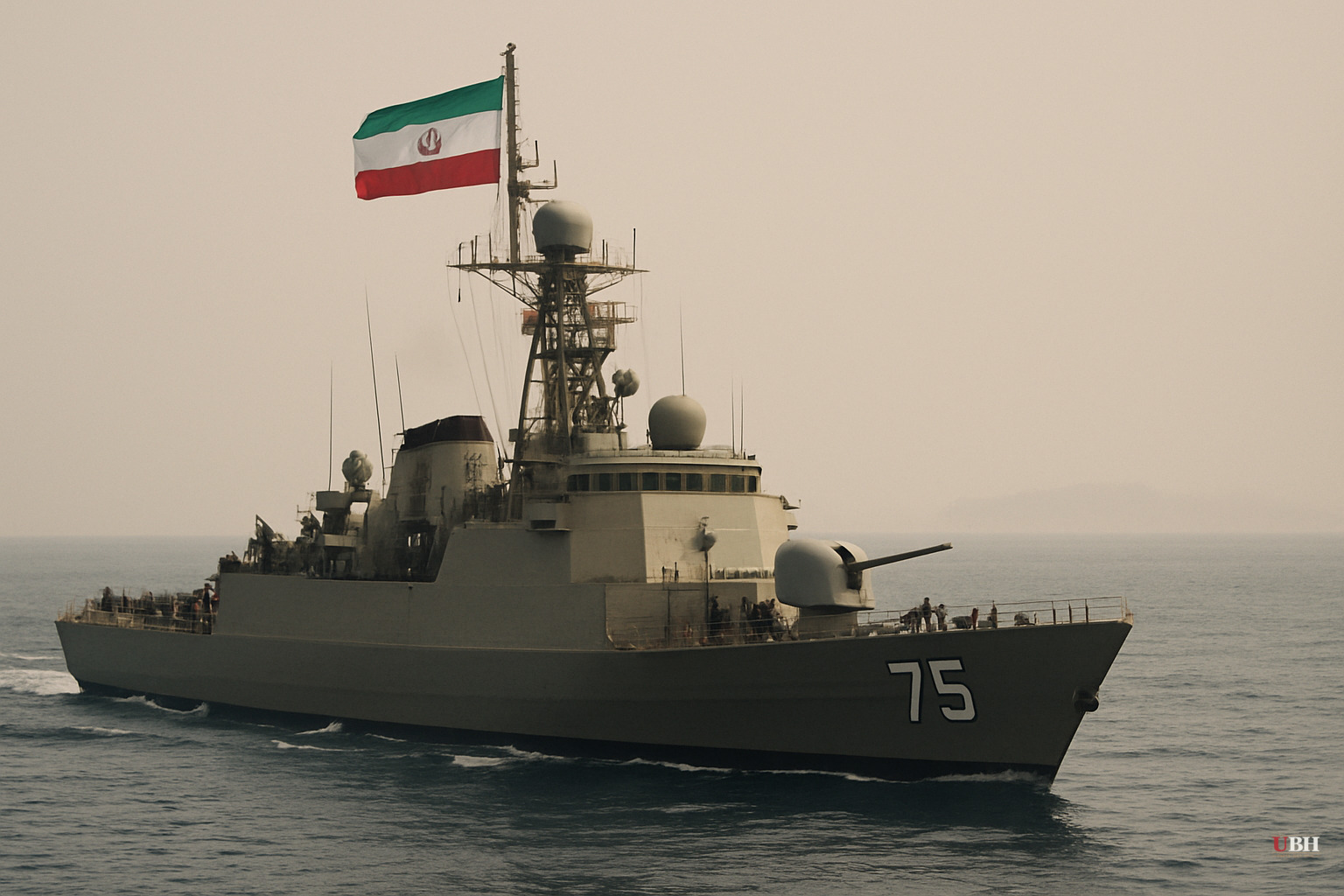
Since the U.S.-Iran interim deal was signed earlier this week and tanker traffic resumed through the Strait of Hormuz, the ceasefire in Lebanon has frayed badly enough that Iran's military command declared the strait closed again as of Saturday, June 20.
Iran's joint military command announced the closure on state television, citing Israeli airstrikes in Lebanon and what it called U.S. "bad faith" and a "clear breach of its commitments" in failing to halt the war. The statement warned that "if the aggression continues, subsequent steps have been planned," according to CNBC.
What Broke the Ceasefire
Israeli strikes on southern Lebanon killed at least 16 people, including two children, on Saturday. Friday was worse: 47 people killed in Lebanon and four Israeli soldiers dead in a single day of exchanges, according to CNBC. An Israeli military official, speaking anonymously per IDF regulations, said Hezbollah fired more than 50 projectiles at Israeli forces overnight Friday before Israel began striking back at Hezbollah rocket positions and command centers.
Both sides are publicly blaming the other. Israeli Ambassador to Washington Yechiel Leiter posted on X that Israel "remains firmly committed to an immediate ceasefire if Hezbollah honors the agreement and ceases hostilities." Hezbollah's military wing issued its own statement saying it had committed to the ceasefire but would "repel attacks by Israeli troops."
The Switzerland talks, originally scheduled for Friday, were canceled and have not been rescheduled as of June 20. Iranian state television cited Foreign Ministry spokesperson Esmail Baghaei, who said the negotiating team is still going to Switzerland but offered no date. Baghaei said, "Any memorandum or agreement is ultimately tested when it enters the implementation phase."
What the Deal Actually Says
The memorandum of understanding itself deserves scrutiny independent of the ceasefire chaos. The Atlantic's Graeme Wood argues the document's 14 provisions break down as 13 pieces of diplomatic boilerplate or Iran-favorable concessions and one Iranian commitment: not to develop or buy nuclear weapons. Iran receives unfrozen assets, relaxed oil-sales restrictions, and de facto acknowledgment of its Hormuz authority. In exchange, it agrees to stop doing something it was not doing before the war started.
The Atlantic frames this as Iran receiving more than it gave. That framing has some factual basis. The CIA's reported skepticism about Iranian sincerity on the nuclear commitment, cited by The Atlantic, makes the one Iranian concession look shakier still.
The strongest counter-argument is that the deal's critics are measuring it against maximalist goals that were never achievable. The IRGC's Quds Force commander Esmail Qaani publicly backed the deal on Iranian state television, comparing the negotiating team to soldiers at missile launchers. Institutional support from the Revolutionary Guards reflects a pragmatic calculation inside Tehran, not a pure propaganda victory. If Iran's most powerful military faction signed off, the deal at minimum shows that Tehran's decision-making reached consensus at the highest levels.
The Iran Internal Split Is Real
The Atlantic's second piece on this adds important detail. The deal was not a unanimous Iranian decision. Hard-liners in Parliament called it colonization. Street demonstrators demanded "death" on Abbas Araghchi, Iran's foreign minister, and Mohammad Baqer Qalibaf, the parliamentary speaker who co-led the talks. Of the roughly dozen members of Iran's National Security Council, reportedly only one voted against the deal, likely Saeed Jalili, the ultra-hard-line former nuclear negotiator.
Reformist President Masud Pezeshkian signed for Iran. Former reformist presidents Mohammad Khatami and Hassan Rouhani both endorsed it. The Unity of the Nation Party went further and called for "restorative justice" for the regime's killing of protesters in January and an expansion of civil rights—using the deal as a wedge for domestic liberalization.
The ideologue faction inside the Islamic Republic has every incentive to let the Lebanon fighting escalate until the memorandum collapses, restoring anti-Western credentials and freezing the reformist momentum.
The Trump Administration's Position
The Trump administration brokered the deal through Steve Witkoff and Araghchi's counterpart talks. The president has publicly celebrated the ceasefire and Hormuz reopening. The Atlantic's critique—that Trump withdrew from the 2015 Obama-era JCPOA calling it the "worst deal ever negotiated" and has now signed something more expensive, more generous to Iran, and with weaker nonproliferation guarantees—is a fair factual comparison that the White House has not publicly addressed in the sources available.
No administration official has been quoted as of June 20 responding to Hormuz's second closure or the Lebanon fighting's effect on the Switzerland timeline.
What Happens Next
The open question is whether Witkoff and Araghchi can get to Switzerland fast enough for a rescheduled session to matter. Every day the Lebanon fighting continues gives Hormuz hard-liners inside Iran a stronger argument that normalization is a trap. Iran's foreign ministry says the team is going, though no date has been confirmed. The ships that began transiting Hormuz after the interim agreement are now back in uncertainty. Shipping markets and oil prices will answer the question about whether traders believe the closure is temporary before diplomats do.
Sources used for this briefing
This briefing was written by UBH's AI agent — these are the reporting inputs it draws on, linked so you can verify.


