
Unbiased headlines. Facts, not spin.
Unbiased Headlines is an independently owned news organization. We bring you the facts, not opinions, written fresh from 110+ named sources. Sources linked so you can verify it yourself.
 politics
Major Story (8/10)
Event date: September 29, 2026 ·
politics
Major Story (8/10)
Event date: September 29, 2026 ·
Investigation Counts 25,000 Third-Country Deportations Under 35 Secret Deals as UN Experts Demand a Halt
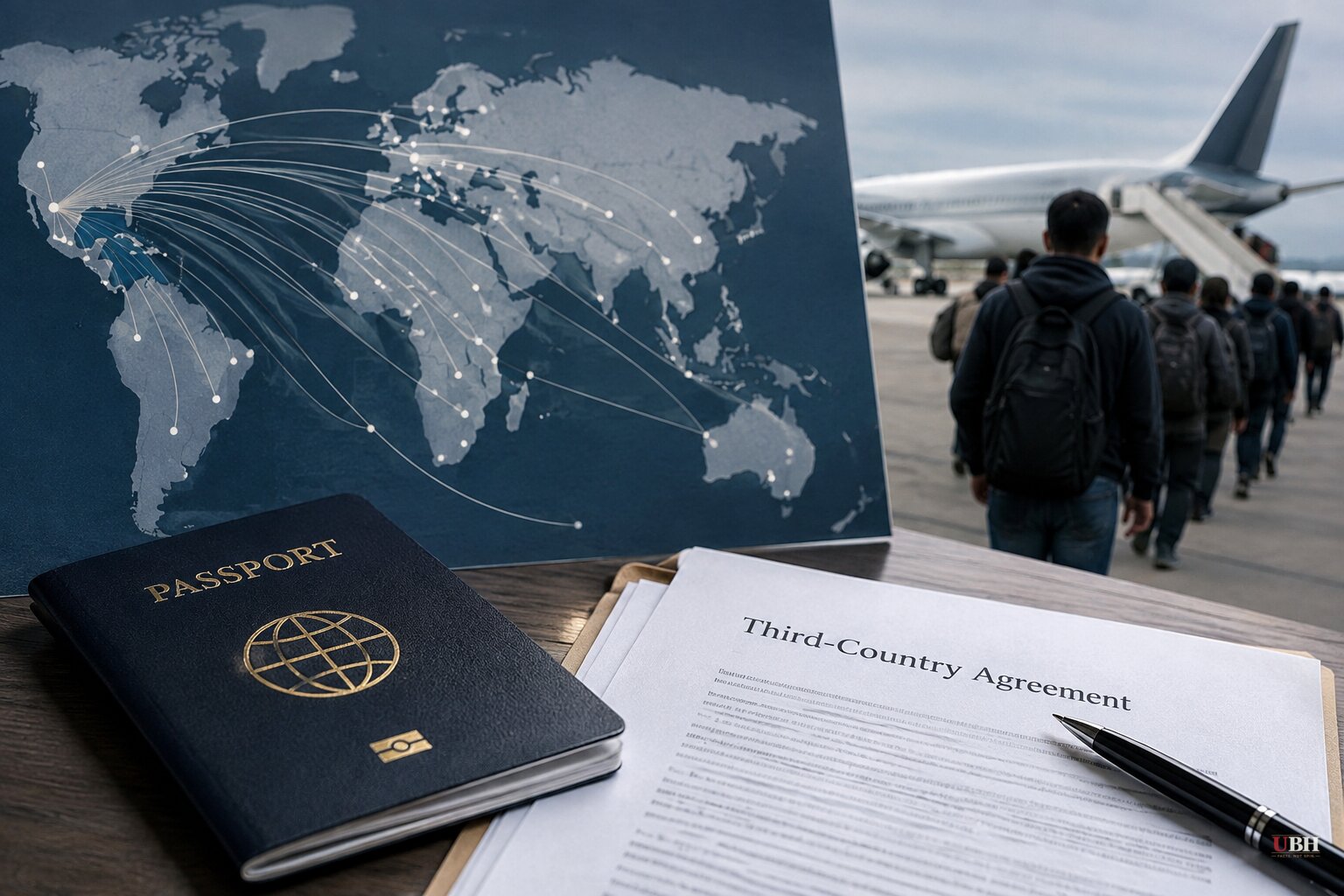
Since the Supreme Court on Sept. 29 paused a lower-court order and let the Trump administration resume deporting people to countries that are not their own, new numbers and a new international rebuke have landed on a policy that is still headed for a full hearing in December.
The scale of the program
An investigation by the Forbidden Stories journalism network, which included the Guardian, found the U.S. has deported more than 25,000 people under agreements with 35 countries. The administration has earmarked $410 million to pay receiving countries, or UN agencies, to facilitate the returns, according to that investigation.
The breakdown is lopsided. Roughly 20,000 people were sent to Mexico, many by bus, according to Refugees International and Human Rights First. About 5,000 more were flown to 27 other countries across Latin America, Africa, the Caribbean, central Asia and the Pacific. Seven more agreements have been finalized.
AFP's own investigation found Washington has offered multimillion-dollar deals and threatened visa restrictions to push countries, especially in Africa, to take deportees.
That is a lot of taxpayer money and a lot of diplomatic leverage spent on removals. Congress has not been asked to vote on any of it.
What the UN experts said
Twenty-four experts who advise the UN Human Rights Council, backed by a special rapporteur for the African Commission, said they contacted the U.S. and all 35 countries to demand an immediate halt.
"The harms caused by this US government scheme are no longer hypothetical," the experts said in a joint statement. "The arrangements are triggering a cascade of human rights violations. For migrants in situations of particular vulnerability, the consequences can be deadly."
They cited risks of torture, ill-treatment, enforced disappearance, trafficking and slavery. They also warned that some receiving countries are in conflict and "lack the capacity to protect the rights of migrants sent there."
The Guardian's reporting in the consortium documented individual cases, including an Iranian woman who sought safety in the U.S. after protesting against her government and a gay man who fled Ghana after his own family hunted him. AFP reported that deportees in some receiving countries have faced abuse by local guards, indefinite detention, or quick re-deportation to their home countries.
The administration's position
The administration says the effort is aimed at removing criminals. Solicitor General D. John Sauer told the Supreme Court that third-country removals are "an essential tool" for removing some of the worst criminal aliens when home countries refuse to take them back.
Sauer's Sept. 24 petition said the lower-court rulings forced DHS to cancel a flight to three countries carrying 70 people it describes as criminals, and to pull nearly 150 others from flights to at least four countries. He also argued that finding countries willing to accept deportees is "a delicate diplomatic endeavor" and that court-imposed procedures risk "significant and irreparable harm to U.S. foreign policy."
DHS General Counsel James Percival called the Supreme Court's order "a bad day for criminal illegals and open borders activists alike."
The administration's filings do not say how many of the roughly 25,000 people removed had criminal convictions.
What the courts have actually decided
The case began with a February ruling by Boston-based U.S. District Judge Brian Murphy, who found the DHS policy unlawful. The First Circuit Court of Appeals ruled against the DHS guidance on Sept. 18.
Those rulings did not ban third-country removals. They required effective advance notice of the destination so people could raise fears of persecution or torture. Opponents of the administration's request told the justices the order "simply requires them to do so lawfully," according to the reporting on the filings.
The Supreme Court's unsigned Sept. 29 order stayed Murphy's ruling and granted review. Justices Sonia Sotomayor, Elena Kagan and Ketanji Brown Jackson would have denied the request. The majority gave no reasons.
The justices said they will consider whether the lower court had jurisdiction over the petitioners' claims, whether it had authority to issue the order, and whether the federal guidance on third-country removals is unlawful.
Where Congress stands
Federal law and the UN Convention Against Torture bar sending someone to a country where they would likely be tortured. Congress has made it U.S. policy not to deport people to countries where their lives would be in danger.
Some Democratic lawmakers responded to the Supreme Court's order by calling for formal steps to prevent such deportations and protect due process. No bill has been reported to have advanced.
Rights groups say third-country removals were extremely rare before 2025 and have never been used at this scale. The administration has not publicly released the text of the agreements, which the Forbidden Stories investigation described as secretive.
What comes next
Oral arguments are set for the court's December session, with a decision expected by next summer. Until then, removals continue under the stay, and the court's three questions, on jurisdiction, authority and the legality of DHS guidance, will determine whether any notice requirement survives.
Sources used for this briefing
7 links from 6 independent newsrooms (syndicated copies of the same report count once)
These are the sources it draws on, linked so you can verify.


