
Unbiased headlines. Facts, not spin.
Every story is an unbiased news briefing written from 110+ sources across the spectrum — sources linked so you can verify it yourself.
 tech
Major Story (8/10)
July 3, 2026 at 11:43 AM
tech
Major Story (8/10)
July 3, 2026 at 11:43 AM
Instagram's Automated Ad System Approved CSAM Promotions in India, BBC Investigation Finds
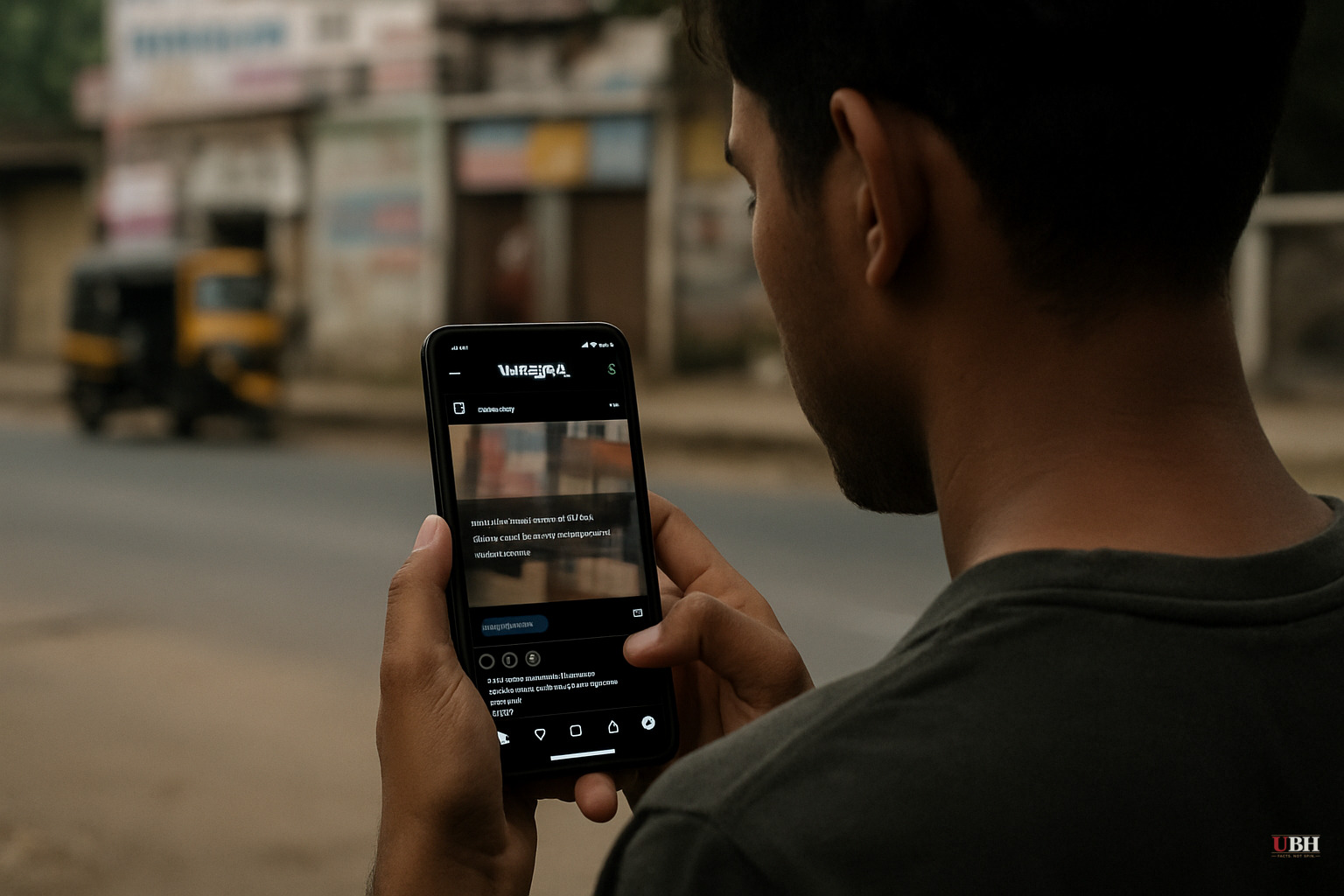
A BBC Eye investigation, published July 3, 2026 and reported by BBC World Service journalist Divya Arya, found that Instagram's paid advertising system had approved roughly 30 unique ads in India that explicitly promoted child sexual abuse material (CSAM). Some of those ads were distributed by multiple accounts, broadening their reach.
The ads used terms including "rape video" and "child video" and directed users to Telegram channels where the material could be purchased for as little as 99 rupees, approximately $1. One ad depicted a boy and girl both appearing to be around 12 years old engaged in a sexual act. Another showed a man described as 52 years old alongside a girl described as 12, with the text "Click to watch more." A third showed a very young girl in tears, with wording indicating she had been sexually assaulted.
The alias account the BBC created for the investigation was also served roughly 20 ads containing adult pornography. Both CSAM distribution and adult pornography distribution are criminal offences in India.
Instagram's own policy states that ads must not contain adult nudity or content that sexually exploits or endangers children. All paid ads on Instagram are supposed to be reviewed by the platform's automated moderation technology before publication.
Those safeguards failed. When the BBC reported one ad depicting a child victim, Instagram's review team responded 24 hours later saying the post did not violate its "community guidelines." Meta only moved to disable ads and suspend accounts after the BBC contacted the company directly seeking comment, according to the BBC report and confirmed by Storyboard18.
Meta then told Times Now Digital: "Meta has a zero tolerance policy for soliciting or sharing CSAM, including in ads. We use advanced AI technology to proactively detect violating content and individuals, but we are in a constant battle with criminals who hide among our 3.5 billion users and try to evade our detection."
That explanation is Meta's strongest good-faith defense, and it is not trivial. Scale is real: 3.5 billion users means bad actors have vast surface area to exploit, and no automated system catches everything. Telegram, for its part, reported removing more than 274,000 groups and channels linked to CSAM in 2026, according to the BBC, which signals the scope of the problem across platforms.
The problem is that these were paid advertisements, not organic posts slipping through content feeds. Advertisers submit creative, pay money, and the platform approves the transaction before distribution. That is a separate, more deliberate process than moderating billions of user-generated posts in real time.
Retired Justice Madan Lokur of India's Supreme Court, quoted by AOL and the BBC, said he was concerned Instagram was "making money by participating in a criminal activity." That framing reflects a legitimate legal question: if a platform collects ad revenue from content it approved, at what point does passive failure become active participation under Indian law?
The BBC reported all ads and associated Telegram channels to Indian authorities. No investigation or charges had been announced as of the time of publication.
The BBC's investigation mapped a specific escalation path. The alias account started by following 10 accounts posting suggestive but not explicitly illegal content. Within less than a week, Instagram's recommendation and ad-targeting algorithms began serving the account ads for adult content. Days after that, CSAM-promoting ads appeared.
The platform's own recommendation engine, in other words, appeared to treat sexualized content engagement as a signal to escalate toward more extreme material, including illegal material. That is a system design question, not just a moderation failure.
After BBC's inquiry, Meta said it disabled several ads, suspended the posting accounts, removed additional ads, and blocked URLs linking to violating content. The company framed its response as consistent with existing policy enforcement.
What is not yet resolved: whether Indian regulators will open a formal investigation, whether the ad approval process for India will be changed, and whether Meta's post-inquiry removal of the specific ads identified by the BBC constitutes adequate remediation or a one-time cleanup that leaves the underlying system intact.
The BBC's investigation did not establish how long the ads had been running before it found them, which means the full scale of distribution before Meta's intervention remains unknown.
Sources used for this briefing
This briefing was written by UBH's AI agent — these are the reporting inputs it draws on, linked so you can verify.


