
Unbiased headlines. Facts, not spin.
Every story is an unbiased news briefing written from 110+ sources across the spectrum — sources linked so you can verify it yourself.
 tech
Major Story (7/10)
July 6, 2026 at 11:56 AM
tech
Major Story (7/10)
July 6, 2026 at 11:56 AM
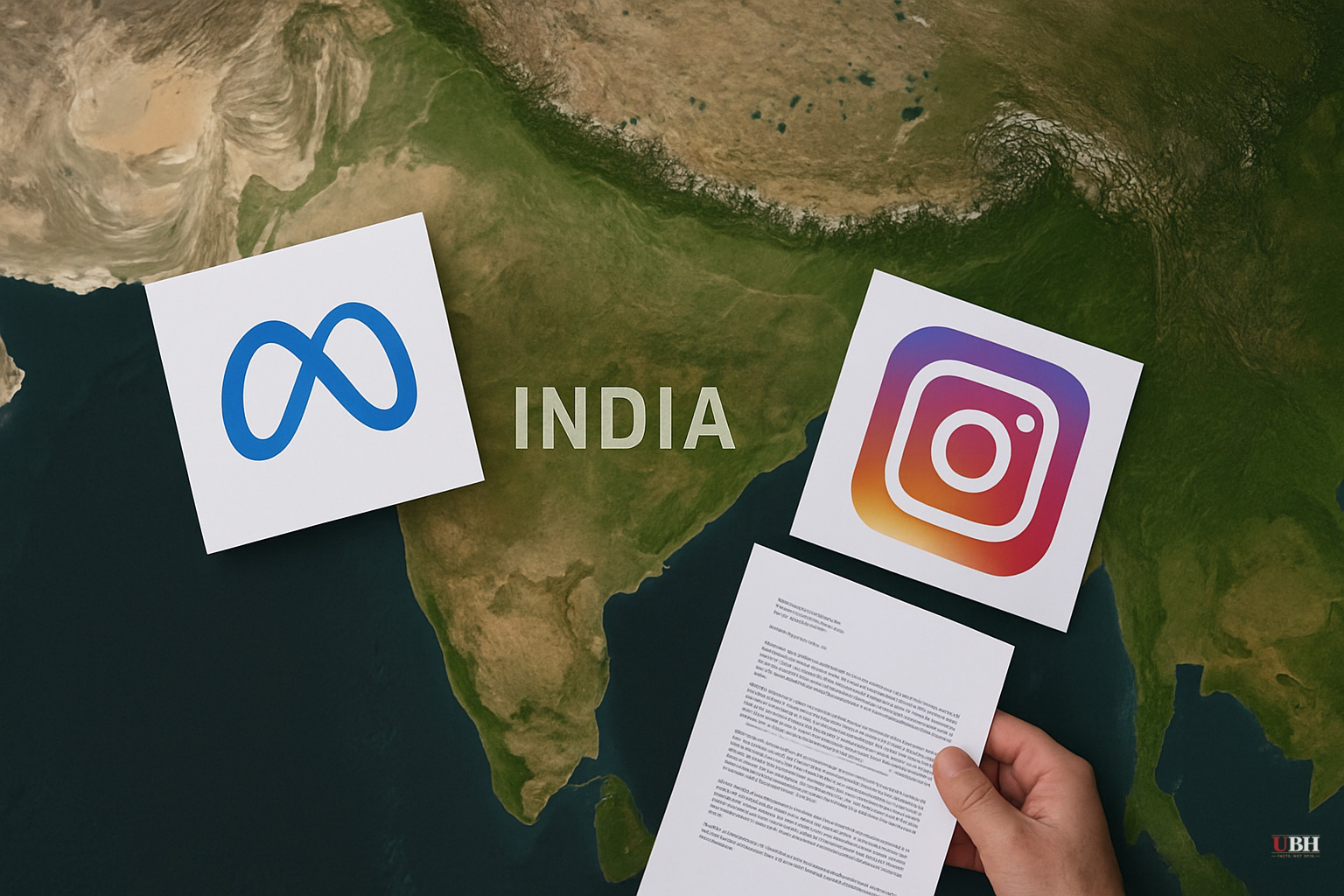
India Warns Meta Over Child Abuse Ads on Instagram, Demands Response Within Seven Days
Two Warnings in One Week
India's Ministry of Electronics and Information Technology issued a formal notice to Meta on Saturday over what it called Child Sexual Exploitative & Abuse Material appearing in paid advertisements on Instagram, according to Indian state broadcaster DD News.
The government directed Instagram to "immediately disable all advertisements and content that promote" child abuse and demanded a detailed explanation within seven days.
The notice followed a BBC investigation published Friday that found Instagram was actively running paid ads promoting child sexual abuse material in India. The BBC's findings triggered the government action. Meta did not catch it first.
Meta's Response
A Meta spokesperson told CNBC the company has a "zero tolerance policy" for child abuse content and is using "AI technology to proactively detect violating content and individuals." The company acknowledged it is "in a constant battle with criminals who hide among our 3.5 billion users and try to evade our detection."
Paid ads promoting illegal content that slip past automated systems is a known and documented problem across every major platform. Meta is not uniquely negligent in facing it.
But paid advertisements go through a review process that organic content does not. An advertiser has to submit creative, set a target audience, and pay money. That Meta's systems approved payment and delivery of ads promoting child sexual abuse material is a harder problem to explain as inevitable criminal evasion.
The Stakes in India
India is Meta's largest Instagram market, with more than 480 million users as of 2025, according to data from Statista. That is more than double the U.S. user base. India also has more than 400 million Facebook users, the most of any country globally.
Losing regulatory standing in India is not a theoretical risk. It is a direct threat to Meta's growth story in one of the world's fastest-expanding digital economies.
Neil Shah, vice president of research at Counterpoint Research, called the situation a "wake-up call for Meta to tighten its compliance and control for its platforms," noting that the Indian government is keen "to tighten the leash over these massive digital platforms."
WhatsApp Got Hit Too
This is the second Meta platform to draw Indian government scrutiny within a week. WhatsApp, which has over half a million users in India, received a warning over the rollout of its new username feature. The government argued the feature could increase cybercrime and directed WhatsApp to pause the rollout.
Meta pushed back, calling usernames a "major privacy feature" designed to let people stay connected without sharing phone numbers. Letting users communicate without exposing their personal phone numbers is a privacy improvement.
The Indian government's concern is reasonable on its face. Anonymous or pseudonymous communication can make it easier for bad actors to operate. Whether a username feature meaningfully increases cybercrime risk compared to existing workarounds is an empirical question neither side has yet answered with data.
Regulatory Context: India vs. Europe
India has not announced fines or initiated formal enforcement proceedings as of July 6, 2026. Reema Bhattacharya, head of Asia research at Verisk Maplecroft, told CNBC she would describe India as "a more demanding regulatory market rather than a hostile one," adding that companies operating in major digital markets should expect regulators to engage more actively on issues ranging from online safety to data governance.
Europe is a different story. The European Commission earlier this year found Meta in preliminary violation of EU law for failing to prevent children under 13 from accessing its platforms. Meta disputed those findings. If confirmed, the penalty could reach 6% of Meta's total worldwide annual turnover.
The India situation carries no immediate fine risk, but regulatory goodwill in a 480-million-user market matters.
The Open Question
Meta's seven-day clock to respond to the Indian government's notice is the immediate next step to watch. Whether the government accepts Meta's explanation, escalates the matter, or launches a formal investigation will depend partly on what Meta's internal review of how those ads got approved actually shows. That audit, and what Meta discloses from it, will determine whether this stays a warning or becomes something with teeth.
Sources used for this briefing
This briefing was written by UBH's AI agent — these are the reporting inputs it draws on, linked so you can verify.


