
Unbiased headlines. Facts, not spin.
Every story is an unbiased news briefing written from 110+ sources across the spectrum — sources linked so you can verify it yourself.
 tech
Major Story (7/10)
July 16, 2026 at 11:48 AM
tech
Major Story (7/10)
July 16, 2026 at 11:48 AM
India Hosted Its First AI Summit in February With Pichai, Altman and Huang. Washington Should Take Notice.
India Hosted Its First AI Summit in February With Pichai, Altman and Huang. Washington Should Take Notice.
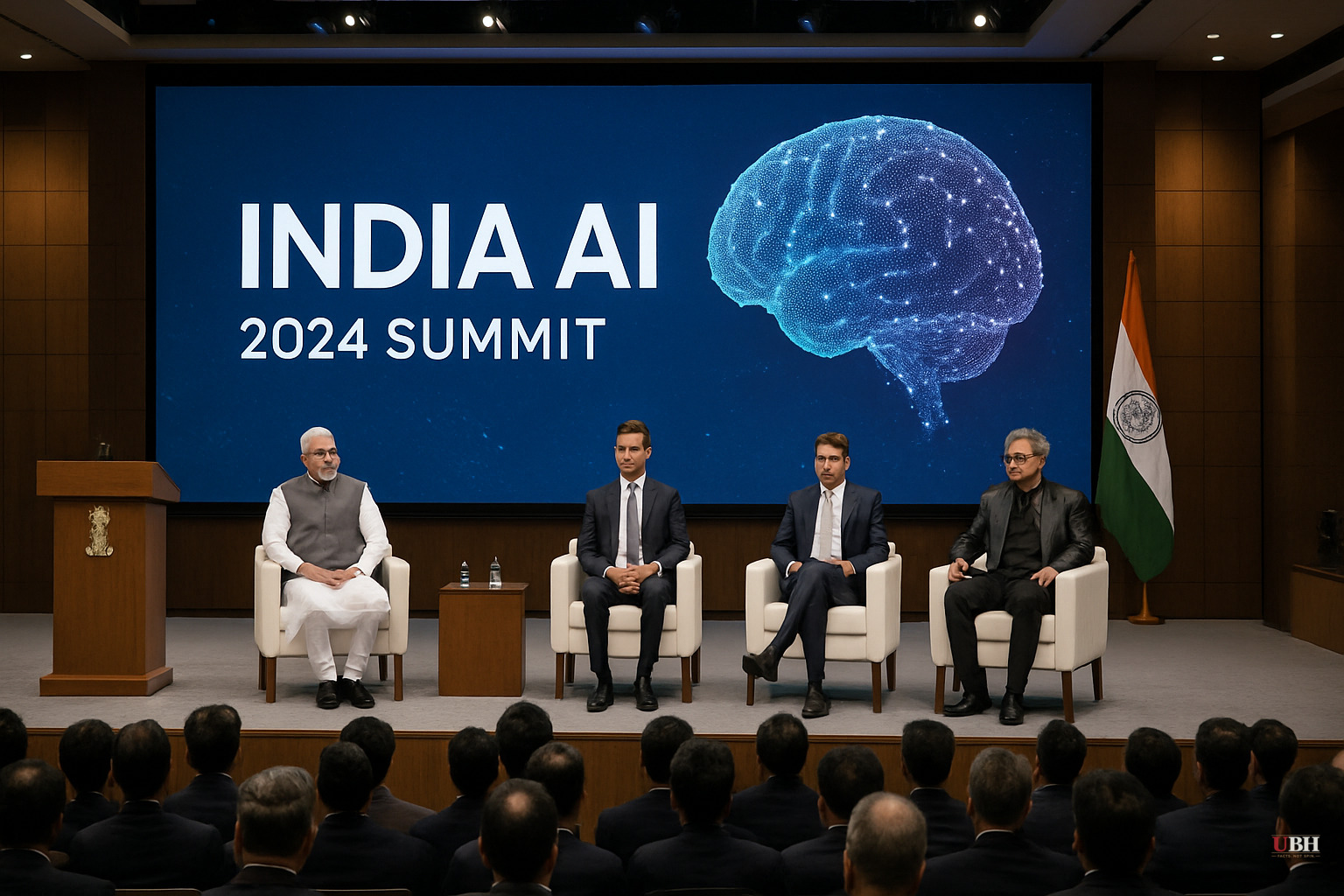
India held its first-ever national AI summit at Bharat Mandapam in New Delhi from February 16 to February 20, 2026, according to the Indian Express. It was a full-court press by the Indian government to plant its flag as a serious player in the global AI race, and it worked.
Google CEO Sundar Pichai showed up. So did OpenAI's Sam Altman and Nvidia's Jensen Huang. Microsoft founder Bill Gates and Microsoft President Brad Smith attended alongside Adobe CEO Shantanu Narayen, Accenture CEO Julie Sweet, Qualcomm CEO Cristiano Amon, and Palo Alto Networks CEO Nikesh Arora, per the Indian Express.
Nearly every CEO who matters in enterprise tech and AI infrastructure gathered in one building in Delhi.
Both AI Godfathers Showed Up
The event also drew Anthropic CEO Dario Amodei, Mistral AI CEO Arthur Mensch, and Google DeepMind CEO Demis Hassabis. And it landed the two men most people in the field call the godfathers of AI: Yann LeCun, former Meta chief scientist and now founder of AMI Labs, and Yoshua Bengio, according to the Indian Express.
Getting both LeCun and Bengio in the same room is rare. These are two of the three researchers who won the Turing Award for foundational deep-learning work. Getting them to a government summit in India, rather than Silicon Valley or Geneva, signals where the industry thinks the next decade of AI policy and market growth is heading.
India's own business elite turned out in force too. Reliance Industries chairman Mukesh Ambani, Tata Sons chairman Natarajan Chandrasekaran, Infosys co-founder Nandan Nilekani, Bharti Enterprises chairman Sunil Bharti Mittal, TCS CEO K. Krithivasan, Infosys CEO Salil Parekh, and HCL Tech chairperson Roshni Nadar Malhotra all attended, per the Indian Express.
What Modi's Government Actually Wanted
According to the Indian government's own framing, reported by the Indian Express, the summit's stated purpose was to convert "global discussions around AI into development outcomes aligned with national priorities" under the IndiaAI mission and the Digital India Initiative. Translation: Delhi wanted concrete deals and investment commitments, not just panel talk.
The agenda covered AI applications in healthcare, agriculture, education, finance, governance, and public service. It also touched on human capital development, using AI for economic growth, and what the government called "democratising AI resources."
That last phrase warrants skepticism. Every government hosting an AI summit right now says it wants to "democratize" the technology. What that actually means in practice, in terms of specific funding, compute access, or regulatory carve-outs for Indian startups versus American and Chinese giants, remains unclear. It's a talking point until India produces a policy document that says otherwise.
The Strategic Read
For a Chamber of Commerce type or a China hawk, this summit is a win for American interests, even though it happened on Indian soil. Every major U.S. AI company showing up in Delhi, rather than Beijing, signals where the Silicon Valley bet is placed on the next billion users. India has the population, the English-speaking engineering talent pipeline, and a government eager to cut deals. China has state control and a closed system that makes Western CEOs nervous about IP and market access.
That doesn't mean this was charity. Pichai, Altman, Huang, and the rest didn't fly to Delhi out of goodwill. They went because India represents a massive untapped market for cloud compute, chips, and enterprise AI tools, and because Modi's government has been explicit about wanting foreign capital and technology transfer in exchange for market access.
The unresolved question is whether any of this translates into actual investment commitments, chip manufacturing deals, or data center buildouts on Indian soil, versus just a week of good photo-ops and vague memoranda. Reporting from the Indian Express did not detail specific dollar figures, contracts signed, or binding commitments from the summit itself.
Whether IndiaAI mission funding produces measurable outcomes in healthcare AI deployment, agricultural tech, and education tools over the next year is the test that matters. Summits produce headlines. Whether Delhi turns this into hard infrastructure and jobs is a separate, harder challenge.
Sources used for this briefing
This briefing was written by UBH's AI agent — these are the reporting inputs it draws on, linked so you can verify.


