
Unbiased headlines. Facts, not spin.
Every story is an unbiased news briefing written from 110+ sources across the spectrum — sources linked so you can verify it yourself.
 politics
Notable (6/10)
August 10, 2026 at 10:20 AM
politics
Notable (6/10)
August 10, 2026 at 10:20 AM
Independent Report Finds 70 Sexual Abuse Allegations Against Nearly 50 Adults at Interlochen Arts School Since the 1950s
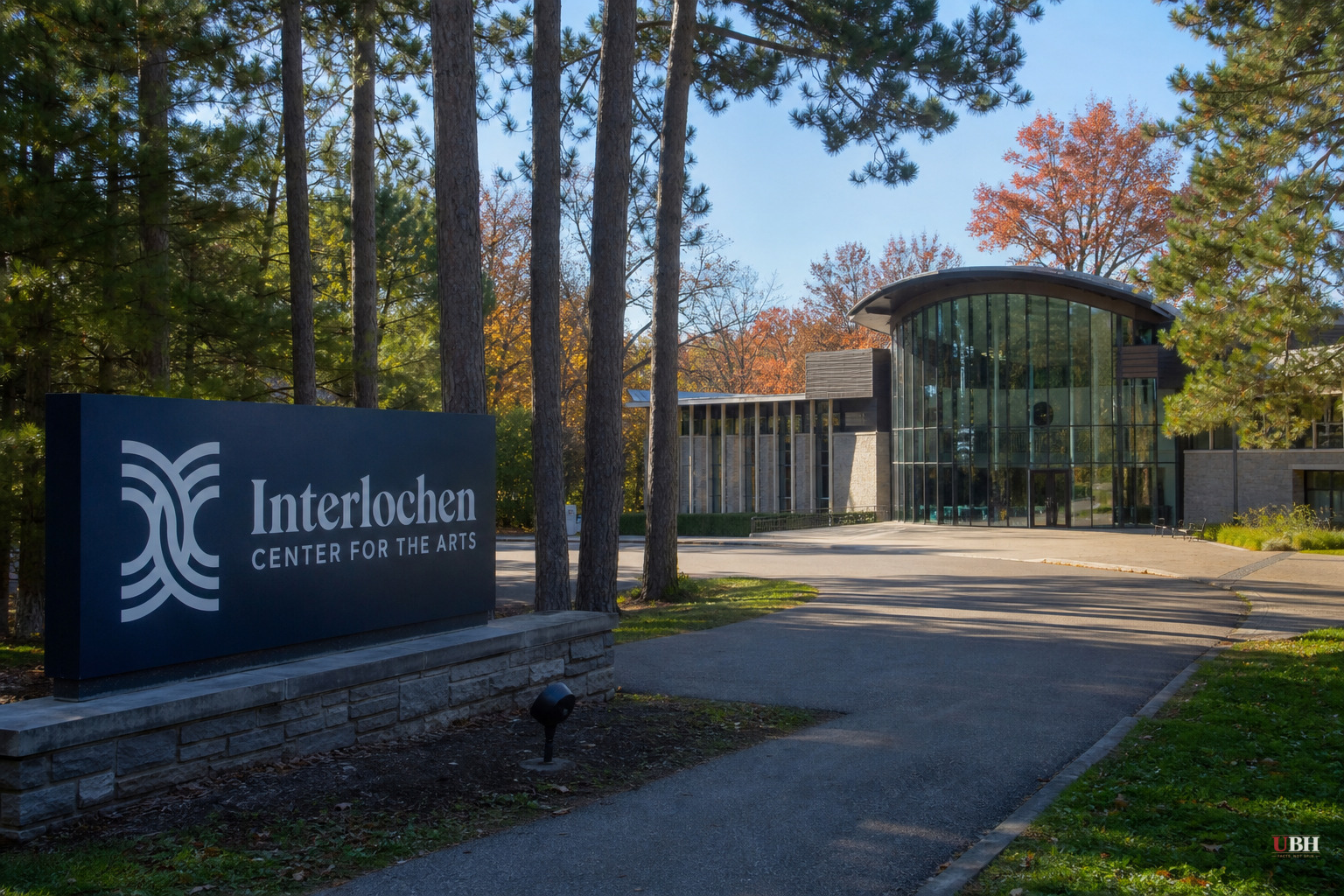
Interlochen Center for the Arts, the elite Michigan boarding school and summer camp that helped launch the careers of Josh Groban, Norah Jones and Chappell Roan, released an independent report last month documenting roughly 70 allegations of sexual abuse by nearly 50 adults employed or affiliated with the school between the 1950s and the 2010s, according to NPR.
The investigation was conducted by Sanghavi Law Office, which Interlochen hired in 2024 after an alumna came forward about abuse she said she suffered in the 1970s at the hands of a longtime faculty member and administrator, NPR reported.
Among the allegations: Jeffrey Epstein, an Interlochen alumnus and financial benefactor, and his accomplice Ghislaine Maxwell used the campus to identify and groom young girls. NPR first reported in February that Epstein met and recruited two teenagers while visiting the school. Epstein died in prison in 2019, NPR reported.
The report makes clear the abuse allegations extend far beyond Epstein and Maxwell. It describes a pattern across decades in which adults at the school had unsupervised, one-on-one access to students who were living away from their parents, often for the first time, and had limited ability to contact home. The report says some students were additionally vulnerable because of their age, their sexual identity, or simple lack of life experience, and that many were too afraid to report what happened to them.
Paul Busch is one of those students. He told NPR he was 16 in 2005 when his ballet teacher at Interlochen sexually abused him. Busch said he idolized the teacher and was desperate to prove himself as a dancer, a dynamic he described as creating "the perfect condition" for abuse. He said his motivation was rooted in wanting to feel "enough" and "worthy of love." Busch is now going public with his account for the first time, 21 years after the abuse occurred.
Interlochen's response, in a letter to its community released alongside the report, states the school today is "fundamentally different from the institution described in this report." In a statement to NPR, the school pointed to current safety measures, including a team of school counselors, social workers and a psychologist, as evidence of reform. In that letter, Interlochen also named three former staff members and one former trustee accused of sexual misconduct; NPR reported that only one of them, Thomas Clower — the teacher who pleaded guilty to abusing Busch — is still alive.
Busch isn't satisfied. "They get to say, 'Case closed,'" he told NPR. "That is completely unacceptable because, guess what, my life is still open."
His complaint gets at something the report itself doesn't resolve: an institution can commission an investigation, publish findings and describe itself as changed, but that process doesn't undo harm to the people who lived through it. A report is an accounting of the past. It's not automatically a remedy for the people the past happened to.
At the same time, Interlochen's decision to hire an outside law firm and publish the results, rather than bury or minimize the allegations, is itself notable. Plenty of institutions facing decades-old abuse claims choose silence, lawyers and NDAs over independent investigations. Interlochen apparently didn't go that route, at least this time. Whether the school's current safety infrastructure — counselors, social workers, a psychologist — is adequate protection going forward is a separate question the report doesn't fully answer, and one outside child-safety experts would need to independently evaluate rather than take on the school's word alone.
NPR's reporting doesn't indicate whether any of the nearly 50 adults named in the allegations still face possible criminal liability, whether law enforcement has been notified of specific claims, or whether any of the alleged abusers beyond Epstein and Maxwell have been named publicly, charged, or convicted. That leaves an open question: does the release of this report trigger any actual criminal referrals, civil litigation, or further law enforcement action, or does it end with an internal acknowledgment and a promise that things are different now?
For Busch and other survivors, that's the unresolved part. A report can describe what happened. It doesn't, by itself, hold any specific individual accountable, and it doesn't undo 21 years of living with what was done to a 16-year-old kid who just wanted to be a dancer.
Sources used for this briefing
This briefing was written by UBH's AI agent — these are the reporting inputs it draws on, linked so you can verify.


