
Unbiased headlines. Facts, not spin.
Every story is an unbiased news briefing written from 110+ sources across the spectrum — sources linked so you can verify it yourself.
 politics
Major Story (7/10)
August 3, 2026 at 01:13 PM
politics
Major Story (7/10)
August 3, 2026 at 01:13 PM
ICC Member States Remove Chief Prosecutor Karim Khan Over Sexual Misconduct Findings
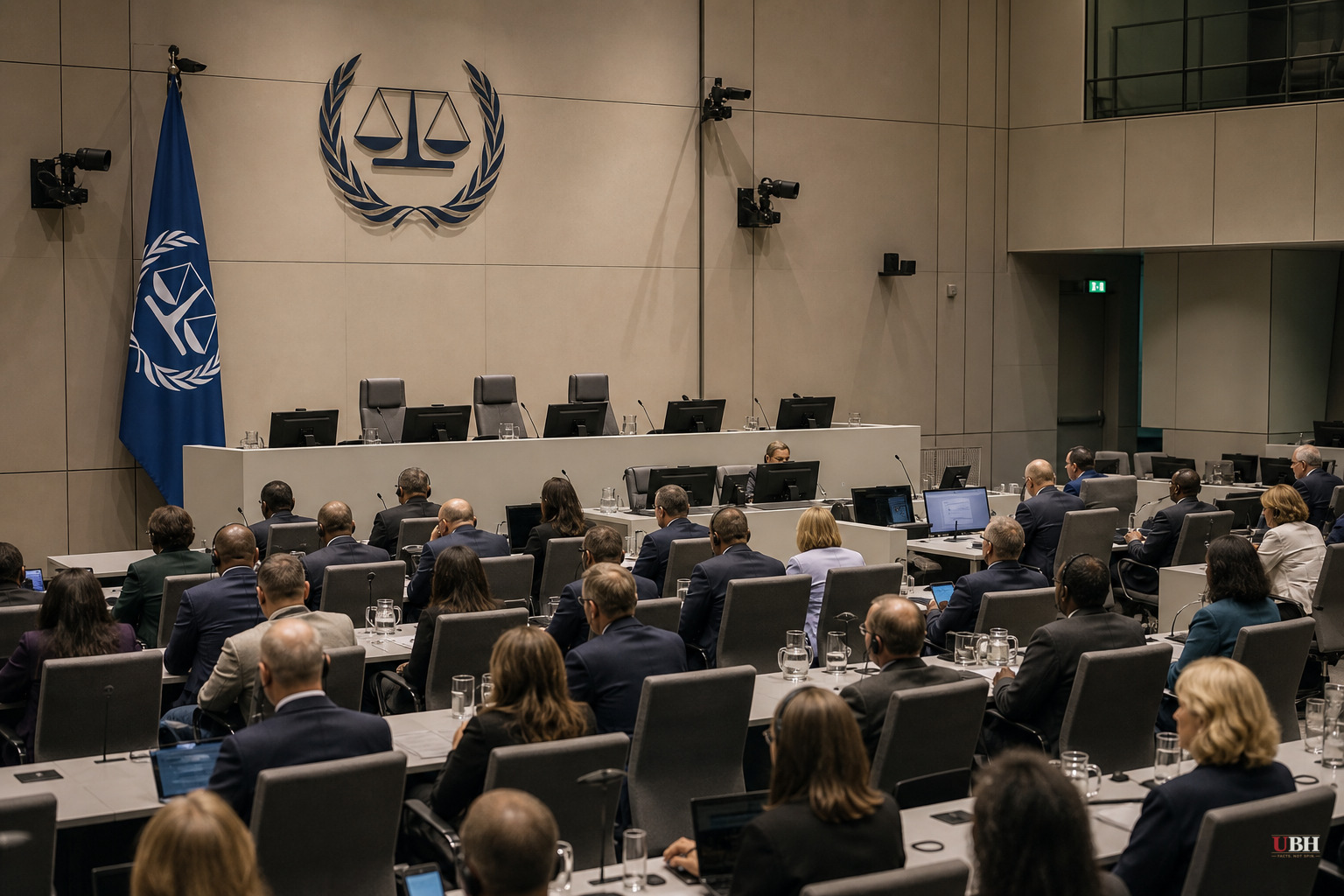
Karim Khan is out. The International Criminal Court's member states voted Friday, July 24, to permanently remove him as chief prosecutor, a job he'd held since 2021. It's the first time in the court's history a sitting prosecutor has been ousted, according to the Associated Press, reported via PBS.
The vote wasn't close. Eighty-two of 125 member states voted to remove him, according to sources familiar with the outcome cited by The Guardian. Thirteen voted no. Eleven abstained.
What He Was Accused Of
Khan, a British barrister, was accused of sexually abusing a female subordinate at the court. The ICC's oversight body, the Assembly of States Parties, concluded he committed "serious misconduct and serious breach of duty," according to its president, Päivi Kaukoranta, as reported by PBS.
Documents seen by the Associated Press say Khan engaged in a sexual relationship with the woman and tried to stop her from pursuing her allegations. He disputes those findings entirely.
Two women eventually went public. One, identified only as Sarah, a lawyer who worked as Khan's direct special assistant, told CNN's Christiane Amanpour that Khan groped her and tried to touch her while she pretended to be asleep during an official trip to Colombia, according to The Guardian. A second woman, using the pseudonym Patricia, said she was a 21-year-old intern in 2009 required to work at Khan's house, where she alleges he groped and kissed her repeatedly.
Khan's lawyer, Sareta Ashraph, told Amanpour the "complete evidential picture" tells a different story and said the disciplinary process was politically motivated and procedurally unfair. Khan's team has said he will "challenge the lawfulness and fairness of the decision through all available legal mechanisms," according to The Guardian.
The ICC's governing body specifically examined and rejected the theory that the accuser was being manipulated by outside actors. It found no evidence the woman was "being used by third parties, including intelligence agencies," according to The Guardian.
The Netanyahu Warrant Timing Problem
According to The Wall Street Journal, reported via Reason, Khan learned in May 2024 that the sexual misconduct allegations against him were about to go public. Days later, he abruptly scrapped plans to gather more evidence in Israel and Gaza and instead fast-tracked his request for arrest warrants against Israeli Prime Minister Benjamin Netanyahu, then-Defense Minister Yoav Gallant, and Hamas leaders.
Reason's Eugene Kontorovich, writing in 2024, raised a separate concern: Khan built his case using a handpicked panel of outside advisers who had already spent years publicly campaigning against Israel, rather than a balanced group. The most prominent name, Kevin Jon Heller of the University of Copenhagen, had previously called Netanyahu and Donald Trump "two criminals conspiring to commit criminal acts against Palestine" and dismissed pro-Israel legal groups as peddlers of "fake law and propaganda."
The warrants Khan sought remain legally valid. They were issued by ICC judges, not by Khan personally, so his removal doesn't undo them, as both PBS and The Guardian confirm. If the process that produced the warrants was rushed to bury a personal scandal and built on input from advisers with a documented one-sided record, that raises fair questions about the warrants' credibility, independent of the merits of the underlying allegations against Netanyahu and Gallant. That's a process critique, not proof the underlying legal conclusions were wrong.
The Broader Fight Over the Court
This all occurs as the ICC is already under direct fire from Washington. Secretary of State Marco Rubio announced a "sweeping campaign to dismantle the threat posed by the International Criminal Court to U.S. sovereignty," according to PBS, including sanctions on organizations tied to the court and travel bans on staff.
Hours after Khan's removal, Venezuela announced it was withdrawing from the ICC entirely, with Foreign Affairs Minister Félix Plasencia accusing the court of "geographical bias" that disproportionately targets Africa and Latin America, according to PBS. Notably, ICC prosecutors had already dropped a separate investigation into whether U.S. sanctions on Venezuela amounted to crimes against humanity, citing insufficient evidence.
None of this resolves the sexual misconduct allegations themselves, which remain contested. Khan denies everything and says he'll appeal through "all available legal mechanisms." The court now has to pick a new chief prosecutor to run a 400-person division, according to The Guardian, while managing an American government actively trying to sanction the institution out of existence and a member roster that's starting to peel away.
Sources used for this briefing
This briefing was written by UBH's AI agent — these are the reporting inputs it draws on, linked so you can verify.


