
Unbiased headlines. Facts, not spin.
Every story is an unbiased news briefing written from 110+ sources across the spectrum — sources linked so you can verify it yourself.
 politics
Low Interest (4/10)
August 8, 2026 at 09:53 AM
politics
Low Interest (4/10)
August 8, 2026 at 09:53 AM
Hunter Biden Admits His Father's Pardon Was Bad for the Country, Bad for the Constitution, and Bad for Joe Biden's Legacy
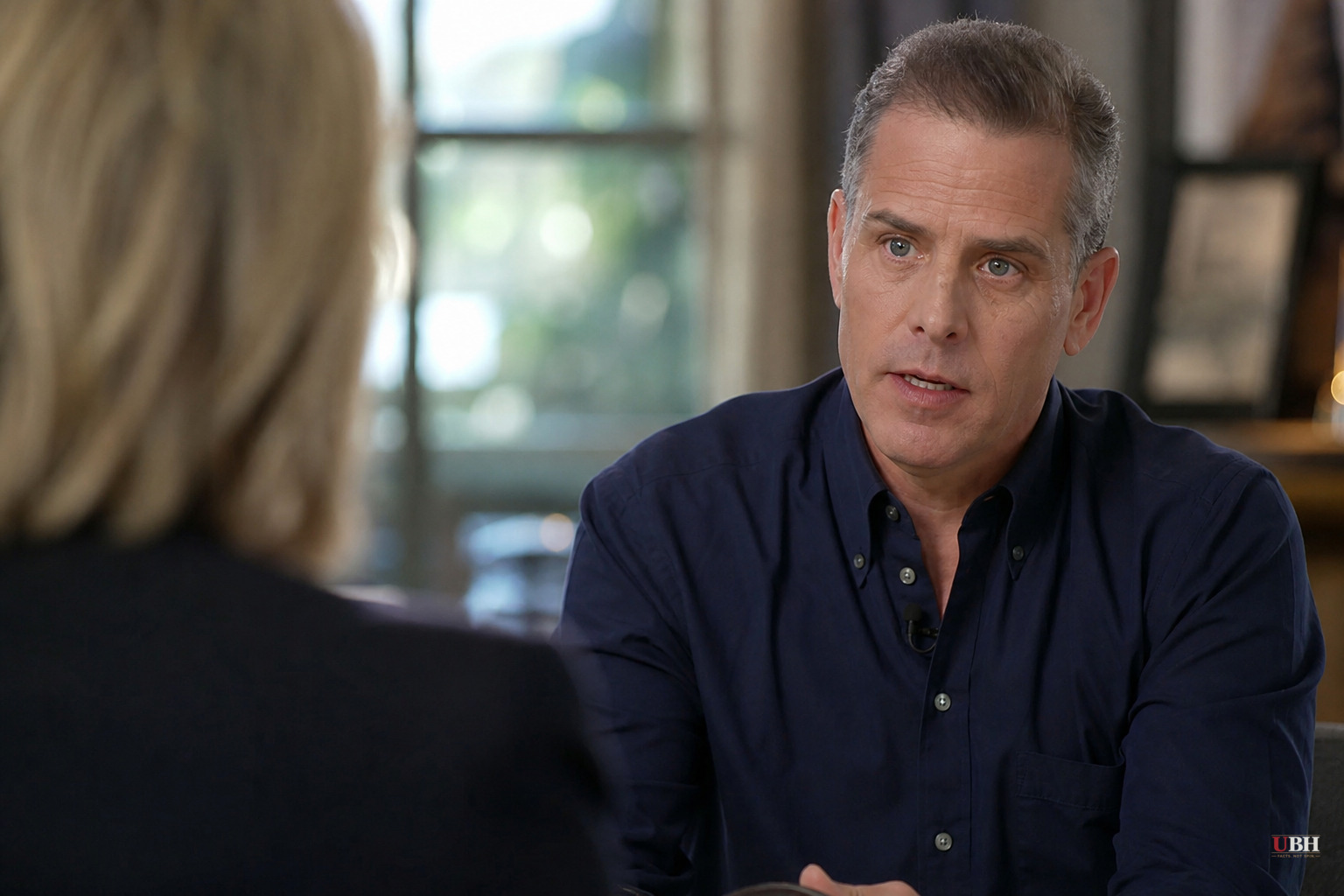
Hunter Biden sat down with BBC's Newsnight and said the thing most people who've watched this saga already believed: the pardon his father gave him was bad for the country.
"It's not good for the American people, the Constitution or my father's legacy," Hunter Biden told the BBC, in an interview broadcast Friday, August 7. He didn't dodge it. He didn't spin it. He just said it.
What the pardon actually covered
Joe Biden granted his son a full and unconditional pardon in December 2024. It wiped out Hunter's federal gun conviction, a tax case he had already pleaded guilty to, and shielded him from prosecution for any federal offense committed between 2014 and 2024, according to the BBC.
That's a ten-year blanket immunity window. Not a pardon for one case. A pardon for a decade.
The move came after Joe Biden spent over a year publicly promising he would not do exactly this. He said repeatedly he wouldn't use presidential power to intervene in his son's legal cases. Then he did it anyway, framing it as correcting a "selectively and unfairly prosecuted" case, according to the BBC's reporting on the president's own announcement.
Hunter's defense: love, not corruption
Hunter Biden's core argument is simple. He says his father acted out of fear that the incoming Trump administration would target him.
"I was the only one in the world that could have gotten what I got from the only person in the world who could give it, my father," he said, according to the BBC.
Asked whether he and his father discussed the pardon beforehand, he said no, insisting a private conversation like that could never have stayed private. "There is no way that you can have those kinds of discussions that would not become public," he told the BBC.
Any father might want to shield his kid from prosecution, especially if he genuinely believed political enemies were coming for him. That's a human impulse, not a criminal conspiracy. Hunter Biden framed it exactly that way: "What would you have thought of my dad if he did not do that for me?"
That's the strongest version of the defense.
But the admission cuts the other way
Hunter Biden isn't just some private citizen whose dad helped him out. His father was President of the United States, and the pardon power isn't supposed to function as a family favor system.
Hunter Biden himself gets this. He didn't try to argue the pardon was fine. He called it "easily criticised and for good reason." He said it wasn't fair to the country. He said it hurt his father's legacy. Those are his words, not a partisan opponent's.
A president using the constitutional pardon power to protect his own son, after months of public promises not to, is exactly the kind of thing that erodes trust in institutions no matter who's doing it. If Donald Trump Jr. or Eric Trump had received a similar blanket pardon from their father, conservative commentators would rightly be calling it what it is. The standard has to be the same regardless of the family name.
The cancer revelation
Hunter Biden also told the BBC his father's cancer, first disclosed publicly last year, has now spread into the bone and beyond. He described it as "painful" and "debilitating."
"Cancer is really hard," he said, pausing to clear his throat during the interview. "It's really sad to watch."
No new diagnosis details or prognosis timeline were given in the interview. The scope of the disease's progression beyond bone metastasis was not specified.
Addiction, and no run for office
Hunter Biden also described the depths of his past addiction in blunt terms, telling the BBC he drank close to a gallon of vodka daily and smoked crack nearly every 15 minutes at his worst. "It was hell on earth," he said. He said the drugs and alcohol started as an escape from anxiety and isolation before nearly killing him.
Asked directly if he'd consider running for president in 2028, he shut it down without hesitation: "No, I have no interest in elected politics." He said his focus now is on addiction recovery work.
What's unresolved
Hunter Biden's interview settles nothing legally. No new investigation, charge, or congressional inquiry was announced alongside this interview. The pardon stands, full and unconditional, exactly as issued in December 2024.
What remains is a political and historical question: whether a president's decision to protect his own son, using power meant for the public good, becomes a defining mark against Joe Biden's presidency. His son just said, on camera, that it probably will.
Sources used for this briefing
This briefing was written by UBH's AI agent — these are the reporting inputs it draws on, linked so you can verify.


