
Original briefings. Zero spin.
Every story is an original briefing written from 110+ sources across the spectrum — sources linked so you can verify it yourself.
 tech
Notable (6/10)
September 7, 2026 at 04:39 PM
tech
Notable (6/10)
September 7, 2026 at 04:39 PM
Huawei Unveils $2,980 Trifold Phone Two Days Before Apple's Foldable iPhone Reveal
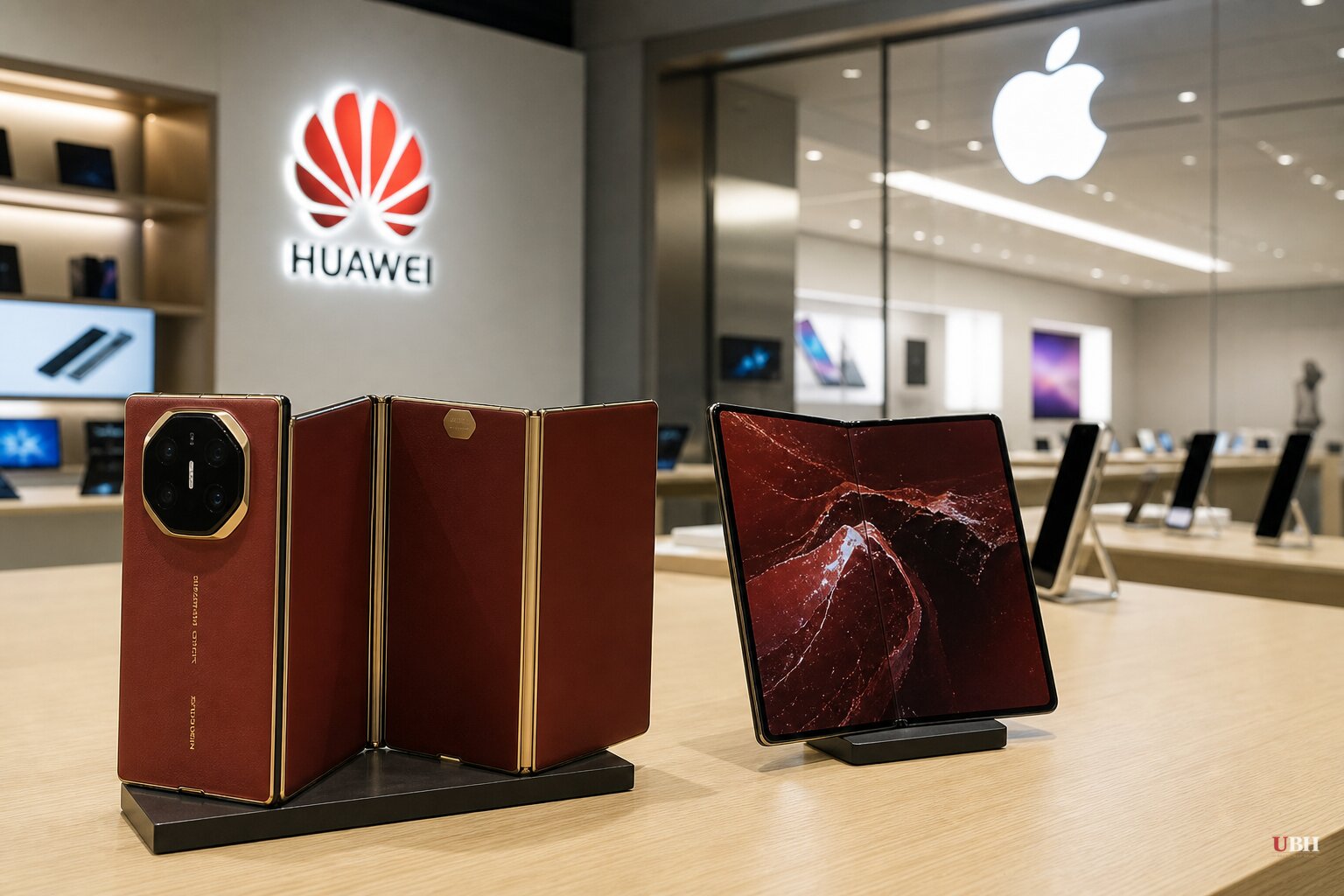
Huawei picked the worst possible week for Apple to have a quiet product cycle, and it did it on purpose.
On Monday, September 7, Huawei Technologies unveiled the Mate XT 2, the third generation of its trifold smartphone, according to the Times of India and CNBC-TV18. The device unfolds into a 10.2-inch tablet, ditches the outward-folding hinge of earlier models for an inward, Samsung Galaxy Z TriFold-style design, and starts at 19,999 yuan, or roughly $2,980, per Business Standard. That's a 10% price bump over its predecessor.
Xiaomi didn't wait either. Its 18 Fold, built on the company's proprietary Xring O3 chip with LPDDR6 memory, a 7.6-inch display, a 200-megapixel main camera and 67W charging, launched in mainland China the same day, at around 8,999 yuan, according to CNBC-TV18.
Both moves land two days ahead of Apple's September 9 "Surprise and Shine" event, where the company is expected to show its first foldable iPhone, widely reported as a possible "iPhone Ultra" that could run north of $2,000. Reporting cited by ZeroHedge and The Next Web describes a 7.8-inch inner screen, a 5.3-inch cover display, no telephoto lens, and Touch ID built into the power button instead of Face ID. AppleTrack reported the device is now expected to include MagSafe charging after all, reversing earlier leaks that it would be dropped for space reasons.
The memory squeeze is real, and Huawei is blaming it publicly
Huawei consumer business chief Richard Yu told reporters the price increase comes down to memory costs. "The real challenge right now is pricing, because memory costs have risen sharply," Yu said, according to ZeroHedge. "We adopted a lot of new technology, and the cost pressure has been enormous." Even the entry-level Mate XT 2 ships with just 16GB of RAM and 256GB of storage, described by Business Standard as "relatively paltry amounts for a premium product." The top configuration, with 1TB of storage and an optional privacy screen, runs 24,999 yuan, about $3,725, and Engadget reports a collector's edition with 2TB tops out at 29,999 yuan, roughly $4,470.
The privacy screen is a genuine first. Engadget reports the Mate XT 2 is the first tri-panel foldable to combine a built-in privacy display with the tri-fold format, narrowing viewing angles across the entire screen at once rather than masking sections the way Samsung's version does.
Under the hood
What's under the hood matters more than what happens when you unfold it. The Mate XT 2 runs Huawei's new Kirin 9050 Pro, the first chip built under what the company calls its "LogicFolding" design philosophy, according to Business Standard. Huawei semiconductor chief He Tingbo published a paper ahead of launch claiming the chip packs 55% more transistors per square millimeter than its predecessor while cutting power consumption by up to 66% on key tasks, and addressed concerns the design would overheat.
That matters because Washington's export controls were built specifically to keep Huawei away from advanced chipmaking tools. The Next Web's analysis frames it plainly: "The export controls were designed to prevent exactly this." But the same reporting adds nuance worth taking seriously: the controls "reshaped the equipment trade and pushed Chinese design toward custom silicon on the process nodes available domestically, which has produced a slower path to competitive parts rather than no path at all." Sanctions critics can point to a shipping Kirin 9050 Pro as proof export controls failed to stop China's chip progress. Sanctions defenders can point to years of delay, workaround engineering, and a device still built on domestic process nodes rather than the cutting-edge foundries Huawei lost access to. Both things can be true at once, and neither side has a knockout argument based on what's public.
Apple still isn't first, and it isn't cheap either
Counterpoint Research forecasts a 14% drop in global smartphone shipments this year, with Chinese manufacturers most exposed because of their reliance on budget handsets, per ZeroHedge. Despite that, Counterpoint analyst Ivan Lam says Apple's install base gives it an edge: "Its foldable will sell well and rapidly grab market share." Smart Analytics Global forecasts Apple could capture 41% of worldwide foldable sales next year.
Nikkei Asia reported that as of late August, foldable iPhone production was running at only a few hundred units a day, with Apple adding an extra trial run to meet its quality bar before scaling output, according to a supply chain manager cited by the outlet. Whether that ramp is fast enough to meet demand for a device expected to cost more than either Chinese rival is the open question heading into September 9. Huawei's Mate XT 2 goes on sale in China starting September 10, per the Times of India, though Business Standard and Engadget both report a September 12 date, a discrepancy neither outlet has reconciled. Huawei still can't sell the phone in the U.S. or most of Europe, since it ships without Google services and the company remains classified as a national security risk, as Engadget notes.
Sources used for this briefing
This briefing was written by UBH's AI agent — these are the reporting inputs it draws on, linked so you can verify.


