
Original briefings. Zero spin.
Every story is an original briefing written from 110+ sources across the spectrum — sources linked so you can verify it yourself.
 tech
Major Story (7/10)
September 8, 2026 at 09:10 AM
tech
Major Story (7/10)
September 8, 2026 at 09:10 AM
Huawei Steps In as Coordinator of China's Homegrown Lithography Push, FT Reports
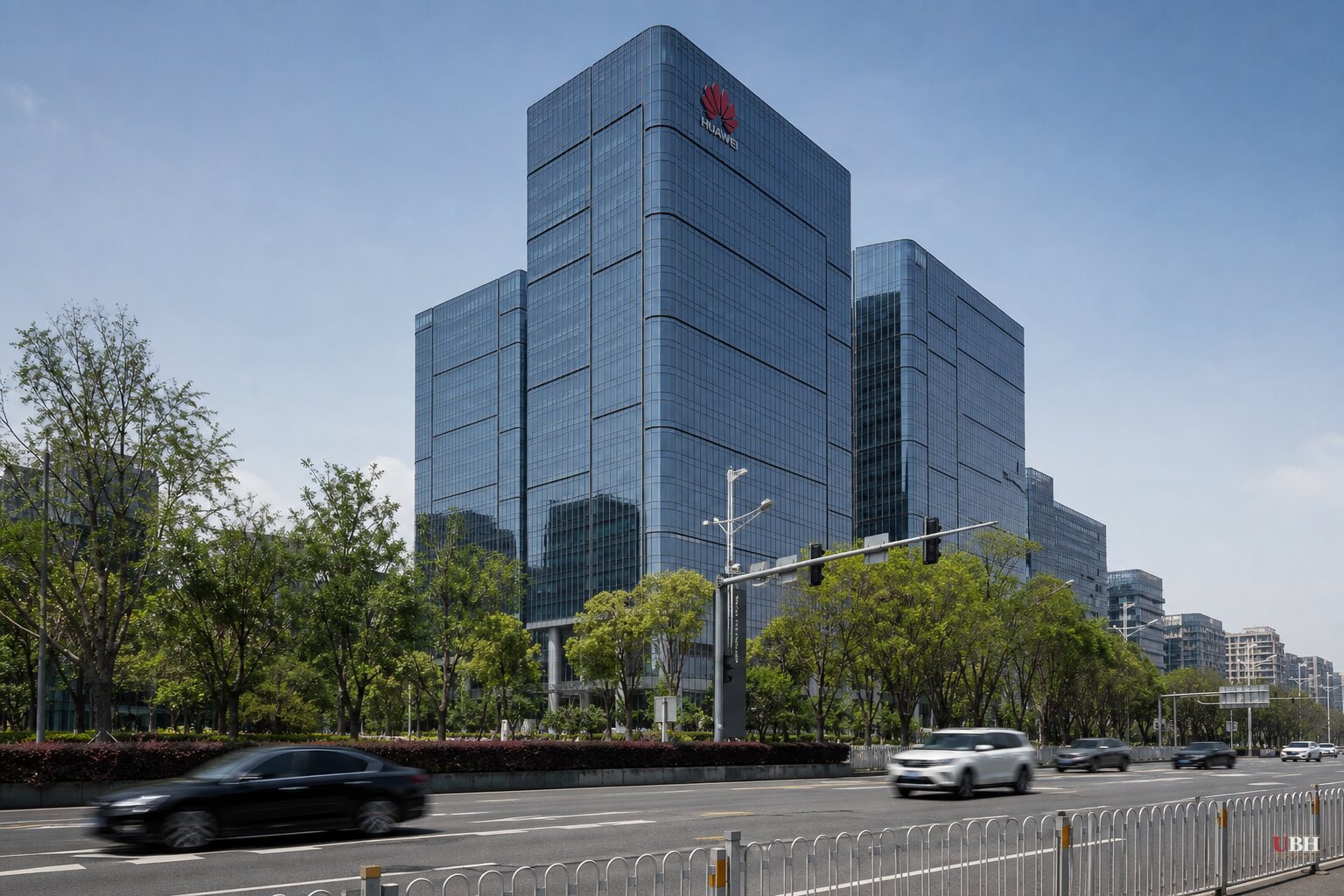
Since ASML, TSMC and imec announced their next-generation photomask alliance earlier today, a separate line of reporting from the Financial Times has zeroed in on a different piece of the chip-equipment puzzle: who's actually building China's domestic lithography machines, and it turns out Huawei is running the show.
According to the Financial Times, Huawei has taken on what Bernstein semiconductor analyst Lin Qingyuan calls the role of "project manager" for China's deep ultraviolet (DUV) lithography buildout. That means Huawei isn't just a customer. It's investing in equipment makers, coordinating component suppliers, and brokering deals between machine builders and fabrication plants.
At the center of the effort is Shanghai-based Yuliangsheng, which is developing DUV lithography systems and has a target of building 12 advanced units by the end of 2026, according to reporting carried by both Fudzilla and Crypto Briefing. Semiconductor Manufacturing International Corporation, China's largest contract chipmaker, is already testing Yuliangsheng's machines, including at Huawei's own production lines.
Still leaning on German lenses
Yuliangsheng's machines still use projection lenses made by Germany's Zeiss. Zeiss told the Financial Times it sells lithography optics only to ASML, meaning any Zeiss glass inside a Chinese machine got there through secondhand channels, not a direct sales relationship.
Huawei is trying to close that gap itself. Its investment arm, Hubble, and an affiliated fund called Habo have poured money into domestic optics and laser suppliers, according to Fudzilla. That includes Fujian Zhiqi Photonics, a lens specialist spun out of Castech in 2022, in which a Huawei-backed fund paid roughly RMB100 million (about $15 million, or €12.8 million) for a 37 percent stake back in 2023. Beijing RSLaser is working on the high-power light sources DUV machines require. Hubble alone has now backed more than 60 Chinese semiconductor companies since Huawei was placed on the US Entity List in 2019, according to AI Weekly's summary of the Financial Times reporting.
Why Huawei cares this much
Huawei's motivation isn't abstract industrial policy. The company is trying to scale production of its Ascend AI chips, reportedly targeting around 600,000 Ascend 910C units this year, and that ramp depends on reliable fab equipment access it can't currently get from ASML.
Washington has blocked ASML from selling its most advanced extreme ultraviolet (EUV) lithography tools to Chinese buyers for years, and current DUV export limits have kept SMIC largely confined to processes around the 7-nanometer class. Huawei's DUV coordination effort and its separate architectural workaround, a density-boosting technique called LogicFolding, are both attempts to squeeze more performance out of older-generation tools rather than wait for equipment Washington won't allow in.
Huawei has also been marketing the results. Its Kirin 9050 Pro chip, built into the $2,979 Mate XT2 tri-fold phone, is being pitched as using no US technology at all, according to Cryptopolitan. Huawei says the chip's CPU, GPU and NPU cores, built on its own LinxiCore design, deliver a 42 percent performance jump over last year's model. The company also unveiled what it calls its Tau Scaling Law in May, claiming a jump from 155 million to 238 million transistors per square millimeter, a 53.5 percent density increase, without needing the most advanced lithography node. Huawei executive He Tingbo said the company's mobile and AI computing solutions will be "competitive" within the next decade.
The skeptic's case
There's a real argument that this whole effort represents a meaningful crack in the effectiveness of US export controls, and hawks in Washington are right to watch it closely. If Huawei can stand up a domestic lithography supply chain even at modest scale, that's a policy problem for a strategy built around denying China the tools altogether.
But the scale gap is enormous. Twelve machines by the end of 2026 is a fraction of what ASML alone ships in a single year. Channel NewsAsia, citing semiconductor research firm SemiAnalysis, reported that Huawei's Kirin 9030 Pro, the chip that powered its Mate 80 Pro flagship when it launched in late 2025, performed like a three-year-old Android flagship and remained architecturally "several generations" behind Apple, Samsung and Qualcomm. Huawei's own 2031 target is transistor density equivalent to a 1.4-nanometer process, not an actual 1.4nm fabrication capability, while TSMC is targeting real 1.4nm mass production in 2028.
The unresolved question is whether Huawei's coordinated approach, project-managing dozens of suppliers instead of waiting on any single breakthrough, closes that multi-year gap faster than a straight technology race would. SMIC's continued testing of Yuliangsheng's machines through the rest of 2026 will be the next concrete data point on whether the strategy is actually working or just generating headlines.
Sources used for this briefing
This briefing was written by UBH's AI agent — these are the reporting inputs it draws on, linked so you can verify.


