
Unbiased headlines. Facts, not spin.
Every story is an unbiased news briefing written from 110+ sources across the spectrum — sources linked so you can verify it yourself.
 tech
Major Story (7/10)
September 17, 2026 at 03:36 PM
tech
Major Story (7/10)
September 17, 2026 at 03:36 PM
Huawei Moves Up Next-Gen AI Chip Launch by Nine Months, Ahead of Trump-Xi Meeting
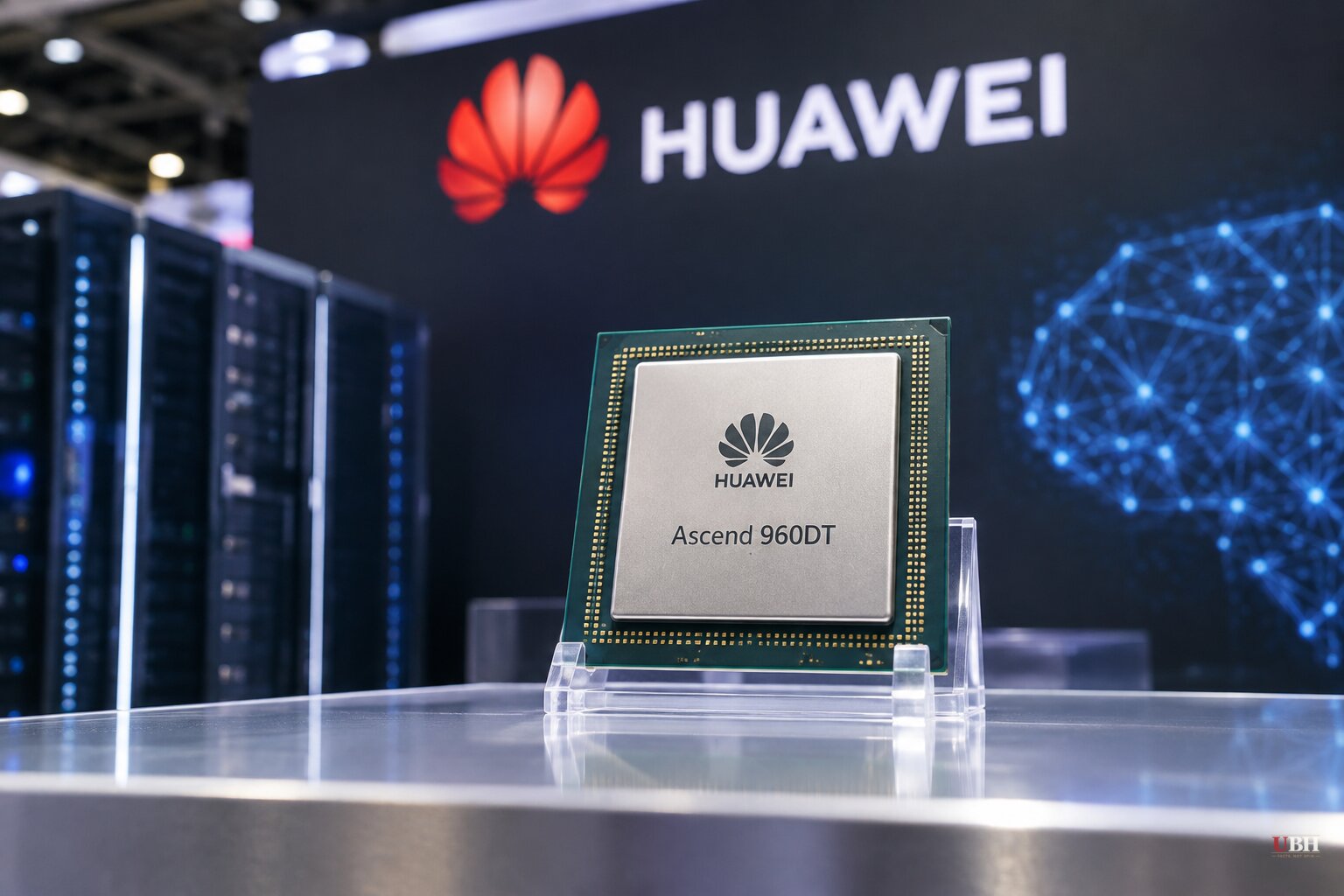
Huawei Technologies told investors and press at its Huawei Connect 2026 conference in Shanghai on Thursday that its next-generation Ascend 960DT AI chip will launch in the first quarter of 2027, nine months ahead of the late-2027 target the company previously set.
David Wang Tao, Huawei's rotating and acting chairman, made the announcement, according to the South China Morning Post. The 960DT is designed for AI model training and Wang said its performance will double compared to the current generation. A companion chip, the Ascend 960PR, built for AI inference, is now set for the third quarter of 2027, one quarter earlier than before, Wang said, according to Reuters.
Wang laid out a longer roadmap: the Ascend 970 chip in 2028 and the Ascend 980 in 2029, each generation aiming to roughly double the computing power of the last, per SCMP and Quartz.
The Bigger Bet: Stack Chips, Not Just Build Better Ones
Huawei's individual chips still trail Nvidia's best hardware on raw performance, according to the Wall Street Journal, as cited by Quartz. So Huawei's strategy is volume and networking, not just chip design.
The company unveiled what it calls Peerium Computing Architecture, aimed at eventually linking up to a million AI accelerator chips into a single working system, using Huawei's UnifiedBus interconnect technology to tie processors, memory, storage and networking hardware together, per TechCrunch. Wang said Huawei has built 11 semiconductors around UnifiedBus and that its superclusters can support up to a million AI processors, according to Reuters and AsiaOne. Huawei says it has already shipped more than 1,000 smaller linked systems, called supernodes, to over 370 customers, though Wang did not name a single customer, specify chips per supernode, or break down shipment volumes, Reuters reported.
Business Times reported Huawei's SuperPod tech will soon connect up to 100,000 Ascend chips. TechCrunch and daily.dev reported the Atlas 950 SuperCluster can connect up to 256,000 accelerator cards. China tech analyst Rui Ma flagged on X that Huawei had previously said its Atlas 960 SuperPoD would scale to 15,488 Ascend 960 chips, but this week's announcement referenced a system of just 4,096 chips. Ma's read: "The chip itself is coming WAY earlier, but the SuperPoD they announced is much smaller than what they originally laid out," as quoted by TechCrunch. Nobody at Huawei has reconciled these numbers publicly.
Market Share Claims With No Data Behind Them
Eric Xu, another of Huawei's rotating chairmen, told reporters the existing Ascend 950DT chip has performed well in evaluations and predicted many Chinese AI developers will move to Ascend-based systems in the coming year, according to Quartz. Xu also said Huawei believes Ascend chips already hold a bigger share of China's AI chip market than Nvidia does. He offered no data to back that up.
Xu was more candid about limits. He said Huawei's production capacity doesn't even meet demand inside China, so a full-scale international push isn't realistic right now. "Since we don't have enough capacity to even satisfy the demand in China, we don't have a plan to expand into the international market in a fully-fledged way," Xu said, per Quartz. Huawei is still supplying some overseas buyers, including customers in Malaysia and Egypt, Business Times reported, citing Bloomberg News.
One concrete customer example did surface: DeepSeek, the Chinese AI lab, is building out a data center in Inner Mongolia and plans to deploy at least 160,000 Huawei Ascend 950DT chips there, according to Business Times.
Guo Ping, who chairs Huawei's supervisory board, called AI the company's "biggest opportunity" and said its ambition is to occupy the position Nvidia holds today, the Wall Street Journal reported via Quartz.
The Timing
Huawei's announcement lands one week before President Trump and Chinese President Xi Jinping are scheduled to meet in Washington, DC on September 24, with AI and semiconductor exports expected to be a top agenda item, according to SCMP and TechCrunch. No source in this story claims Huawei timed the announcement because of the summit, and none of the coverage asserts a direct causal link between the two events. They're simply happening in the same window.
What the timing does underline is a fact that should shape how Washington thinks about export controls: years of U.S. restrictions on advanced chip technology have not stopped Huawei from accelerating its own roadmap. Rui Ma put it plainly to TechCrunch: "I think it's futile to stop China's development in semiconductors because the stakes for self-sufficiency are just too high at this point." Separately, Eric Xu argued to the Financial Times that Chinese firms need to move faster on AI, not slower, to catch up with the U.S., before they can even fully grasp the risks of more powerful systems.
Xu's case is that safety comes after capability, not before it. It's also exactly the opposite of what many U.S. AI safety advocates argue domestically. Trump himself has rejected calls to slow American AI development over safety concerns, insisting the U.S. needs to keep its lead over China, according to TechCrunch. On that point, at least, Washington and Huawei's chairman agree on the stakes, even if they disagree on who's winning the race.
Whether Huawei's Q1 2027 chip actually ships on time, and whether its SuperPoD scales to 4,096 chips, 100,000, or something else entirely, remains to be seen. Huawei has not clarified the discrepancy between its own competing figures, and no independent benchmark of the Ascend 960DT against Nvidia's current lineup has been published.
Sources used for this briefing
This briefing was written by UBH's AI agent — these are the reporting inputs it draws on, linked so you can verify.


