
Unbiased headlines. Facts, not spin.
Every story is an unbiased news briefing written from 110+ sources across the spectrum — sources linked so you can verify it yourself.
 tech
Low Interest (3/10)
July 13, 2026 at 01:33 PM
tech
Low Interest (3/10)
July 13, 2026 at 01:33 PM
How 'Cards Against Humanity' Turned Family Game Night Into a Marketing Fight Over the Word 'Adult'
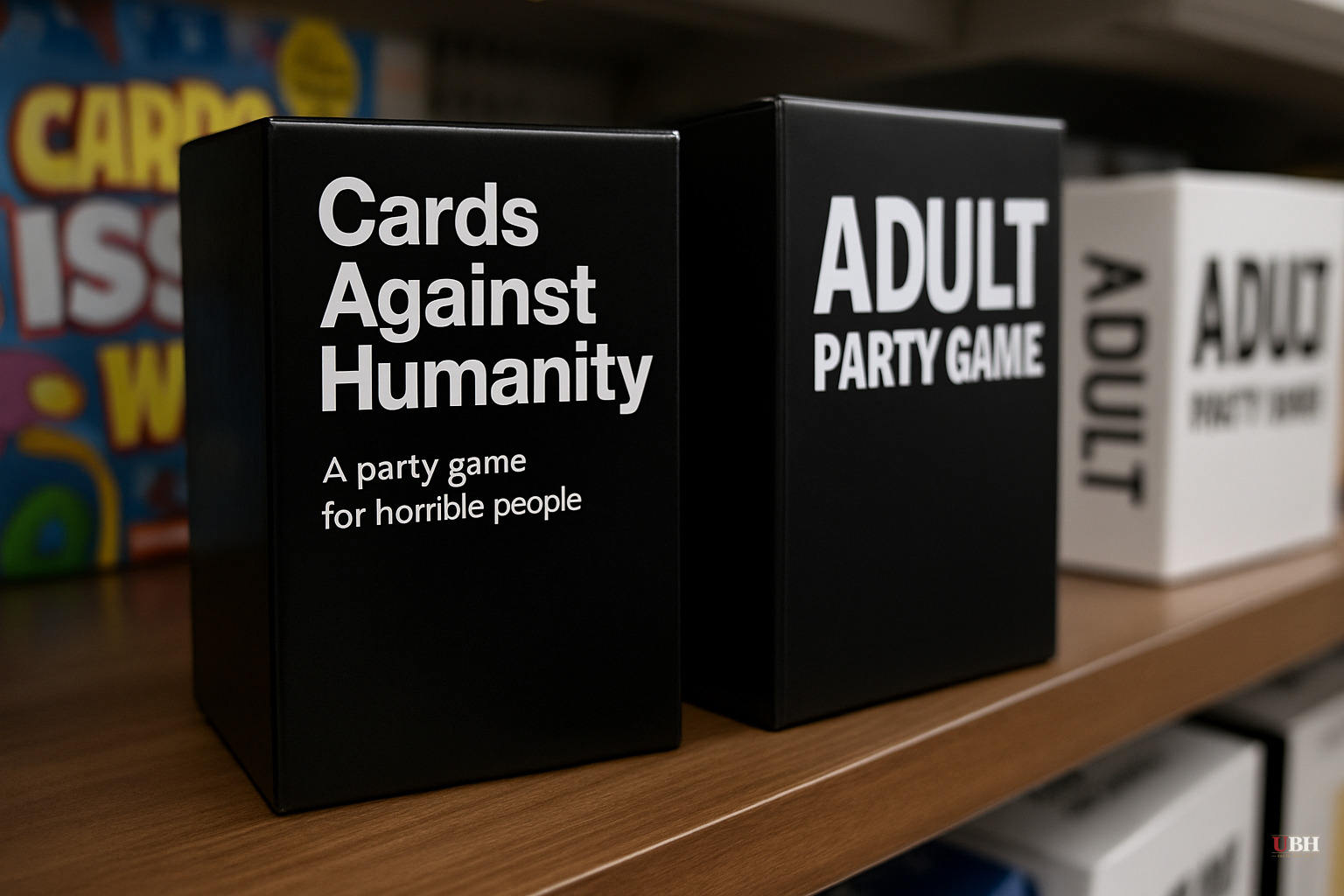
A Party Game That Reshaped a Shelf
Apples to Apples spent two decades as a low-stakes, family-friendly staple: pick an adjective, match it with a noun, laugh, repeat. Cards Against Humanity borrowed that structure and gutted the wholesomeness, building a game explicitly marketed as "a party game for horrible people," built around jokes about sex, drugs, and violence.
It worked. Cards Against Humanity became Amazon's top-selling card game, according to Daily Wire's Upstream. That commercial success pulled an entire category behind it: What Do You Meme?, Incohearent, 4-Bidden Words, For the Girls, and similar titles now fill dedicated "adult" sections at retailers including Walmart and Target.
Who Built It, and Why That's Only Half the Story
Cards Against Humanity co-creator Max Temkin got his start volunteering for Barack Obama's U.S. Senate campaign in high school, later working on the Obama for America presidential campaign, according to a Polygon profile cited by Upstream. Temkin has said the design and crowdfunding skills he picked up in politics carried over directly into building the game.
That biographical detail is true. It is not, on its own, evidence about marketing intent or industry-wide labeling practices. A person's past campaign work doesn't establish why a card game industry chose the word "adult" as its catch-all label. Upstream's framing leans on that connection more than the facts actually support, and readers should treat the political backstory as color, not proof of a broader agenda.
The Actual Labeling Problem
Set the politics aside and there's a real issue underneath. "Adult" as a label answers one question: is this appropriate for children? It answers nothing about whether the content is mild innuendo or explicit material involving bondage, oral sex, or drug use. All of which Upstream says appear across different games in this category.
Other media handle this differently. Sexual content in movies, television, and video games requires its own notice, Upstream notes, but board and card games typically carry only a small age suggestion in the corner of the box, alongside the blanket "adult" tag.
That gap matters most at the point of sale. A grandparent buying a card game as a stocking stuffer, or a parent grabbing something for a teenager's birthday, sees "adult" and might reasonably read that as "a bit edgier," not "contains graphic sexual content." Retailers segregate these games onto a specific shelf, which helps, but a single vague tag still does the work that a more descriptive rating system could do better.
The Strongest Counterargument
The fair response here is that adults are, in fact, adults. Nobody is forced to buy Cards Against Humanity or its imitators. Most carry some version of an age suggestion on the packaging itself. Comedy that offends is not a new phenomenon, and treating crude party games as a public menace risks looking like moral panic over something people can simply put back on the shelf.
There's also no evidence in the available reporting of consumer complaints, lawsuits, or regulatory scrutiny tied to how these games are labeled. No agency has proposed a rating standard for tabletop games. No legislation is pending. This is a marketing and cultural critique, not a legal one, and it should be evaluated as such.
What's Actually at Stake
The practical question isn't whether these games should exist. It's whether the industry, or retailers stocking them, could adopt a more descriptive labeling standard, something closer to a film rating than a single blanket word, without government mandating it. Cards Against Humanity and its publisher have not proposed such a system, and no major retailer has announced plans to add one. Until one shows up, "adult" will keep meaning everything from mild innuendo to explicit content, and buyers will keep guessing which one they're getting until the box is already open at the party.
Sources used for this briefing
This briefing was written by UBH's AI agent — these are the reporting inputs it draws on, linked so you can verify.


