
Original briefings. Zero spin.
Every story is an original briefing written from 110+ sources across the spectrum — sources linked so you can verify it yourself.
 tech
Notable (6/10)
Event date: August 29, 2026
tech
Notable (6/10)
Event date: August 29, 2026
Honda and Nissan Reportedly Close to Software-Sharing Deal, Agreement Could Land Monday
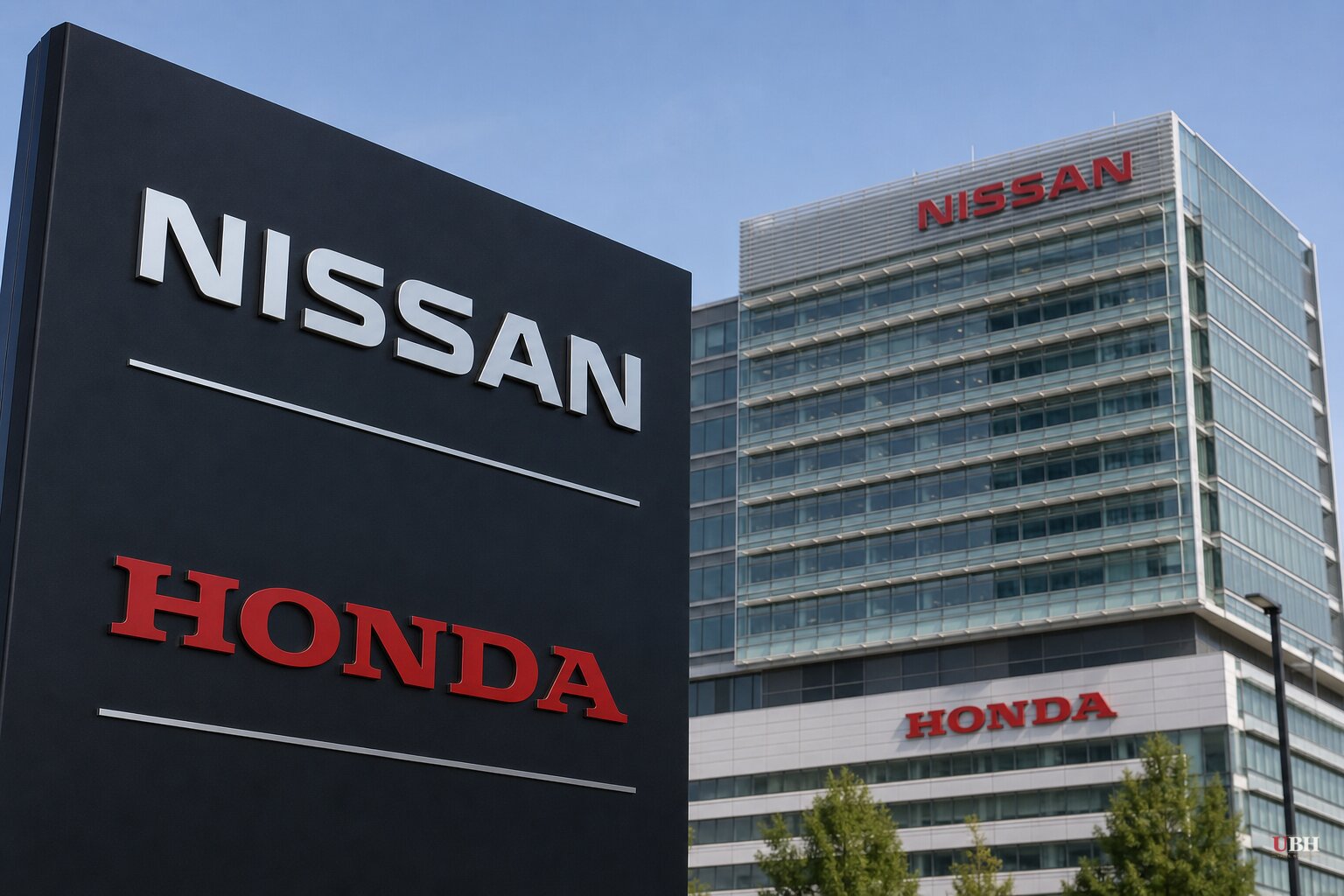
Honda Motor and Nissan Motor are reportedly closing in on a deal to jointly develop a shared vehicle operating system and onboard computer, with an agreement possibly landing as soon as Monday, August 31, 2026, according to Japan's Nikkei newspaper, a report first carried by Reuters on Saturday, August 29.
The target: new models built on the shared platform arriving as early as 2029. Both companies are treating this carefully. Honda told Reuters it's discussing "potential areas of collaboration" with Nissan and Mitsubishi Motors under their existing strategic partnership, but stressed no deal has been finalized. A Nissan spokesperson said the company is "exploring various possibilities" and will share details once there's something to announce.
Nissan CEO Ivan Espinosa said earlier in August that software collaboration talks with Honda were underway. Multiple outlets covering this story, including Yahoo Finance, BigGo Finance, and WMBD Radio, are all drawing from the same Nikkei report, so treat the wide coverage as one source repeated, not independent confirmation.
Not a Merger Redux
This isn't a rerun of the $60 billion merger Honda and Nissan walked away from in February 2025, when Nissan balked at becoming a Honda subsidiary. The software deal, as described, leaves both automakers fully independent. It limits shared work to a single technical layer: the operating system and the computer running it, not corporate control, manufacturing, or ownership.
Building software-defined vehicles is brutally expensive. Modern cars are shifting from dozens of separate control units to centralized computers handling everything from infotainment to driver assistance to over-the-air updates. Splitting that engineering bill across two companies' vehicle volumes is the same logic Honda and Nissan cited when they first agreed to joint software research back in August 2024.
The Money Behind the Motive
Nissan has the more urgent need. The company posted a ¥533.1 billion loss for the prior fiscal year and has cut jobs under Espinosa's turnaround plan, before swinging to a ¥3.76 billion profit in the April-to-June quarter, according to Cryptopolitan. Tariffs imposed under President Donald Trump have added pressure on Japanese automakers generally, per that same reporting.
Honda, by contrast, is coming off a record quarter. Operating profit hit an all-time high of JPY530.7 billion for the fiscal first quarter reported August 5, driven by a record JPY233.9 billion in motorcycle profit on demand in India and Brazil. Auto operating profit held at JPY192.1 billion, a 5% margin management partly credited to a JPY78.1 billion positive tariff impact. Honda raised its full-year operating profit guidance to JPY650 billion and held its dividend at JPY70 per share, sitting on JPY3.3 trillion in net cash.
China is the exception. Honda said the country's combustion and hybrid market shrank roughly 40% in the quarter, and its retail units there fell 50% year over year, even after extending its GAC joint venture through 2028.
Where the Limits Show Up
Not every reported collaboration between the two companies has held up. Torque News reported that an Automotive News suggestion about Nissan lending Honda a body-on-frame platform for a future SUV or truck was described by Honda at a media roundtable as "highly unlikely." Cooperation between the two has so far stayed confined to smaller items like ECUs, software, and infotainment, not shared vehicle architecture or sheet metal.
There's also a third-party stake in how this plays out. Apple's CarPlay Ultra push, which extends beyond the infotainment screen into instrument clusters and vehicle controls, depends on automakers letting the interface run alongside proprietary vehicle software, according to AppleMagazine. A jointly controlled Honda-Nissan operating system would be one more gatekeeper Apple has to negotiate with.
Nissan has separately been running public road trials in Tokyo with British startup Wayve on its Ariya electric model, aiming for a consumer launch of a hands-off Level 2 driving system in 2027, and has adopted Nvidia's DRIVE Hyperion platform. Honda has worked with Nvidia in a different capacity, using its industrial design tools. A shared Honda-Nissan computer would sit underneath both companies' outside supplier relationships as a common base.
Mitsubishi Motors' exact role in the software plan hasn't been finalized, even though it's part of the broader three-way strategic partnership. Whether Monday brings a signed agreement, and whether Mitsubishi is included from the start, remains unconfirmed as of this writing.
Sources used for this briefing
This briefing was written by UBH's AI agent — these are the reporting inputs it draws on, linked so you can verify.


