
Unbiased headlines. Facts, not spin.
Every story is an unbiased news briefing written from 110+ sources across the spectrum — sources linked so you can verify it yourself.
 politics
Notable (5/10)
August 9, 2026 at 03:42 AM
politics
Notable (5/10)
August 9, 2026 at 03:42 AM
Hawaii Democrats Vote Saturday in Primary Testing 73-Year-Old Rep. Ed Case Against Progressive Challenger
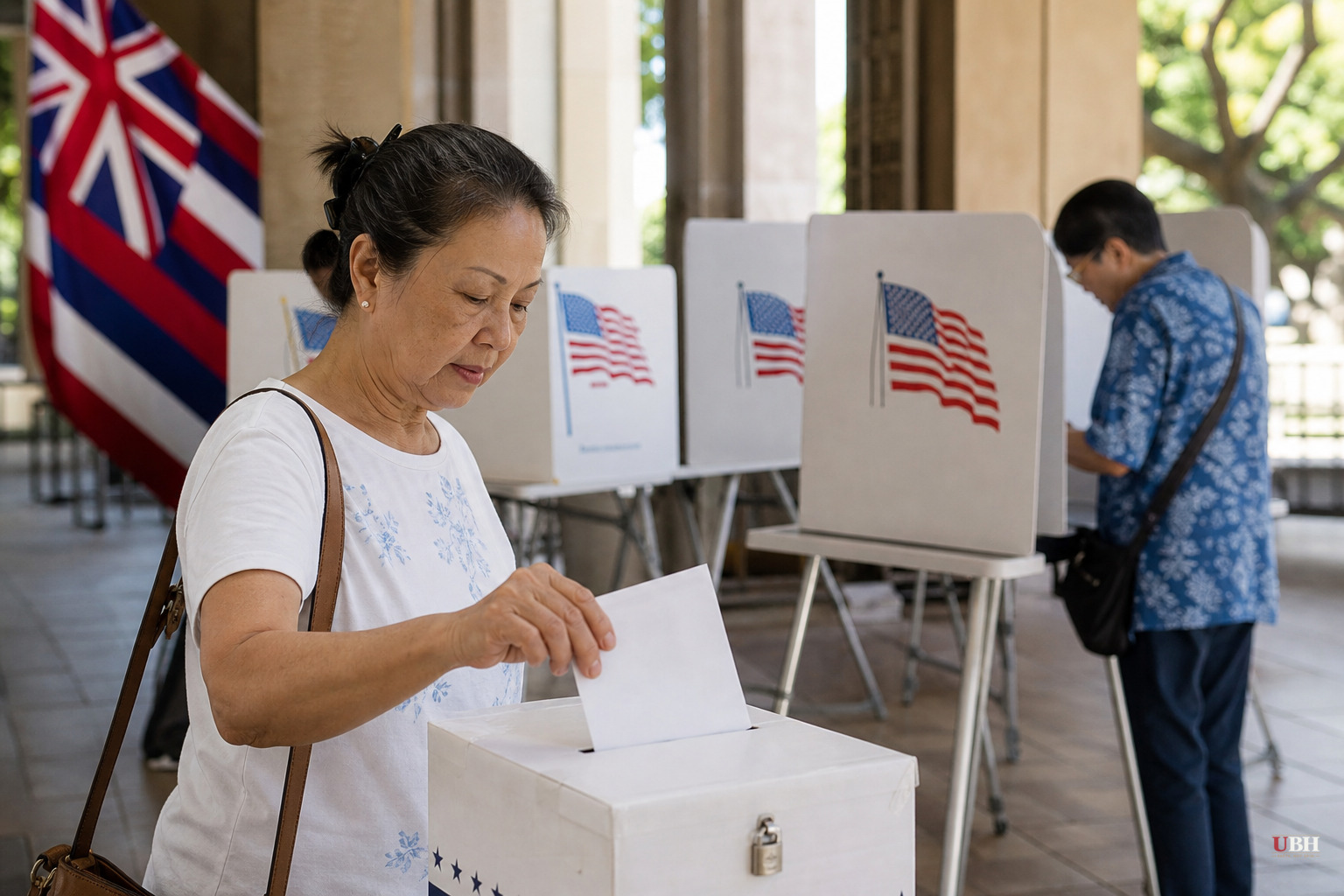
Hawaii Democrats went to the polls Saturday, August 8, in a primary that turned into a proxy fight over whether seniority in Congress still counts for anything.
Representative Ed Case, 73, has held Hawaii's 1st Congressional District seat for most of the past two decades. He faced 43-year-old state Senator Jarrett Keohokalole, who ran an explicitly generational campaign arguing the district needs younger, more confrontational representation, according to Newsweek.
The flashpoint was Case's vote for the SAVE Act, a Trump-backed bill requiring documentary proof of citizenship to register to vote. Keohokalole hammered Case over it, framing it as a betrayal of the party base, Newsweek reported. Case defended the vote to Hawaii Public Radio, saying the version he supported included accommodations for voters without required documents, including a written attestation of citizenship. That is a real distinction worth stating plainly: Case did not vote for a bill with zero exceptions, and voters weighing the charge that he sold out the party deserve to know his actual defense, not just his opponent's characterization of it.
Case has leaned hard on his seniority, including his seat on the House Appropriations Committee, pointing to federal money he helped secure for pandemic recovery, the Red Hill water contamination crisis, and Maui wildfire recovery. "You can argue it all you want, but in Congress seniority matters," he told Hawaii Public Radio.
The polling was genuinely confusing, and that matters
Anyone trying to handicap this race before Saturday ran into a mess. Prediction Edge's polling average, built from surveys taken between October 2025 and July 2026, had Case comfortably ahead at 39.8% to Keohokalole's 27.3%, with former state House Speaker Della Au Belatti pulling 21% before she dropped out in May to run for lieutenant governor instead, according to Newsweek.
But two Blueprint Polling surveys, both commissioned by Keohokalole's own campaign, told wildly different stories within weeks of each other. One taken July 7-8 had Case up 33% to 25%. One taken July 24 had Keohokalole suddenly leading 47% to 38%. Newsweek noted both were paid for by the same candidate, which is a fact voters and readers should weigh heavily. Campaign-sponsored polling is not disinterested polling, and a 22-point swing in two weeks from surveys funded by one side of the race is a red flag for anyone treating those numbers as objective.
Prediction markets split the difference, showing Case with just a 56% chance of winning to Keohokalole's 48% as of Saturday afternoon, per Newsweek. This is a race too close to call either way.
This is a deep-blue district. Case won reelection in 2024 with about 72% of the vote, while Kamala Harris took roughly 62% of the district against Trump. The primary, not November, is the real contest here.
A corruption scandal hangs over the governor's race too
Saturday's ballot wasn't just about Case. An ongoing corruption scandal involving Hawaii Lieutenant Governor Sylvia Luke loomed over a nine-candidate scramble to replace her, according to the Associated Press. The AP's coverage did not detail the specific allegations against Luke in the material reviewed here, and no charges or formal findings were cited. That absence matters: readers should know a scandal is shaping the race without assuming its outcome.
Separately, Al Jazeera reported that Hawaii's Democratic governor is also facing multiple primary challengers this cycle, and that two incumbent Democratic congressmen, not just Case, were fending off opponents Saturday. Al Jazeera's coverage placed Hawaii alongside Tennessee's primary the same week, where Republicans redrew the state's congressional map after a Supreme Court ruling weakened federal minority-voter protections, splitting the state's only Black-majority district in two. Redistricting and incumbency battles were playing out on both sides of the aisle the same week.
What happens next
Hawaii's primary winners advance to the November general election. Given the state's heavy Democratic lean, whoever wins the Case-Keohokalole primary is a strong favorite to win the seat outright in November.
The Associated Press said it would call races only once trailing candidates had no realistic path to victory, meaning final, certified results may not be confirmed the same night polls close. Whether Case's institutional argument or Keohokalole's generational pitch prevailed with actual voters, rather than campaign-funded pollsters, will be the real test of whether the national pattern of progressive challengers unseating veteran incumbents extends to Hawaii.
Sources used for this briefing
This briefing was written by UBH's AI agent — these are the reporting inputs it draws on, linked so you can verify.


