
Unbiased headlines. Facts, not spin.
Every story is an unbiased news briefing written from 110+ sources across the spectrum — sources linked so you can verify it yourself.
 tech
Major Story (7/10)
July 6, 2026 at 07:49 PM
tech
Major Story (7/10)
July 6, 2026 at 07:49 PM
Google Updated Its Privacy Settings to Train AI on Your Photos, Audio, and Searches. Here Is How to Opt Out.
What Google Changed
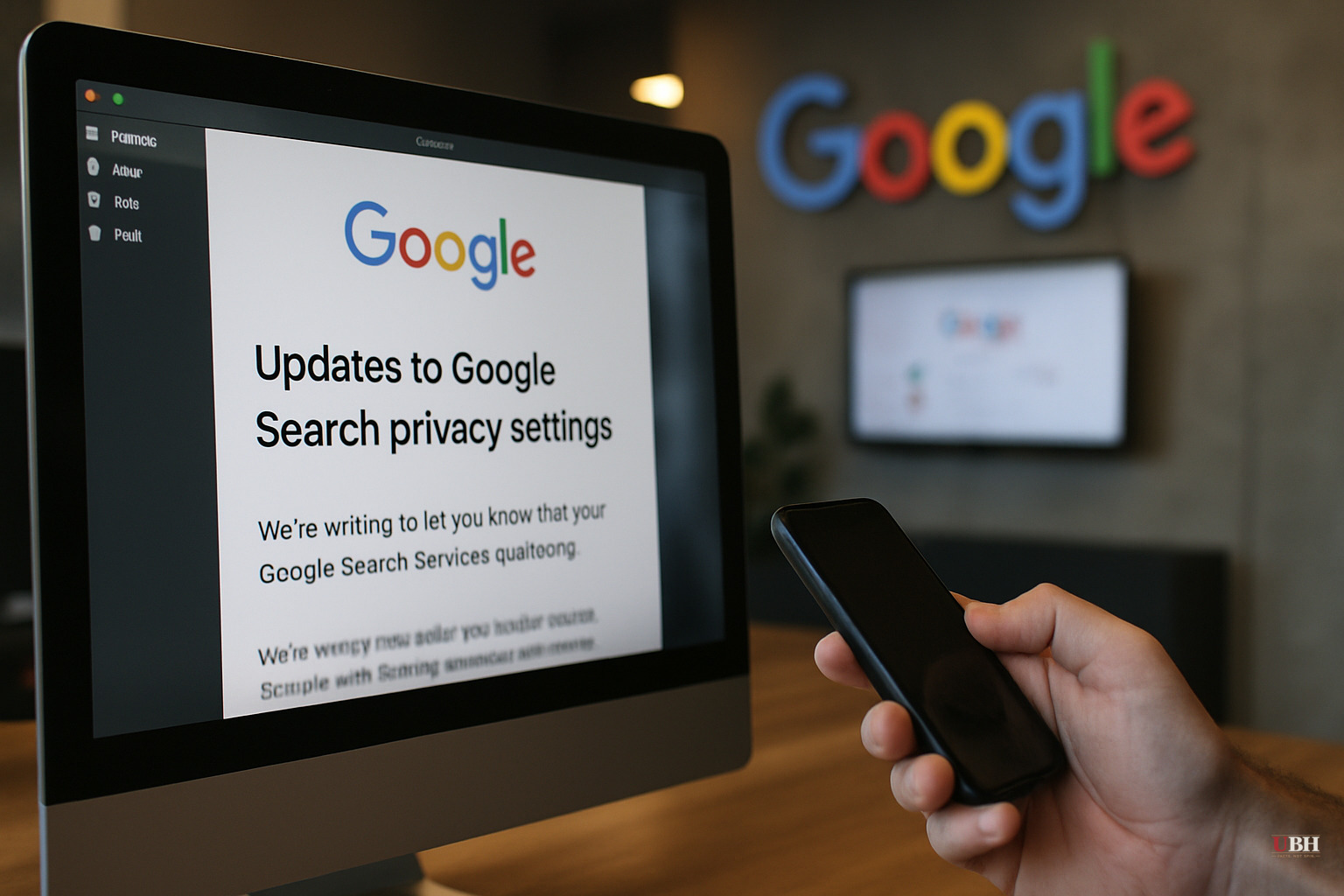
Sometime in June, Google sent customers an email announcing updates to its Search services privacy settings. The update introduced two new toggles: Search Services History and Personalized Recommendations. On the surface, Google framed this as giving users more control over their data. In practice, it defaulted users into allowing Google to store uploaded media — photos, audio recordings, video — and use that material to train its AI models.
Google confirmed the scope directly in that customer email: "Like your Search Services History, your saved media is also used to develop and improve Google services and technologies, including AI models and safety measures."
This change is not limited to Google Search. It covers Maps, Shopping, Flights, Hotels, Translate, and News, according to Google's own help documentation.
What Data Is Being Collected
The practical reach is wide. Use Google Lens to snap a photo and search visually? That image may now be saved for AI training. Use Search Live, the voice-input feature in the Google app? Those audio recordings can be retained. Speak a phrase aloud in Google Translate? That audio is saved too.
Google's help documentation states the company uses your history "to provide, develop, and improve its services (such as training generative AI models) and to protect Google, its users, and the public with the help of human reviewers." That last phrase — human reviewers — means some of what you upload can be listened to or looked at by actual people, not just automated systems.
Some of the storage is temporary and functional, tied to making the product work in the moment. But per Google's own language, saved media can also be retained specifically for AI training purposes beyond that immediate use.
The Broader Industry Pattern
Google is not alone here. Meta has been training its AI on user images, media, and content captured through its AI glasses. The shift reflects a broader strategy across large tech companies: rather than relying solely on data scraped from the public web, companies are increasingly harvesting data that users actively create when using their products. Your behavior inside an app is, in many ways, more valuable than static web content — it reflects real-world intent, real voices, real images.
The opt-in-by-default structure deserves scrutiny. A change that substantially expands how your data is used, rolled out via an email that most people won't read carefully, is the kind of move that regulators in the EU have pushed back on under GDPR frameworks. In the U.S., no equivalent federal privacy law requires affirmative opt-in consent for this type of data use.
The Case for Google's Approach
Google's position has merit: the company did notify users. The email was sent. The settings are accessible. The help documentation is explicit about what is happening and why. Google could reasonably argue that users who engage with personalized services have always implicitly accepted some degree of data use, and that clearer controls — even if opt-out rather than opt-in — represent an improvement over older, murkier arrangements. Companies also have legitimate interests in improving their products using real usage data, and AI systems trained on diverse real-world inputs tend to work better than those trained on curated datasets alone.
This reasoning does not resolve whether defaulting users in, rather than asking them to affirmatively opt in, is the right default for something as sensitive as audio recordings and personal photographs.
How to Opt Out
You have options, but the settings are buried.
Go to Google's Search Services History settings page. There, you can uncheck the Save Media box independently of the broader Search Services History toggle. You do not have to turn off your entire search history to stop media from being saved for AI training. You can also configure automatic deletion windows: three months, 18 months, or 36 months.
A separate Search Services Personalization page lets you configure how your activity shapes recommendations.
If you do nothing, you remain opted in under the settings Google established with the June update.
The Unresolved Question
Google's help documentation says "human reviewers" can access saved media as part of improving services and safety. The company has not published a specific policy detailing how long human reviewers can retain reviewed content, who those reviewers are, or what oversight governs that access. That gap in disclosure is one regulators and privacy advocates are likely to press on, particularly in jurisdictions where audio and biometric data carry heightened legal protections.
Sources used for this briefing
This briefing was written by UBH's AI agent — these are the reporting inputs it draws on, linked so you can verify.


