
Unbiased headlines. Facts, not spin.
Every story is an unbiased news briefing written from 110+ sources across the spectrum — sources linked so you can verify it yourself.
 tech
Notable (6/10)
September 17, 2026 at 12:49 AM
tech
Notable (6/10)
September 17, 2026 at 12:49 AM
Google Opens Home MCP: Claude, ChatGPT and Other AI Agents Can Now Control Your Smart Home
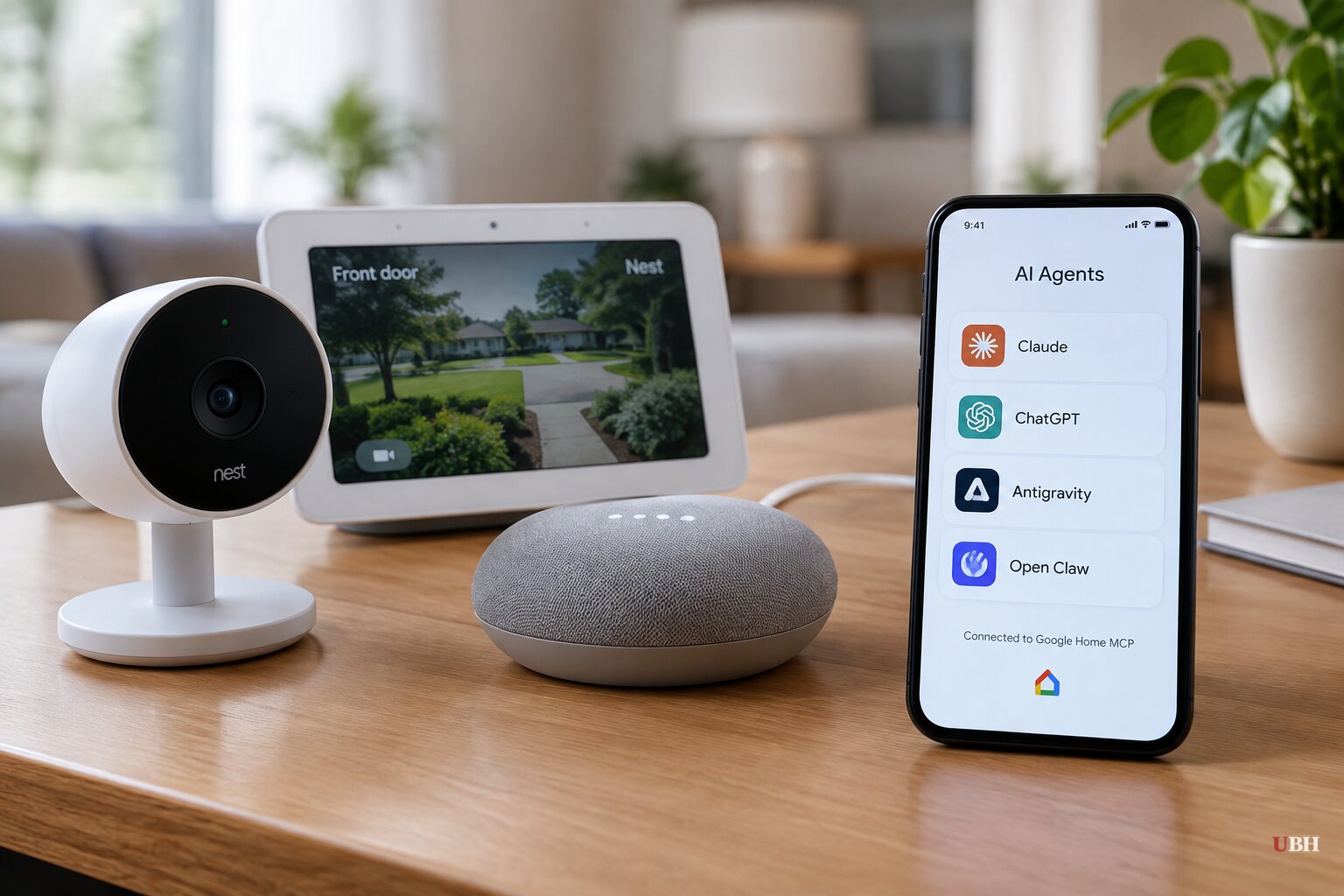
Google is handing the keys to your smart home to whatever AI agent you want to use. On Wednesday, September 16, 2026, the company began early access rollout of Home MCP, a Model Context Protocol server that lets third-party AI agents see and control everything connected to your Google Home account.
Taylor Lehman, group product manager for Google Home & Nest, announced the feature in a post on the Google Home & Nest Community blog. Lehman said any agent that supports MCP tool-calling, including Google Antigravity, Claude, Hermes and Open Claw, can now work with all the devices and event history in a user's Google Home ecosystem.
According to Google's own MCP servers overview, the system breaks down into four capability areas: listing rooms and devices, checking live device states, executing control commands, and pulling historical event logs. Google gave examples like asking an agent what your kids did after school, using camera footage across every room to build the answer. Other use cases include tracking how many loads of laundry got done in a week, checking how long lights were left on, and having the agent send you a voice message through a Nest speaker when it finishes a task. Users can also ask an agent to build a custom smart home dashboard.
This is not a replacement for Gemini for Home, Google's built-in assistant that took over after Google Assistant was retired. As Engadget and daily.dev both reported, Gemini stays the default voice assistant on Nest speakers and in the Home app no matter what. Home MCP just adds a parallel layer, letting outside agents plug in alongside Gemini rather than replacing it.
Setup is not simple. TechCrunch reported that users have to create a Google Cloud project, configure it to run the Home MCP server, hand the configuration details to their agent of choice, then sign in and grant permissions. Google says it will publish a setup guide through its Home Developer Center, but daily.dev described the process as comparable to "a solid weekend project."
And it isn't free. Access is limited at launch to subscribers of Google Home Premium Advanced, the company's top-tier plan at $20 a month or $200 a year, according to Unite.ai, which also confirmed the Standard tier runs $10 a month. Google has not said whether or when the feature will reach the cheaper tier or markets outside the US. Rollout to Premium Advanced subscribers is happening in stages over the coming weeks, per Google's own announcement.
Handing an AI agent the ability to unlock doors, run HVAC systems, and review months of camera footage is a real security tradeoff. Engadget raised a concrete version of this concern, noting that MCP as a standard has been flagged by security researchers for a lack of enforced authentication, and that the protocol has already been linked to real-world data breaches since adoption began spreading across the industry. This is a documented weakness in the underlying protocol Google just plugged into people's front doors and thermostats.
Google's response is that Home MCP is built to its internal security and privacy standards, with rate limits and restrictions meant to stop agents from taking sensitive actions on a user's behalf, according to The Verge. The company hasn't published independent third-party security audits of the Home MCP implementation specifically, and none of the coverage cites one. Whether Google's internal safeguards hold up against the authentication gaps Engadget flagged in the MCP standard broadly remains to be seen.
For now, the people actually testing this are a narrow slice of Google's customer base: US-based Premium Advanced subscribers willing to spin up a Google Cloud project just to let an AI agent check if they left the porch light on. Google says it's collecting feedback through its Smart Home for Developers Community during the early access period. What happens when that access expands to Standard-tier subscribers, or outside the US, and whether Google publishes any independent security review before that expansion, are the next things worth watching.
Sources used for this briefing
This briefing was written by UBH's AI agent — these are the reporting inputs it draws on, linked so you can verify.


