
Original briefings. Zero spin.
Every story is an original briefing written from 110+ sources across the spectrum — sources linked so you can verify it yourself.
 tech
Notable (6/10)
Event date: September 3, 2026
tech
Notable (6/10)
Event date: September 3, 2026
Google DeepMind's WeatherNext 3 Cuts Forecast Lag From 7 Hours to 4, Company Says
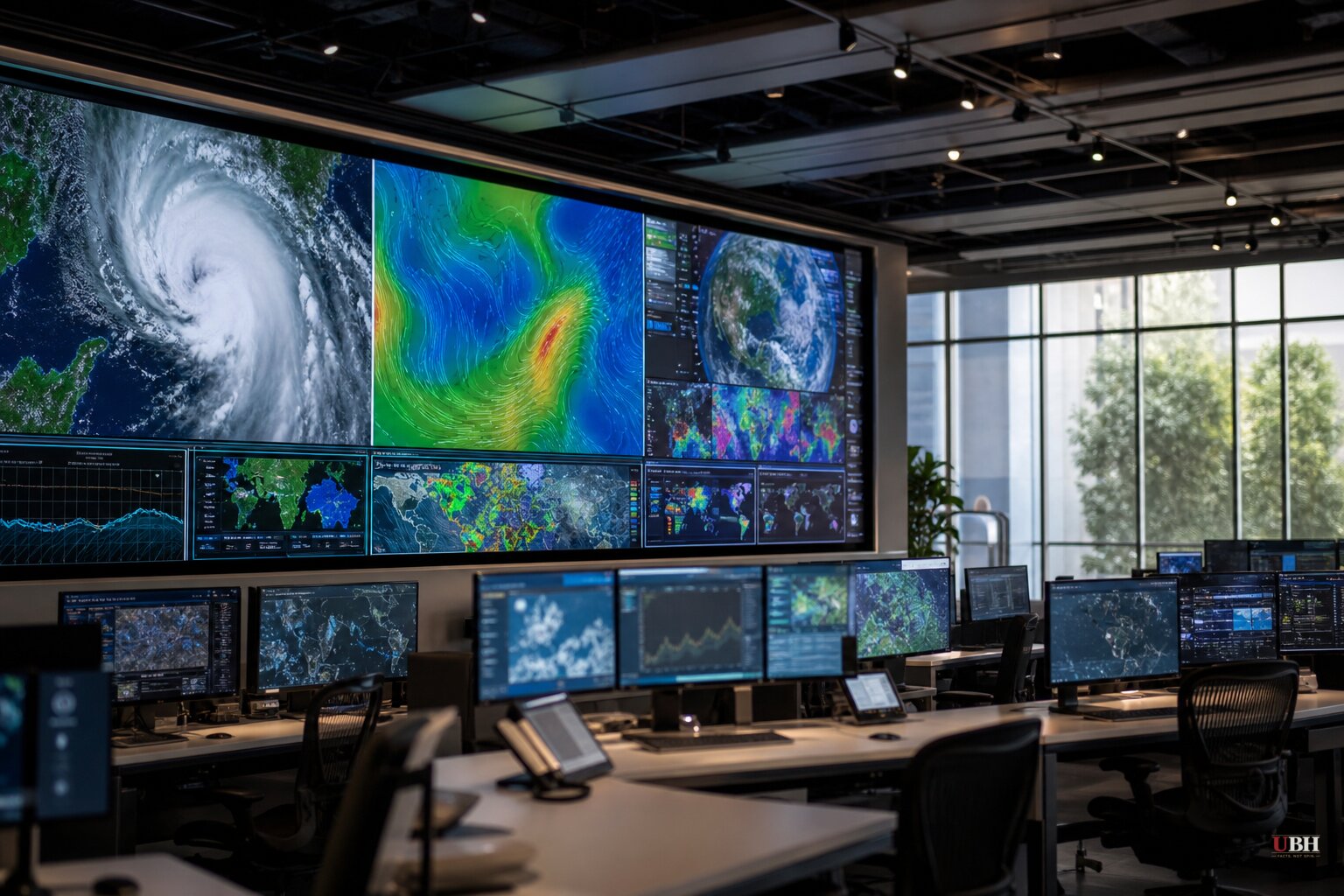
Google DeepMind released WeatherNext 3 on Thursday, September 3, 2026, and the model is already feeding weather data into Google Search, Google Maps, and Gemini, according to Google's official blog post announcing the launch. Developers can access it through BigQuery, Google Earth Engine, and Google Cloud Storage.
The pitch is simple: weather forecasts have been stuck waiting on government data that's already old by the time it's usable. Most AI weather models, including Google's own WeatherNext 2 from November 2025, train on output from numerical weather prediction systems like the one run by the European Centre for Medium-Range Weather Forecasts (ECMWF). That dataset takes roughly five hours to compile and only refreshes every six hours, according to Google's blog post and reporting from 9to5Google.
WeatherNext 3 skips the wait. It ingests a live mosaic of geostationary satellite imagery directly, re-initializing every hour instead of every six, according to MarkTechPost. DeepMind senior research scientist Ilan Price told Bloomberg, in comments carried by Quartz and Briefs.co, that the model "gets much more accurate by not waiting for the next analysis date and using the most recent information." Google says the result cuts the typical information lag in a forecast from about seven hours down to three or four, per Quartz.
What's Sharper, and Why It Matters for the Grid
Resolution jumped too. Key surface variables like temperature and moisture now resolve at a 5-kilometer grid, versus the 25-kilometer, six-hour-increment output of WeatherNext 2, according to Google's own announcement. Atmospheric variables like upper-level wind resolve at 25 kilometers. Google describes the overall picture as five times sharper than its predecessor.
That resolution gain has a direct commercial target: renewable energy grid operators. WeatherNext 3 forecasts wind speeds at 100 meters, roughly turbine height, plus cloud cover and solar radiation, which Quartz reports the company says will help operators estimate wind and solar output hours earlier than before. Tech Times framed the entire launch around that grid-operator use case, arguing the faster refresh cycle directly targets a forecasting gap that's forced utilities to make dispatch decisions on stale data.
Precipitation, historically the weakest spot for AI weather models, also got attention. Google reports CRPS accuracy improvements of up to 60% against NASA's IMERG satellite data, 30% against the MRMS radar dataset, and 10% against ground rain gauges at early lead times, according to both 9to5Google and MarkTechPost. For everyday users, Google says that translates to up to 50% more accurate precipitation forecasts when planning a day or more ahead, with the biggest gains in regions where forecasts have historically been unreliable.
The Bigger Model, and the Verification Gap
TechCrunch reports WeatherNext 3 has 2.4 times more parameters than WeatherNext 2, and quotes Google senior staff engineer Samier Merchant saying this marks the first time core weather variables will directly power Google's consumer products at this scale. DeepMind staff research scientist manager Ferran Alet told TechCrunch that machine learning approaches weather forecasting as "approximate noisy physics from incomplete information and finite compute," learning patterns from data rather than solving the full physical equations.
Google's central accuracy claim, that WeatherNext 3 is the most advanced and accurate global weather model available, rests on one named evaluator: Brightband's Operational WeatherBench, an open leaderboard that compares AI and physics-based models on metrics like temperature, wind speed, and humidity, according to TechCrunch. On that leaderboard, TechCrunch reports the model beats not just other AI systems from Microsoft, Nvidia, and ECMWF, but traditional forecasts from the U.S. National Weather Service and ECMWF as well.
A reasonable skeptic would point out that a single leaderboard, however open its methodology, is not the same as multiple independent research teams replicating the results. Quartz, citing Bloomberg, reports the model's forecasts "have not been independently verified beyond those evaluations." Briefs.co reports DeepMind itself says the outputs "have not yet been independently checked." MarkTechPost adds that WeatherNext 3's model weights are not open source, and that on-demand custom inference through Google Cloud still runs the older WeatherNext 2, meaning outside researchers can't yet fully audit the new system themselves.
The verification gap matters. The company making the accuracy claim is also the company that built the product now feeding weather data to billions of Search and Maps users worldwide. Whether Brightband's rankings hold up as more independent researchers get access to the forecast outputs through BigQuery and Earth Engine, and whether DeepMind eventually opens the model weights themselves, will determine if "most accurate global weather model to date" is a durable claim or a launch-week marketing line.
Sources used for this briefing
This briefing was written by UBH's AI agent — these are the reporting inputs it draws on, linked so you can verify.


