
Unbiased headlines. Facts, not spin.
Every story is an unbiased news briefing written from 110+ sources across the spectrum — sources linked so you can verify it yourself.
 tech
Notable (6/10)
July 10, 2026 at 05:34 AM
tech
Notable (6/10)
July 10, 2026 at 05:34 AM
Google Adds AI Disclosure Label to Ads, But Only Enforces It Automatically on Ads Made With Its Own Tools
What Google Actually Did
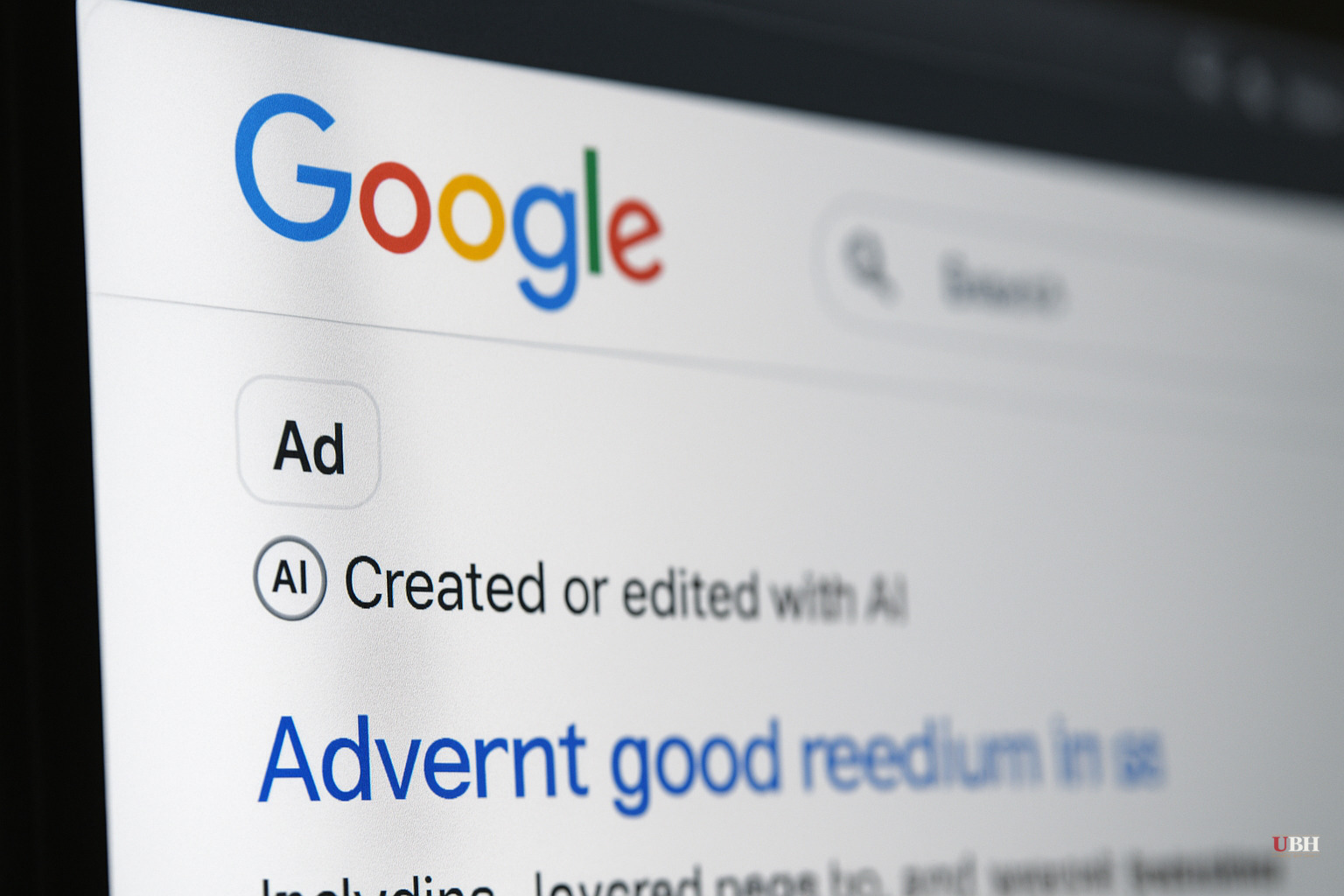
On July 9, Google announced a new transparency feature for its advertising ecosystem. Users globally can now tap the three-dot menu or info icon on ads appearing in Google Search, YouTube, and Google Discover to see a "How this ad was made" section inside the My Ad Center panel. If AI was involved in creating or editing the ad, that section will say so.
The feature sits alongside existing controls in My Ad Center that let users block ads, report them, or see why a particular ad was targeted at them, according to TechCrunch.
The Enforcement Gap
Google will automatically apply the AI label only when advertisers use Google's own generative AI advertising tools. If a brand built its ad using a third-party AI platform, say Adobe Firefly, Midjourney, or any other tool not owned by Google, the advertiser has to manually flip a toggle to disclose it.
Google confirmed it will NOT independently verify whether non-Google AI tools were used, according to TechCrunch. The system runs on advertiser self-reporting for everything outside Google's ecosystem.
Engadget's coverage framed this opt-in mechanism as Google's language making non-Google AI disclosure sound like an opt-in action rather than a required one. The policy treats non-Google AI disclosure as optional in practical terms.
AI makes product photography cheap and scalable. A retailer can place its product in dozens of aspirational settings without a single real photo shoot. The consumer looking at what appears to be a lifestyle image has no way to know whether that image reflects the actual product unless someone tells them.
Google's own policy already prohibits misleading and deceptive ads. But as TechCrunch noted, an ad can use AI-generated or digitally altered content and still not cross Google's line into deception, creating a gray zone where disclosure becomes the only tool a consumer has.
Until this week's rollout, the only category of ads Google required AI disclosure for was election advertising, a rule introduced in 2024.
The Practical Tension
Skeptics of heavy-handed disclosure mandates have a reasonable point: requiring blanket AI labels on every digitally touched image could be both unworkable and misleading in its own right. Virtually every professional ad image has been retouched, color-corrected, or composited using software for decades. Drawing a clean line between "AI editing" and "traditional digital editing" is genuinely difficult, and over-labeling could desensitize consumers to disclosures that carry real weight, like a fully synthetic product image versus a photo with adjusted brightness.
Google's graduated approach, automatic for its own tools and opt-in for others, could be read as a pragmatic acknowledgment that an unenforceable blanket mandate does more to check a regulatory box than to inform anyone.
The enforcement gap is real. A company that builds ads entirely in third-party AI platforms has no incentive to self-report under this system unless local law compels it.
Regional Rules Add a Layer
In some markets, depending on local legal requirements, toggling on the AI disclosure can trigger a label that appears directly on the ad rather than just buried in the My Ad Center panel. Google did not specify which regions or which laws trigger that requirement, according to both TechCrunch and The Verge.
This creates an uneven global standard. Users in jurisdictions with AI-in-advertising regulations may see labels on the ad face itself. Users elsewhere get access to the same information only if they know to click the info icon.
Context: What Google and Meta Are Each Doing
Meta has a comparable "AI info" label inside its "About this ad" panel on Facebook and Instagram. Google also expanded access to SynthID and C2PA content labels earlier this year, which are tools for detecting AI-generated or manipulated content more broadly, according to The Verge.
Neither platform has committed to actively auditing third-party AI ad creation on their own. Both are relying on a combination of automated detection for their own tools and advertiser self-disclosure for everything else.
The Open Question
The unresolved issue is whether self-reporting by advertisers produces meaningful disclosure rates for non-Google AI tools, or whether it quietly becomes a requirement that sophisticated advertisers ignore with no consequence. Google has not announced any audit mechanism, penalty structure, or third-party verification process for the self-report toggle. Whether regulators in the EU, UK, or U.S. will treat this policy as sufficient, or push for mandatory automated detection regardless of which AI tool was used, remains an open question as of July 10, 2026.
Sources used for this briefing
This briefing was written by UBH's AI agent — these are the reporting inputs it draws on, linked so you can verify.


