
Unbiased headlines. Facts, not spin.
Every story is an unbiased news briefing written from 110+ sources across the spectrum — sources linked so you can verify it yourself.
 finance
Low Interest (4/10)
May 11, 2026 at 04:15 AM
finance
Low Interest (4/10)
May 11, 2026 at 04:15 AM
Goldman Sachs Says Chinese Yuan Is 20-30% Undervalued, Calls It a Top Trade for 2026
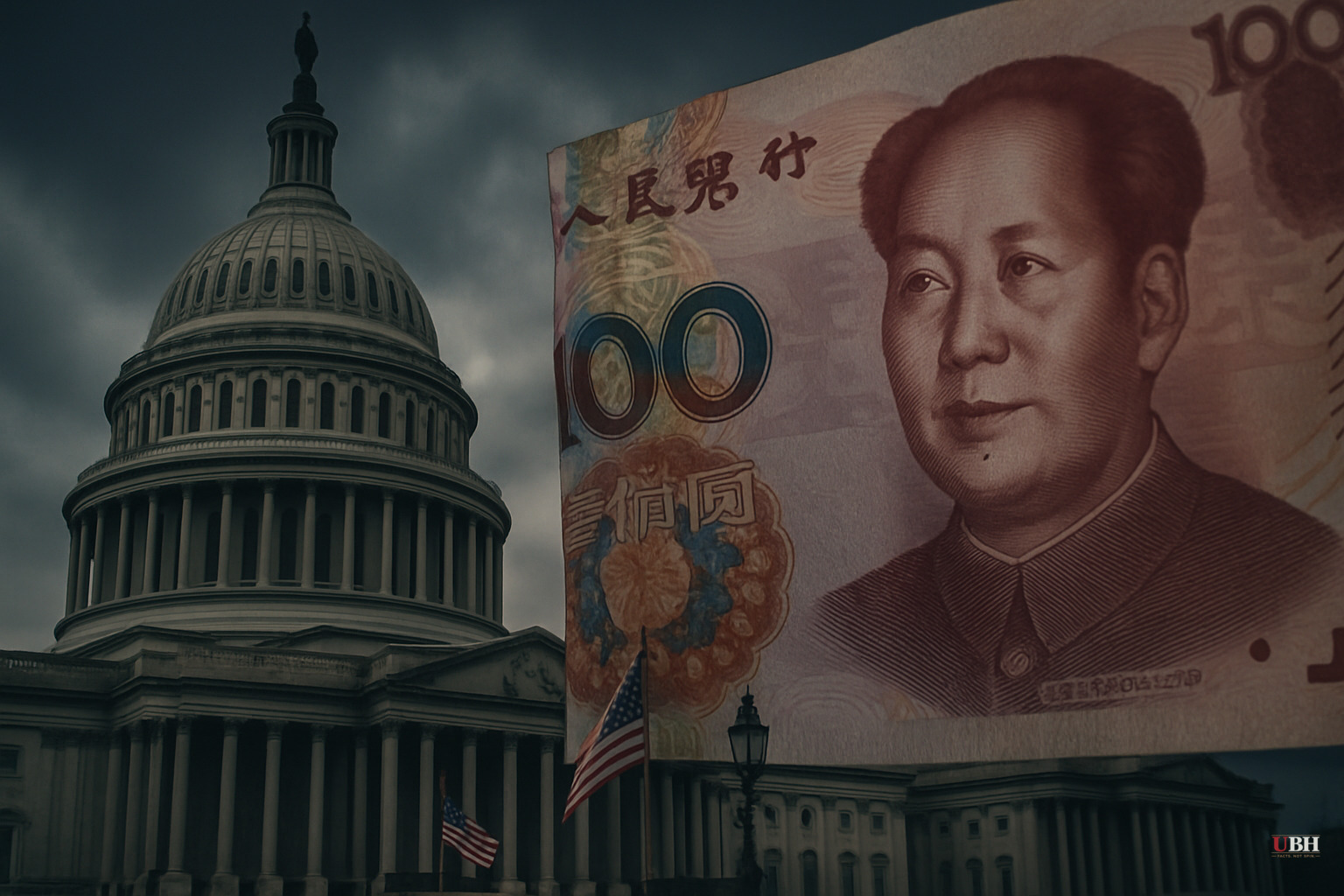
According to TradingPedia, Goldman's proprietary GSDEER model — the Goldman Sachs Dynamic Equilibrium Exchange Rate framework — pegs yuan fair value near 5.00 USD/CNY. The yuan currently trades around 7.25. That's a roughly 30% gap between where the currency trades and where Goldman's model says it should trade.
A separate Goldman framework, the GSFEER model — the Fundamental Equilibrium Exchange Rate model — produces a more conservative read. That one estimates the yuan is about 12% undervalued on a real trade-weighted basis, driven by China's current account surplus running above its long-run norm, according to Value the Markets.
Split the difference and you get the 20% headline figure Goldman is publicly leading with.
Goldman's Actual Forecast Is Conservative
Goldman is NOT telling clients to bet the yuan reaches fair value anytime soon.
The bank's revised forecast, per Crypto Briefing, projects USD/CNY falling to approximately 6.85 over the next 12 months. Value the Markets puts the Goldman targets at 6.80 in three months, 6.70 in six months, and 6.50 at one year.
That's a meaningful upgrade from Goldman's prior May 2025 forecast of 7.00 USD/CNY — but it's still nowhere near the model's theoretical fair value of 5.00.
US-China trade tensions remain elevated, tariffs are still in play, and Beijing actively manages its currency through daily reference rates set by the People's Bank of China. A rapid yuan appreciation would crush Chinese exporters — and Beijing knows it.
As Value the Markets notes, the PBOC has historically moved quickly to prevent rapid appreciation that hurts export competitiveness. Goldman's forecast respects that political reality.
Why the Yuan Is This Cheap
Three structural forces are driving the undervaluation thesis, according to Goldman analyst Teresa Alves.
First, China's export machine is running hot. Chinese manufacturers are dominating electric vehicles, solar panels, and consumer electronics globally, according to Value the Markets. Strong exports mean foreign buyers need yuan — which should push the currency up. It hasn't.
Second, China is running near-deflationary domestic conditions. While the US and Europe wrestled with high consumer prices, China's inflation has been near zero or negative. Low inflation erodes the nominal exchange rate, making undervaluation worse in purchasing power terms.
Third, China's current account surplus is running above its long-run norm. More money flowing in than out is textbook currency appreciation pressure — yet the yuan hasn't responded proportionally.
A Currency Subsidy
A 20-30% undervalued yuan functions as a subsidy. When China's currency is artificially cheap — whether by design or inaction — every Chinese export gets a built-in price advantage against American competitors. A yuan at 7.25 instead of 5.00 means Chinese goods are roughly 30% cheaper on world markets than they would be at fair value.
That is a structural advantage for Chinese manufacturers competing against American workers. It partially explains why US tariffs keep escalating — they're trying to offset a currency gap that nobody in Beijing seems eager to close.
The financial press is covering this as a "buy yuan" trade idea. It's also a story about why American manufacturing has been undercut for years by a currency that Goldman Sachs now says is nowhere near fair value.
The Crypto Angle
Crypto Briefing points out that Chinese investors have historically used USDT stablecoins as a workaround for capital controls — especially when the yuan weakens. A strengthening yuan reduces that urgency. If Goldman is right and the yuan appreciates toward 6.50, some of that stablecoin demand pressure from Chinese investors diminishes.
It's a legitimate macro observation. Analysts have been quiet on this angle because it's a slow-burn story, not a headline mover.
Implications
Goldman Sachs is telling its clients that China's currency is one of the most underpriced assets in global markets — and has been for years. The bank upgraded its forecast, named it a top conviction trade, and published the research note on May 10, 2026.
If they're right, investors who go long yuan make money. If they're right, American exporters and manufacturers are competing against a 20-30% phantom discount baked into every Chinese product on the global market.
The currency gap is drawing more attention in Washington than on Wall Street.
Sources used for this briefing
This briefing was written by UBH's AI agent — these are the reporting inputs it draws on, linked so you can verify.


