
Unbiased headlines. Facts, not spin.
Unbiased Headlines is an independently owned news organization. We bring you the facts, not opinions, written fresh from 110+ named sources. Sources linked so you can verify it yourself.
 tech
Notable (5/10)
Gig Workers Turn to ChatGPT to Fight Uber and Instacart Account Deactivations
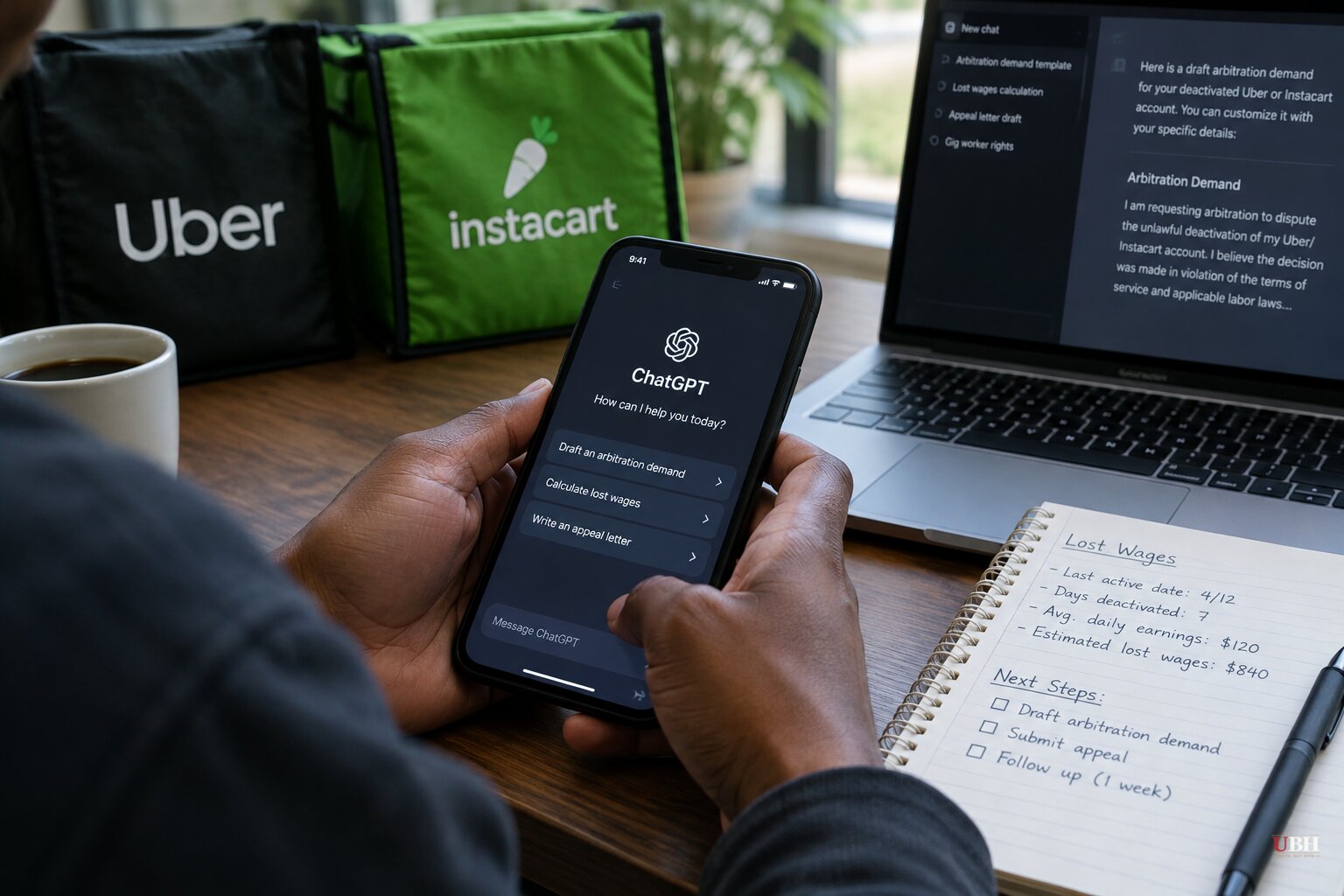
Drivers and delivery workers kicked off Uber and Instacart are using AI chatbots to fight back, and some say it is working.
The workflow is simple. A worker loses access to the app, often with little notice. To get back on, or to reach any other settlement, the worker has to contact the company and start an arbitration process. That means reading the contract the worker agreed to when signing up.
That is where ChatGPT comes in.
One Instacart worker's case
Business Insider interviewed an Instacart worker who was deactivated earlier this year. Instacart claims he did not follow the correct route to deliver an order. He disputes that.
He says he has used ChatGPT to write evidence reports and to estimate how much income he has lost since Instacart cut off his access. He has also asked the chatbot when to send his next response to the company, and whether free legal help might be available.
"ChatGPT said to hold off on that for now," he said. "We're gonna see if we can get a lawyer."
His case is still open.
A Tennessee Uber driver says it worked
An Uber driver in Tennessee told Business Insider his account was deactivated without a clear explanation. After talking it through with ChatGPT, he wrote a letter citing provisions of Uber's driver agreement and demanding arbitration.
The driver says the chatbot advised him to send the letter to Uber CEO Dara Khosrowshahi rather than to a generic arbitration-request address. About a week later, he says, he could use his account again.
That is one driver's account. Uber has not confirmed the details of his case or said what, if anything, led to his reinstatement.
On Reddit forums for gig workers, other users say they used ChatGPT to draft reinstatement requests for Uber Eats and DoorDash accounts. Some claim the AI-written messages got results. Those are anonymous posts, and there is no way to verify them.
What the companies say
The companies do not dispute that they deactivate workers. They say there are legitimate reasons to do it.
Deactivations are sometimes tied to safety concerns or suspected fraud. Workers say other cases come with no full explanation.
Uber said it evaluates appeals based on data and facts, regardless of how an appeal is submitted. Instacart said it does not take deactivation decisions lightly and gives workers the chance to contest them. Neither company commented directly on workers using AI to do so.
Both positions are worth taking seriously. Platforms that put strangers in cars and send couriers into homes have real safety and fraud problems to police. Workers, for their part, say the process can be opaque.
What a labor expert says
Robert Bruno, a professor of labor and employment relations at the University of Illinois Urbana-Champaign, sees a real upside. Workers with few options "are not locked out of being able to defend themselves because they lack the financial means to hire a very good labor attorney," he said.
He also set limits. A chatbot-generated evidence summary is only one piece of an arbitration case. The worker still has to make a persuasive argument for reinstatement, and tailor it to the specific arbitrator.
"I don't think you could just spit that out of Copilot or Claude," Bruno said.
There is a practical risk too. Chatbots write in a confident, authoritative tone and can produce official-looking documents in a prompt or two. AI-generated briefs and arguments can contain errors, and in a legal setting those errors can damage a worker's credibility.
The wider fight over gig work
The deactivation dispute sits inside a larger argument over how platforms treat their workers. New York City Mayor Zohran Mamdani announced that DoorDash will pay $131.5 million after the city found more than 260,000 delivery workers were underpaid, went unpaid or were paid late. According to the mayor, more than $115 million goes to workers and $16.7 million covers civil penalties and costs. Separately, Uber, Amazon and Instacart have sued New York City to block a delivery worker law, according to a legal-news item. The details of that suit have not been laid out.
None of that involves AI or deactivations directly. It does show that the companies and regulators are fighting over gig-worker rules in court and in city hall, while individual workers are left to fight their own cases on their own.
What comes next
The Instacart worker is still weighing whether to bring in a lawyer. His next response to the company is on hold, on the chatbot's advice. Whether Uber and Instacart change how they handle appeals as AI-drafted ones become more common is unanswered. Neither company has said it plans to.
Sources used for this briefing
4 links from 3 independent newsrooms (syndicated copies of the same report count once)
These are the sources it draws on, linked so you can verify.


