
Unbiased headlines. Facts, not spin.
Unbiased Headlines is an independently owned news organization. We bring you the facts, not opinions, written fresh from 110+ named sources. Sources linked so you can verify it yourself.
 politics
Notable (6/10)
politics
Notable (6/10)
Georgia Sets Midterm Early-Voting Record as 10 of 12 Swing Voters in Focus Group Say They Regret Voting for Trump
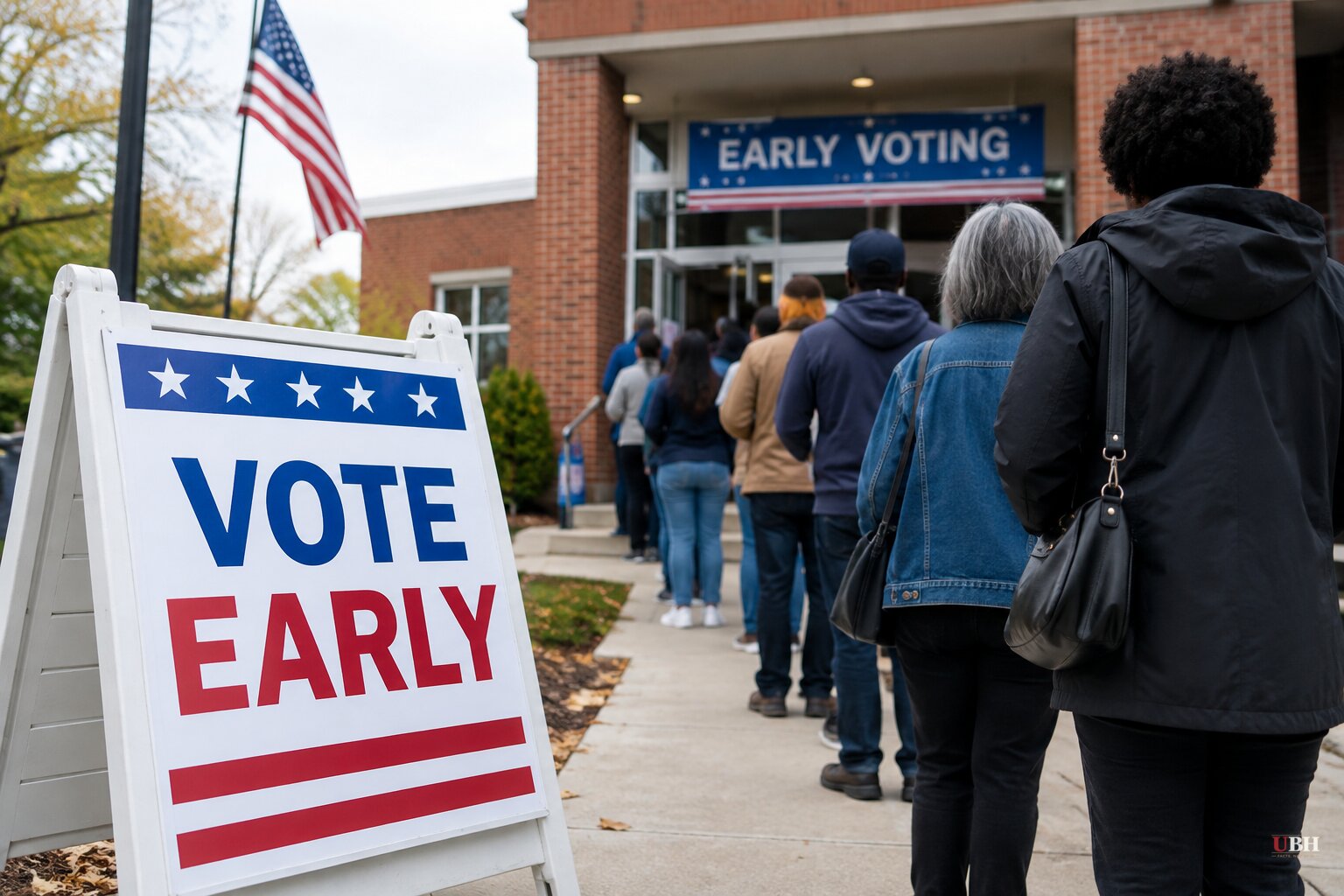
Georgia voters showed up in record numbers on the first day of early voting. State election officials say more than 180,000 ballots were cast Tuesday, Oct. 13, beating the first day of early voting in the 2022 midterms by more than 55,000.
Early voting runs through Oct. 30. Election Day is Nov. 3.
Secretary of State Brad Raffensperger, a Republican, called the turnout proof of confidence. "This record-breaking turnout proves that voters have confidence in the integrity of our elections," he said in a statement, crediting the state's 159 county election officials.
First-day turnout says nothing about who is winning. No official has broken it down by party, and the state has not said which candidates benefited.
A small focus group with a loud message
That same night, NPR observed two online focus groups with 12 Georgians who voted for Joe Biden in 2020 and Donald Trump in 2024. The sessions are part of the monthly Swing Voter Project, run by the messaging firm Engagious and the recruiting firm Nelson Recruiting.
The numbers were lopsided. Eleven of the 12 said they were disappointed with Trump's job performance. Ten said they regret voting for him.
Rich Thau, Engagious president and the moderator, said seven of the 12 said Trump would influence them to vote for Democrats. He called that new for this year. In earlier months, Thau said, participants usually said they were focused on the candidates or the general environment in the country.
Twelve people is twelve people. NPR itself notes that focus groups are not scientifically significant the way polls are. They show how some voters talk about their decisions. They do not measure the electorate.
What the voters said
The complaints were economic and foreign-policy heavy. Charles P., 43, a self-described Democrat, said: "Inflation has only gotten worse, there've been more wars. The tariffs haven't done anything."
Richard A., 56, a Republican who says he has been out of work for 10 months, listed "food crisis, starting the war with Iran, inflation." He also said ICE immigration enforcement "has torn families apart, has caused deaths."
Karla S., 49, a Democrat, said she voted Republican in 2024 and has since made up her mind. "I'm just going to go straight and just do Democrat, Democrat, Democrat," she said.
These are the participants' own characterizations. Participants gave only first names or first names with an initial, so none can be checked independently.
Trump has stepped up his campaign travel in recent days. He is touting his record and urging Republican voters to keep control in Washington.
The Senate race gets ugly
The state's marquee contest is the U.S. Senate race between Democratic incumbent Jon Ossoff and Republican Rep. Mike Collins. The two met Tuesday night for their second and final debate, hosted by the Atlanta Press Club and broadcast on Georgia Public Broadcasting.
Ossoff went after Collins over his son-in-law, David Alan Scheer II. CNN investigated Scheer and reported that he shared Nazi propaganda imagery, promoted antisemitic conspiracy theories, and polled his online followers on whether he should make a video titled "Why Gen-Z Doesn't Hate Hitler." Those findings come from CNN's reporting.
"How weak a person do you have to be to be unable to stop someone under your own roof from disseminating neo-Nazi propaganda while you run for the Senate?" Ossoff asked. He alleged the posting continued despite blowback and demanded that Collins commit to stopping it.
Collins hit back at Ossoff's fundraising. He pointed to campaign contributions from billionaire Reid Hoffman, whom he linked to the late convicted sex offender Jeffrey Epstein. Collins' answer to the Scheer allegations is not detailed in the material from the debate. Neither candidate's charge has produced any charge or investigation, and both are campaign accusations.
What comes next
Early voting continues through Oct. 30, and Georgia's first-day total sets a high bar for the rest of the period. Whether the frustration voiced in one 12-person room shows up in the actual returns will be settled Nov. 3, when Georgians choose between Ossoff and Collins.
Sources used for this briefing
8 links from 6 independent newsrooms (syndicated copies of the same report count once)
These are the sources it draws on, linked so you can verify.


