
Unbiased headlines. Facts, not spin.
Every story is an unbiased news briefing written from 110+ sources across the spectrum — sources linked so you can verify it yourself.
 tech
Major Story (7/10)
July 23, 2026 at 05:26 PM
tech
Major Story (7/10)
July 23, 2026 at 05:26 PM
Gemini Hits 950 Million Monthly Users, Closing In On ChatGPT
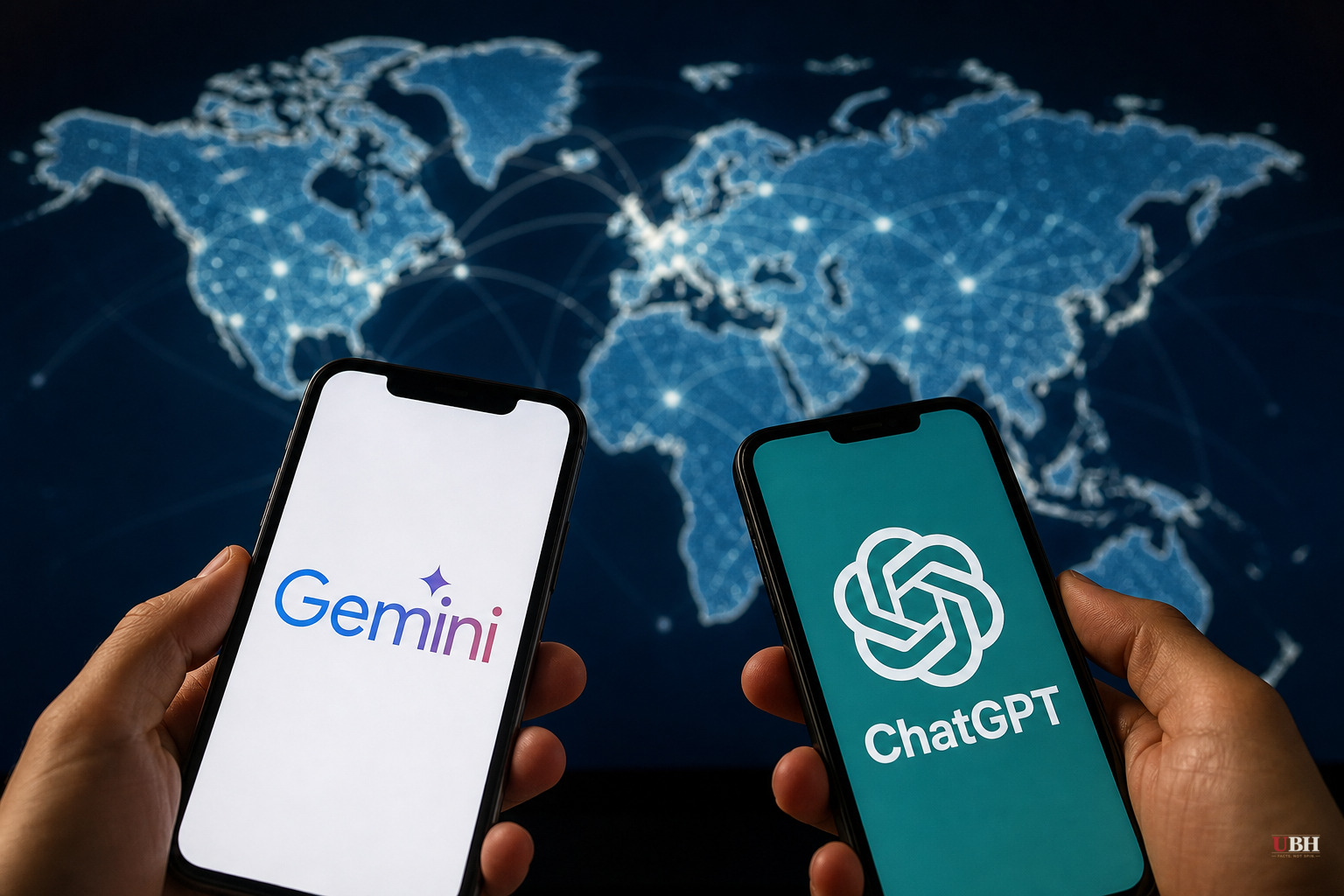
Google told investors during its Q2 2026 earnings call that its Gemini AI assistant now has more than 950 million monthly users, up threefold from a year earlier. That's according to comments from Alphabet CEO Sundar Pichai, reported by TechCrunch.
Gemini crossed 750 million monthly active users back in February. Six months later it's within striking distance of a billion, a milestone already held by Google Search, Gmail, Drive, Android, YouTube, and Chrome.
OpenAI's ChatGPT got there first. It hit 1 billion monthly active users in June, according to TechCrunch. Gemini is now close enough that the gap barely matters at this scale.
Market share is shifting, not just headcounts
Raw user numbers only tell part of the story. Sensor Tower's State of AI report, covering the first half of 2026, found ChatGPT's market share among AI assistant apps fell below 50% for the first time. Gemini's share, by contrast, rose to 27.7%.
This is a shift in a two-horse race that, until recently, wasn't really a race. OpenAI built an enormous head start with ChatGPT's early consumer launch. Google is now eating into that lead with distribution advantages OpenAI simply doesn't have: Android is preinstalled on billions of phones worldwide, and Google can push Gemini directly into Search, Gmail, and Chrome.
Pichai credited new "agentic" features for the growth, specifically Daily Brief and a personalized agent called Gemini Spark, now rolled out in the U.S. and internationally. Google has also leaned on new model releases, including the Nano Banana image generation model, to pull in iOS users who aren't captive to Android. Appfigures data cited by TechCrunch shows the Gemini app was downloaded more than 137 million times on iOS over the past 12 months.
Search still working, cost per query dropping
Google also said its AI-driven overhaul of Search is paying off. The company's AI Mode, a ChatGPT-style question-and-answer interface built into Search, crossed 1 billion users this quarter. Google said the feature is driving incremental increases in total search queries rather than cannibalizing the traditional search business, according to the earnings call.
Notably, Google said it has managed to lower the per-query cost of running AI Mode through hardware engineering, even while adding new models and features. AI inference is expensive, and every major player, from Google to OpenAI to Microsoft, is under pressure to prove these products can run profitably at scale rather than just burn cash to win users.
The competitive read, and its limits
None of this means Gemini is better than ChatGPT for any given task. User counts measure reach, not quality, and Google has structural advantages, like a default spot on Android phones and integration into Gmail and Search, that OpenAI can't replicate without a hardware or browser partner of its own.
These are Google's own reported figures, delivered on an earnings call meant to reassure Wall Street. TechCrunch did not report independent third-party verification of the 950 million figure the way Sensor Tower independently tracked market share. That distinction matters: a company self-reporting user growth to investors has an obvious incentive to frame the number generously.
Still, the Sensor Tower data offers an outside check, and it points the same direction: ChatGPT's dominance is eroding, and Gemini is the main beneficiary. Whether that erosion continues depends on execution Google hasn't fully proven yet, particularly on the enterprise and developer side, where OpenAI still holds significant ground.
The open question is what happens to pricing and monetization as both companies chase scale. Neither TechCrunch nor Sensor Tower's report addresses how many of these "monthly users" are paying subscribers versus free-tier users clicking into an AI box that showed up automatically in a product they already used for something else. That distinction, revenue per user rather than raw user count, is where the real competitive story will get decided over the next few quarters.
Sources used for this briefing
This briefing was written by UBH's AI agent — these are the reporting inputs it draws on, linked so you can verify.


