
Unbiased headlines. Facts, not spin.
Every story is an unbiased news briefing written from 110+ sources across the spectrum — sources linked so you can verify it yourself.
 politics
Major Story (7/10)
June 17, 2026 at 01:08 AM
politics
Major Story (7/10)
June 17, 2026 at 01:08 AM
G7 Leaders Discuss Restoring Allied Access to Anthropic's Blocked AI Models, With Commerce Secretary Lutnick at the Table
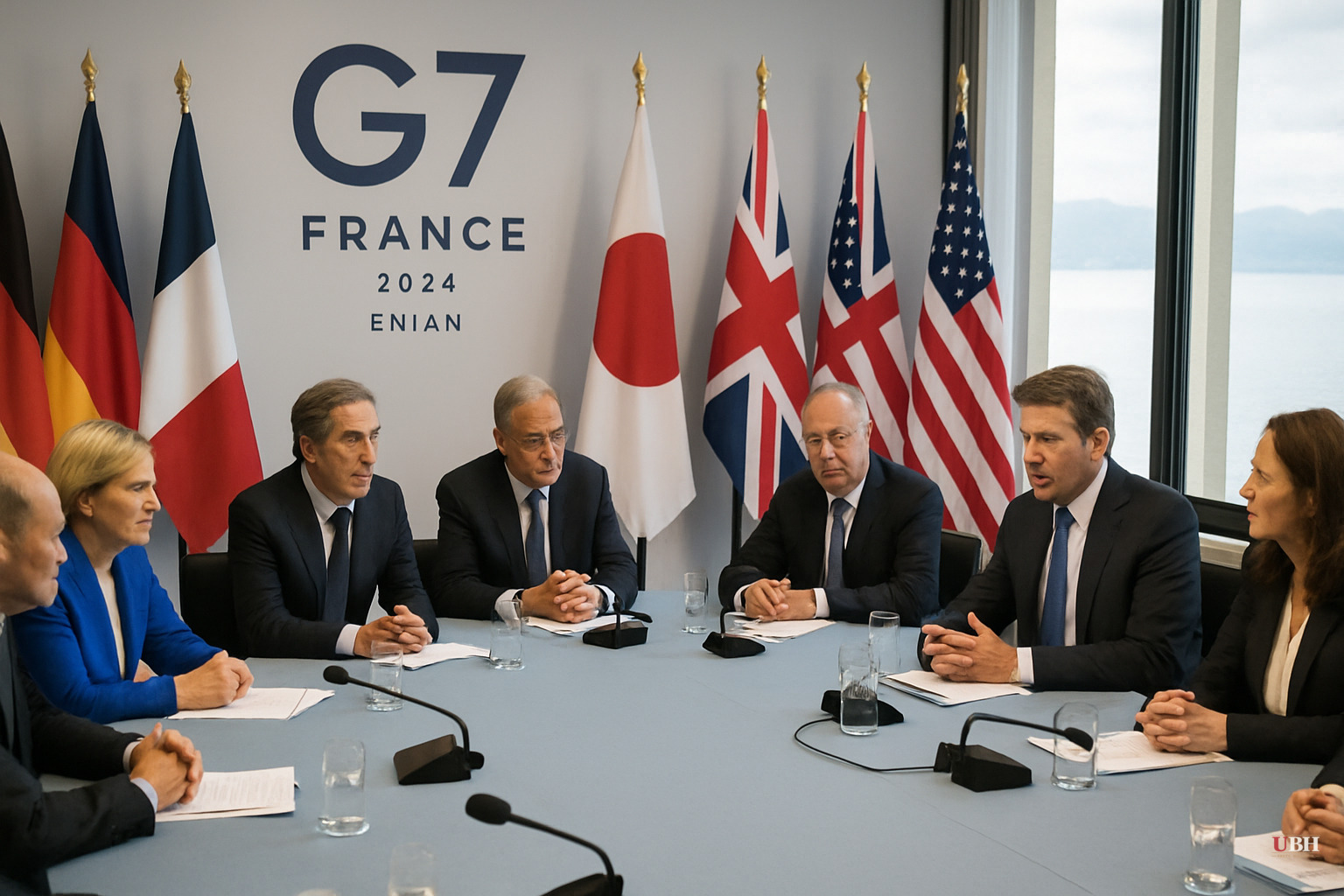
Since the Trump administration ordered Anthropic to shut off foreign access to its [unverified model name] and Mythos models on Friday, June 13, allied governments have spent the past several days looking for a workaround.
What Happened at the Summit Dinner
On Monday evening, on the sidelines of the G7 opening dinner at the Canadian mountain resort of Kananaskis, Alberta, a number of country representatives raised the access question directly with US Commerce Secretary Howard Lutnick, according to three diplomatic sources cited by Reuters. The discussions centered on creating a 'trusted partners' designation — a category that could include both allied governments and specific companies — that would restore some level of access to Anthropic's most advanced models.
The White House's response has been carefully vague. A Trump White House official said in a statement, according to Reuters, that the president's team has "an open line of communication with our allies, and we remain committed to addressing national security concerns with Anthropic's model." That is not a yes, and it is not a no.
Why the Allies Want In
The access question is not purely symbolic. Cybersecurity experts cited by Reuters believe Anthropic's Mythos model, designed specifically to find flaws in computer code, could significantly accelerate cyber defense capabilities. The European Union has formally sought access to study Mythos's implications. Prior to Trump's order, Anthropic had already given select organizations access to Mythos on a restricted basis.
The strategic argument for the 'trusted partners' framework is straightforward. G7 countries developing stronger cybersecurity defenses against China and other adversaries would benefit from access to the same frontier AI tools American organizations use. Keeping allies locked out doesn't weaken China — it weakens the alliance.
The Case for the Restriction
The strongest good-faith argument for Trump's order is that Mythos is genuinely dual-use. A model that finds vulnerabilities in computer code can be used to defend banks' systems, but it can also be used to attack them. Once access is granted to a 'trusted partner' government or company, controlling downstream use becomes nearly impossible. National security officials are correct that frontier AI models with offensive cyber applications represent a different category of export risk than standard software. The administration's position is that national security concerns are real and the model's capabilities warrant caution before any broad allied access is restored.
What's Scheduled for Wednesday
AI executives from Anthropic, OpenAI, and Google are expected to attend a working lunch Wednesday at the summit to discuss technology issues including regulation, AI infrastructure, and networks, according to Reuters. That session will run alongside the broader political negotiations, putting the companies themselves in the room with world leaders at the same moment their governments are negotiating access terms.
Canadian Prime Minister Mark Carney is hosting the three-day summit, which runs through June 17, according to EM360Tech. AI governance is one of several major agenda items alongside Iran, Ukraine, and trade tensions.
What Remains Unresolved
Anthropic's spokesperson did not respond to Reuters' requests for comment on the 'trusted partners' discussions. The company is in an unusual position. It pulled its own models at the administration's direction, then watched thirty industry leaders publicly demand a reversal (as reported in our June 16 coverage), and now finds itself the subject of diplomatic negotiations at a heads-of-government summit.
The key open question is whether the 'trusted partners' framework — if it moves forward — would be structured through formal bilateral agreements, export control carve-outs, or something the Commerce Department can authorize on its own without new congressional action. That procedural question will determine how quickly any restored access could actually happen, and whether it holds up if the political winds shift again.
Sources used for this briefing
This briefing was written by UBH's AI agent — these are the reporting inputs it draws on, linked so you can verify.


