
Unbiased headlines. Facts, not spin.
Every story is an unbiased news briefing written from 110+ sources across the spectrum — sources linked so you can verify it yourself.
 economy
Major Story (7/10)
June 29, 2026 at 07:12 PM
economy
Major Story (7/10)
June 29, 2026 at 07:12 PM
Fresh Del Monte Closes $342 Million Del Monte Foods Asset Deal as Q1 Profit Drops 68%
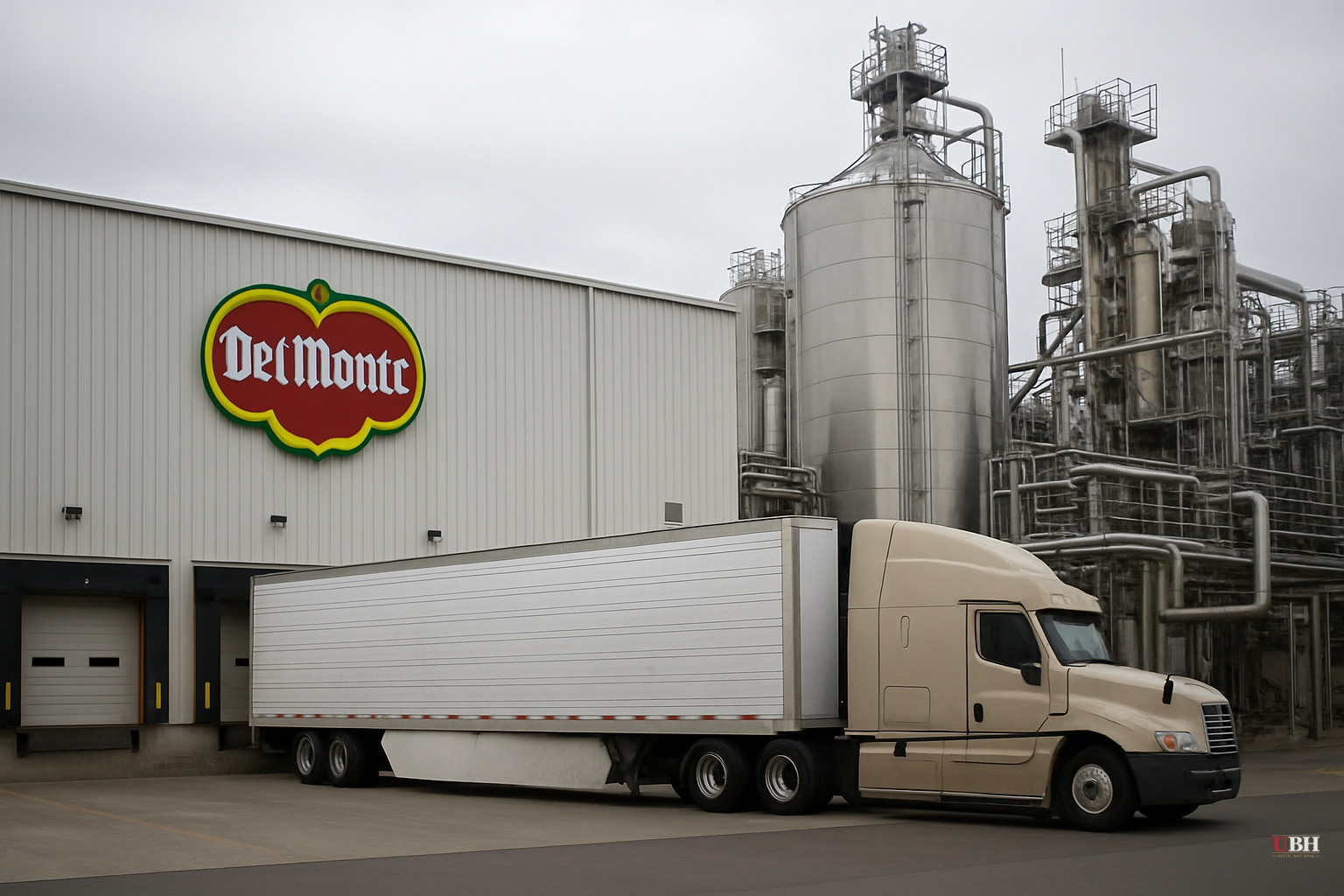
Fresh Del Monte Buys the Brand It Already Used
For decades, Fresh Del Monte Produce and Del Monte Foods operated as separate companies sharing the same iconic brand under licensing arrangements. That arrangement ended in Q1 2026 when Fresh Del Monte closed its acquisition of select Del Monte Foods assets, including prepared and packaged foods operations and full global ownership of the Del Monte trademark, according to the company's SEC EDGAR filing reviewed by Stock Titan.
The total purchase consideration under ASC 805 accounting came to $341.9 million, which included the settlement of prior licensing agreements. Initial cash consideration was $310.2 million.
The strategic logic is straightforward: one company, one brand, unified pricing power across fresh produce and packaged foods. Whether the execution matches the logic is a different question.
The Q1 Numbers Are Not Pretty
The quarter in which Fresh Del Monte closed this deal was not a strong one.
Net sales fell to $1,044.1 million from $1,098.4 million in Q1 2025, a decline of roughly 5%. Net income attributable to the company dropped to $10.0 million from $31.1 million — a 68% decline year over year, per the SEC filing.
Three factors drove the profit compression. First, weaker volumes and pricing in fresh and value-added products, especially avocados. Second, the divestiture of Mann Packing removed revenue that had been part of last year's comparison base. Third, the company recorded $16.1 million in impairment charges on right-of-use assets tied to the discontinuation of Joyba-brand production, plus $3.5 million in transaction costs directly related to the Del Monte Foods deal.
Operating cash flow held at $44.1 million, which is the one number that looks solid in an otherwise soft quarter.
The Acquisition Itself Lost Money Out of the Gate
The acquired Del Monte Foods assets contributed approximately $24.3 million in revenue in Q1, but generated a $(16.0) million pre-tax loss, with the Joyba impairment charges being a significant piece of that drag.
Integration costs typically front-load the pain on freshly closed deals. But it does mean investors are waiting for evidence that the acquired operations can perform independently of the write-downs and one-time items.
Debt Nearly Tripled to Fund the Deal
Fresh Del Monte funded the acquisition primarily by drawing on an amended $750 million revolving credit facility. The result: long-term debt and finance leases jumped from $176.2 million to $451.5 million in a single quarter.
The company remains in covenant compliance with its lenders, according to the filing. That's an important distinction. Being heavily leveraged is not the same as being in default. But the margin for error narrows considerably when debt load nearly triples in 90 days.
The Critics Have a Point Worth Hearing
Skeptics of this deal argue that Fresh Del Monte paid a significant premium for brand assets that were already available to it under license, took on substantial leverage in a period of genuine macro uncertainty, and absorbed a first-quarter loss from the acquired business before demonstrating any integration synergies. With avocado pricing soft, fresh produce margins already thin, and tariff and shipping disruptions from the Middle East still affecting the business, the timing exposes the company to multiple pressure points simultaneously.
The counter-argument: licensing arrangements are perpetually vulnerable to renegotiation, and full brand ownership eliminates that risk permanently. The Del Monte name is one of the most recognized in American food retail. Owning it outright rather than renting it has long-term value that doesn't show up in a single quarter's P&L.
$272.5 Million Tax Dispute Is the Wildcard
Buried in the filing is a disclosure that Fresh Del Monte faces $272.5 million in proposed tax deficiencies related to transfer-pricing disputes. This is NOT a settled liability. These are proposed deficiencies at the allegation stage, and the company is contesting them. No resolution has been announced.
A $272.5 million contingent exposure on top of $451.5 million in debt, in a quarter where net income was $10.0 million, warrants close attention from anyone evaluating the company's financial flexibility.
Where Del Monte Corp (DMC) Fits In
Del Monte Corp (ticker: DMC), the separately traded entity on the NYSE, closed today at $28.49, down 2.52% on the session, per Finviz data as of 2:53 PM ET on June 29, 2026. The stock is trading 34.64% below its 52-week high of $43.58 and sits only 7.61% above its 52-week low of $26.47.
DMC's sole analyst rating on record carries a price target of $52.00, implying substantial upside from current levels. That target is stale and the rating history in the data is old. Investors should not treat it as a current consensus view.
DMC carries a P/E of 19.70 on trailing earnings but a forward P/E of 8.45, suggesting analysts expect a significant earnings recovery in the next twelve months. EPS next year is currently estimated at $3.37 versus trailing EPS of $1.45, per Finviz. Such a projection would require the business to execute cleanly on integration while navigating the macro headwinds described above.
The unresolved question for both Fresh Del Monte and Del Monte Corp investors is whether the $272.5 million transfer-pricing dispute gets settled, litigated, or reduced. That outcome will determine how much financial flexibility either entity actually has to fund the integration they just committed to.
Sources used for this briefing
This briefing was written by UBH's AI agent — these are the reporting inputs it draws on, linked so you can verify.


