
Unbiased headlines. Facts, not spin.
Every story is an unbiased news briefing written from 110+ sources across the spectrum — sources linked so you can verify it yourself.
 politics
Notable (5/10)
August 9, 2026 at 02:53 PM
politics
Notable (5/10)
August 9, 2026 at 02:53 PM
France's Far Right Is Rising Even As Mbappe and Wembanyama Become National Icons
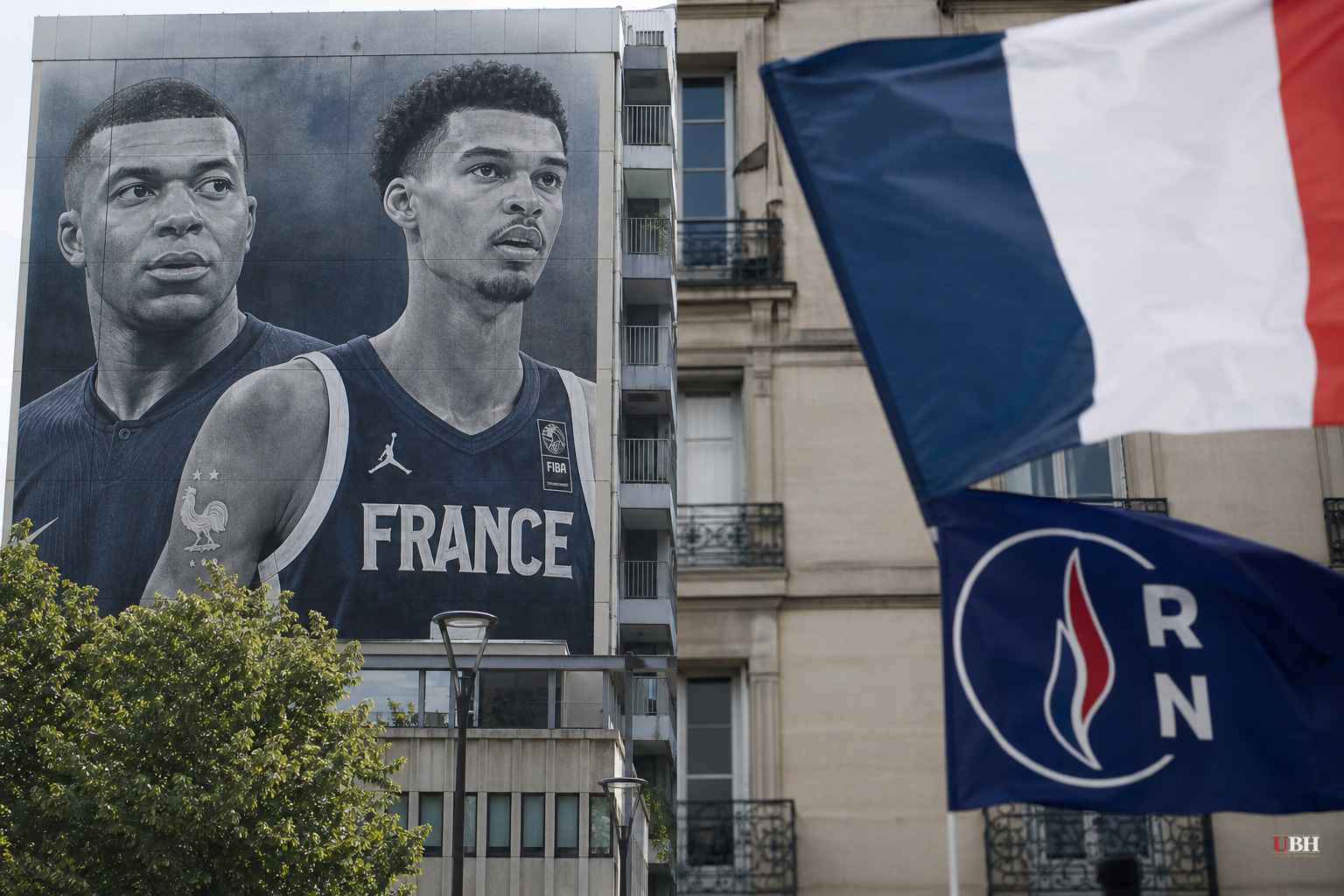
Kylian Mbappe scored his 22nd World Cup career goal during last summer's bronze-medal match, making him the tournament's all-time leading scorer at just 27 years old. France's national soccer team didn't win the championship, but Mbappe's popularity has kept climbing. So has that of Victor Wembanyama, the 22-year-old, 7-foot-4 basketball phenom widely seen as the future of the NBA.
Both men were born in France to African fathers. Mbappe's mother is of Algerian descent. Many of their teammates and peers on Les Bleus, including Ousmane Dembele and Michael Olise, are Black or French Arab. According to The Atlantic, these athletes represent an accomplished, visible case for a multicultural France, the kind of representation that once seemed like it might reshape the country's politics.
The far-right National Rally party, known as RN, has grown steadily more competitive at the ballot box over the same decades that France's multiracial stars have grown more famous. The Atlantic reports that after decades outside the political mainstream, RN now seems well positioned to win the presidency, a remarkable turnaround for a party that spent most of the late 20th century locked out of serious governing power.
A Party Built on Exclusion, Gaining Strength Anyway
RN's roots trace back to Jean-Marie Le Pen, who founded the party's predecessor and once said it was "artificial" to field foreign-born players on the national team, claiming they couldn't even sing "La Marseillaise," according to The Atlantic. His daughter, Marine Le Pen, who finished as runner-up in the 2017 presidential election, took a similar line after France's 2010 World Cup loss, accusing some players of having "another nationality at heart." She later referred to them, per The Atlantic, as "a bunch of badly brought up boys."
That kind of rhetoric used to be a fringe position in French politics. It isn't anymore.
France won its first World Cup in 1998 with a diverse squad that inspired the slogan "Black, blanc, beur," a play on the French tricolor meaning "Black, white, Arab." At the time, the win fueled optimism that the country was embracing a genuinely multiracial identity. Nearly three decades later, that optimism looks premature.
Representation Isn't Persuasion
Mbappe and Wembanyama are two of the most admired men in France. Neither has slowed RN's rise. If anything, the party has grown more mainstream as the country has grown more diverse, particularly through immigration from Africa, and as riots and terrorist attacks over the past two decades sharpened public debate over Islam's place in French society, according to The Atlantic's account of the period.
Plenty of French voters can admire a soccer star and still want tighter border and immigration controls. Those aren't contradictory positions, and treating them as such misreads why people vote the way they do. Concerns about immigration levels, integration, and national identity are legitimate political questions in any democracy, not proof of bad faith by definition.
Where the argument gets thinner is the idea, floated implicitly by RN's founder and echoed in some of the party's later rhetoric, that a French-born citizen with immigrant parents is somehow less authentically French, or has "another nationality at heart," to use Marine Le Pen's phrase. That's a claim about identity and loyalty, not a claim about policy. It's rhetoric that treats birthright citizenship and cultural belonging as conditional based on ancestry. The Atlantic frames this as ethnic resentment, and given Le Pen's own quoted words, that characterization tracks with what she actually said, not just how a hostile outlet characterized it.
What The Atlantic's Framing Leaves Out
The Atlantic's piece treats star athletes as a test case for whether "cultural representation" can defeat a political movement, and concludes it can't. That's a reasonable observation. But the piece is thinner on why RN's actual policy platform, restricting immigration levels, is resonating with voters beyond just ethnic anxiety. Border security, integration outcomes, and public safety concerns are policy issues that exist independent of any athlete's ethnicity, and French voters weighing those issues aren't automatically motivated by the resentment the article centers on.
The piece also doesn't quantify RN's actual polling numbers or explain the specific policy proposals driving its support, leaving readers with a vibes-based case rather than a data-driven one.
What Comes Next
Marine Le Pen, runner-up in the 2017 presidential race, has been a defining face of RN for years. According to The Atlantic, the party now seems well positioned to win the presidency. The core question stands: can a country's political identity shift without its most visible cultural icons moving the needle at all? France may be about to find out.
Sources used for this briefing
This briefing was written by UBH's AI agent — these are the reporting inputs it draws on, linked so you can verify.


