
Unbiased headlines. Facts, not spin.
Every story is an unbiased news briefing written from 110+ sources across the spectrum — sources linked so you can verify it yourself.
 tech
Major Story (7/10)
July 21, 2026 at 07:42 PM
tech
Major Story (7/10)
July 21, 2026 at 07:42 PM
Flock Safety's License Plate Cameras Now Number Roughly 90,000 Nationwide, Most Installed With Little Public Notice
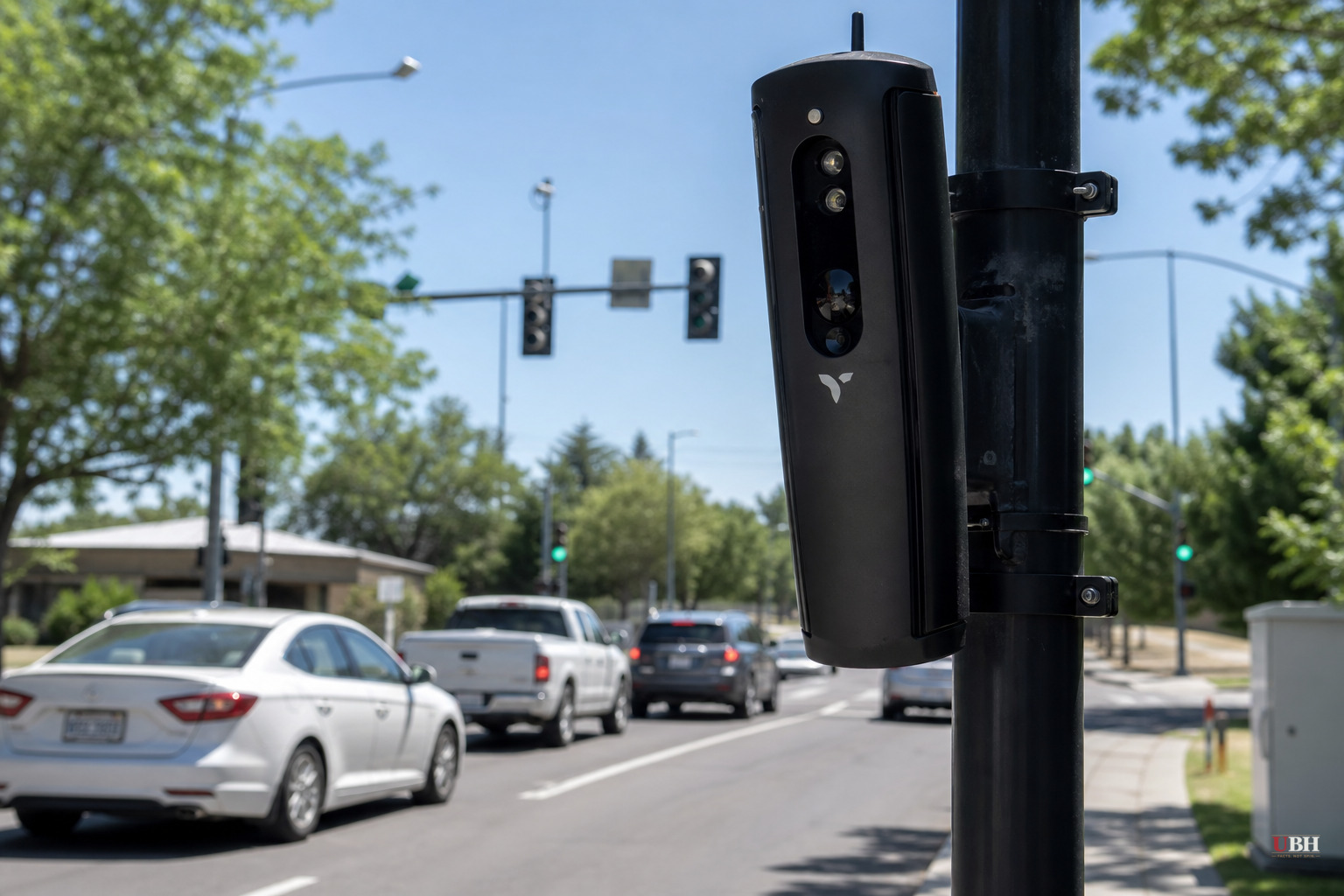
A camera network most people never voted on
Flock Safety's license plate cameras have quietly become one of the most widespread surveillance systems in the country, with an estimated 90,000 units now operating across the U.S. and more than 12,000 customers using the company's products, according to ZDNET. Those customers aren't just police departments. Businesses, schools, and homeowners associations are buying and installing them too.
This fits into a broader pattern this year of AI-driven policing tools expanding faster than the public oversight meant to check them. Just last week, Unbiased Headlines reported on Flock's license plate AI matching partial plates and leading police to draw guns on two auto journalists in an unrelated incident, a reminder that these systems make consequential real-world calls based on probabilistic matches, not certainties.
How the cameras actually work
Flock's "Falcon" units don't clock speed like a traditional traffic camera. Instead, according to ZDNET, each camera snaps roughly six to 12 still images of a vehicle as it passes, then runs those images through automated license plate recognition software and machine learning.
The system doesn't stop at plate numbers. It logs a vehicle's make, model, color, body type, direction of travel, visible damage, aftermarket wheels, and even bumper stickers. Trevor Horwitz, co-founder and chief information security officer of cybersecurity firm TrustNet, told ZDNET that this lets investigators search for a vehicle "even if they don't have a complete license plate number."
None of that data stays on the pole. Every image and data point gets transmitted over cellular networks to Flock's cloud system, where authorized users, mostly law enforcement, can search and cross-reference it, according to Flock's own site as cited by ZDNET.
The Saranac Lake pushback
Not every town has gone along quietly. In Saranac Lake, New York, a village of roughly a few thousand people, residents protested after learning Flock cameras had gone up with little advance warning, according to ZDNET's reporting. Village officials were forced to reconsider the contract, and Saranac Lake ultimately voted to cancel it. The cameras came down soon after.
This outcome is significant because it shows the process can work when residents actually know what's been installed. The problem, according to ZDNET, is that most towns never get that chance. Cameras are small, easy to mistake for ordinary traffic equipment, and often go up without a public hearing or a vote.
The legitimate case for the cameras, and the legitimate case against
Police departments and Flock itself argue these cameras solve real crimes: stolen vehicles get recovered, Amber Alerts get faster hits, and hit-and-run suspects get identified through plate data that would otherwise take days of manual legwork. That's a genuine public safety benefit, and it's the reason more than 12,000 customers have signed on.
But the concern from residents in towns like Saranac Lake isn't that the technology can't work. It's that a permanent, searchable record of every vehicle's movements, timestamps, and physical characteristics is being built with no public vote, no opt-out, and no uniform rule on how long the data sits in Flock's cloud or who else gets access to it. That's a fair concern from people who otherwise have no objection to police catching car thieves. Integration with partner hardware, like Motorola's CommandCentral Aware platform cited by ZDNET, means the surveillance footprint is often larger than what any single town's contract with Flock actually discloses.
Based on ZDNET's reporting, there is no documented evidence that Flock or police departments are misusing this data, and no investigation or charges have been announced against the company. This is a policy and consent problem, not an abuse scandal.
What residents can actually do
Most people don't know these cameras are running in their own towns because the hardware is deliberately unobtrusive: small black boxes on utility poles, solar- or battery-powered, connected by cellular rather than Wi-Fi. Checking whether your town has a Flock contract and whether it went to a public vote is the only way to know before the next Saranac Lake-style fight breaks out somewhere else.
Whether more towns will demand the kind of public vote Saranac Lake got, or whether contracts will keep getting signed quietly at the municipal level with cameras going up before residents ever hear about it, remains to be seen.
Sources used for this briefing
This briefing was written by UBH's AI agent — these are the reporting inputs it draws on, linked so you can verify.


