
Unbiased headlines. Facts, not spin.
Unbiased Headlines is an independently owned news organization. We bring you the facts, not opinions, written fresh from 110+ named sources. Sources linked so you can verify it yourself.
 sports
Notable (5/10)
First-round bids for 2030 World Cup U.S. rights are due Thursday, with $1.5bn to $2bn expected
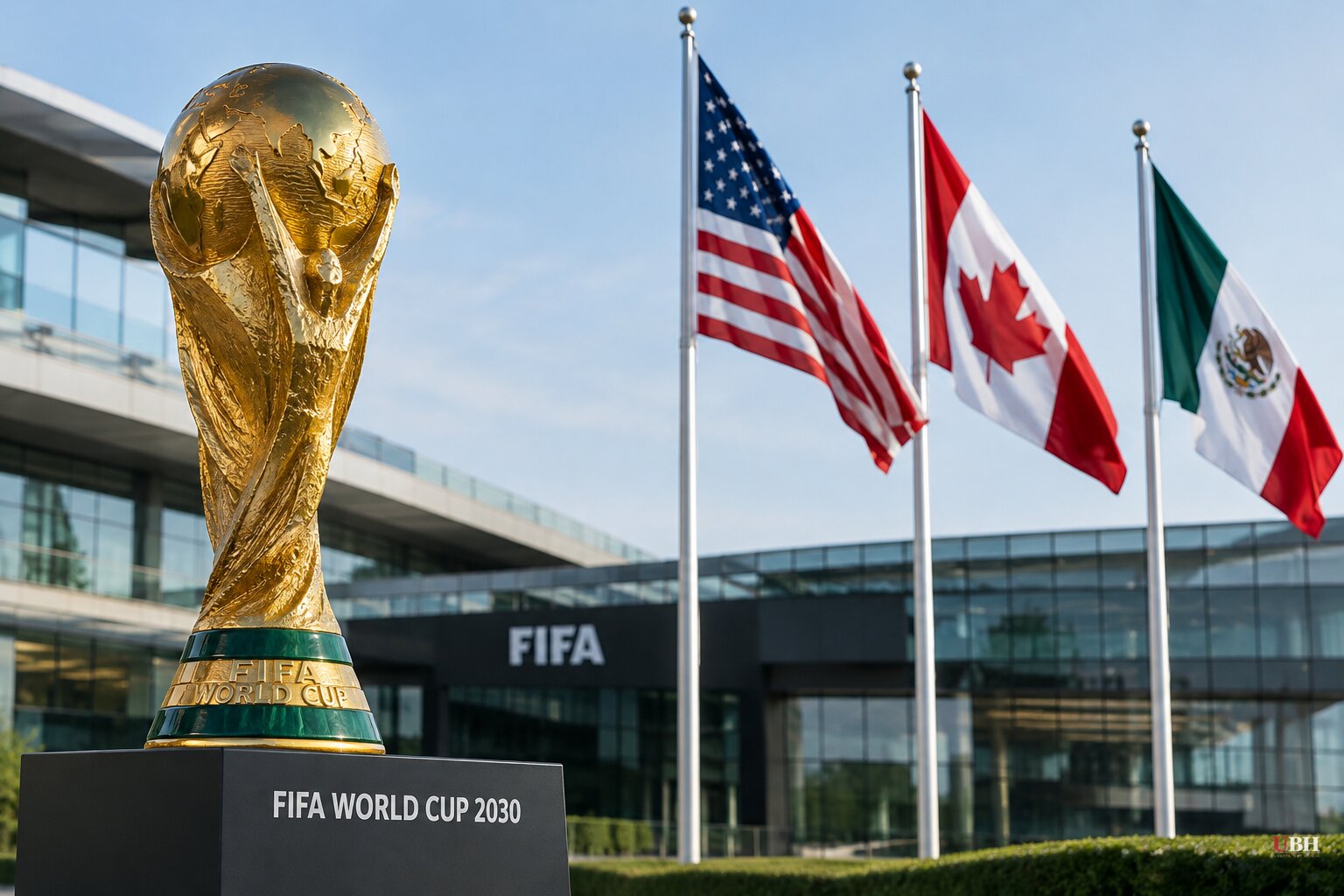
FIFA's first-round deadline for U.S. broadcast rights to the 2030 men's World Cup falls on Thursday, Nov. 19. Nearly every major network and streamer is expected to submit an offer.
Media-rights and broadcast experts canvassed by The Guardian in the U.S. and Europe expect the auction to bring in between $1.5 billion and $2 billion. That would be the most competitive and expensive sale in the tournament's history.
What the 2026 deal cost
Fox paid $485 million for exclusive English-language rights to this year's World Cup. Comcast's Telemundo paid $600 million for Spanish.
Neither deal went to auction. FIFA extended both in 2015, without competitive bidding, as compensation for moving the 2022 Qatar tournament from summer to winter.
The 2026 tournament then delivered the numbers. Fox's broadcast of Spain's extra-time win over Argentina in the final peaked at 51.685 million viewers, the most-watched soccer telecast in U.S. history. Across all 104 matches, Fox averaged 7.7 million viewers, double the figure for Qatar.
Telemundo and Peacock averaged six million viewers per match. Both the final and a Mexico-England match peaked above 23 million on the Spanish-language side.
The money followed. Fox and Telemundo together generated $1.19 billion in advertising sales during the tournament, according to ad-tracking firm Guideline, with Fox accounting for $835 million. Antenna data shows nearly three million people subscribed to Fox's streaming service, Fox One, in June, about 400,000 of them on opening day.
The bidders
The Guardian reports that multiple sources confirmed Netflix will bid. So will fellow streamers Apple TV, Disney, Amazon, YouTube and Dazn, along with traditional players Fox, ESPN and NBCUniversal.
Paramount Skydance's position is unclear. The Guardian lists it among the expected bidders but says it may be constrained by budget cuts following its $110 billion acquisition of Warner Bros Discovery. A separate report says Skydance has opted out of bidding, a claim Skydance has not confirmed.
Netflix is the name that keeps coming up. It already holds exclusive U.S. rights to the 2027 and 2031 Women's World Cups, and it has rights to the 2030 men's tournament in Spain.
"I would put money on Netflix to win. They will pay whatever it takes," one experienced media-rights buyer told The Guardian. That is one anonymous buyer's prediction, not a finding by FIFA or Netflix, and Netflix has not commented on its bid.
A broadcasting veteran quoted by The Guardian, also unnamed, said "there's a huge range of buyers and therefore a broad range of possible outcomes." The same person said Fox "will find it very challenging to retain the rights."
Fox's position
Fox is not conceding. Fox Corporation CEO Lachlan Murdoch said earlier this month the company will be "disciplined" in its approach to World Cup rights.
That signals a focus on price. Fox is sitting on the strongest data of any bidder: the record final, the doubled average audience and $835 million in World Cup ad sales. A winning bid in the $1.5 billion to $2 billion range would be three to four times what it paid for 2026.
Fox also has a time-zone problem to work around. The 2030 tournament is in Spain, Portugal and Morocco, so kickoffs will be less friendly to American viewers. The Guardian's sources say the effect is hard to price and may not matter much given demand. As a reference point, NBC paid about $1.5 billion for the 2024 Paris Olympics and averaged more than 30 million daily viewers.
Why the structure matters
FIFA is selling English and Spanish rights together for the first time. The Guardian's sources read that as a sign FIFA wants a single exclusive holder, which suits streamers that are not tied to linear networks.
There is no U.S. rule requiring a World Cup to air on free-to-air television. Spain has one, which is why Netflix will have to share some 2030 matches there with a broadcast network. In the U.S., FIFA could in principle sell every match to a single streamer behind a subscription.
That is not the only path. Prior reports indicate FIFA is open to joint bids between multiple broadcasters, which would leave room for a streamer and a broadcast network to split the tournament.
Netflix's coverage of the 2027 Women's World Cup next summer will be its first run at the tournament in the U.S. FIFA has not said when it will narrow the field after Thursday's first round, or whether it will accept a joint bid over a single-buyer offer.
Sources used for this briefing
6 links from 6 independent newsrooms (syndicated copies of the same report count once)
These are the sources it draws on, linked so you can verify.


