
Unbiased headlines. Facts, not spin.
Every story is an unbiased news briefing written from 110+ sources across the spectrum — sources linked so you can verify it yourself.
 politics
Major Story (7/10)
June 23, 2026 at 03:34 AM
politics
Major Story (7/10)
June 23, 2026 at 03:34 AM
Federal Judge Blocks Trump's Expanded SAVE Database for Voter Roll Checks, Citing Inaccurate Data and Privacy Violations
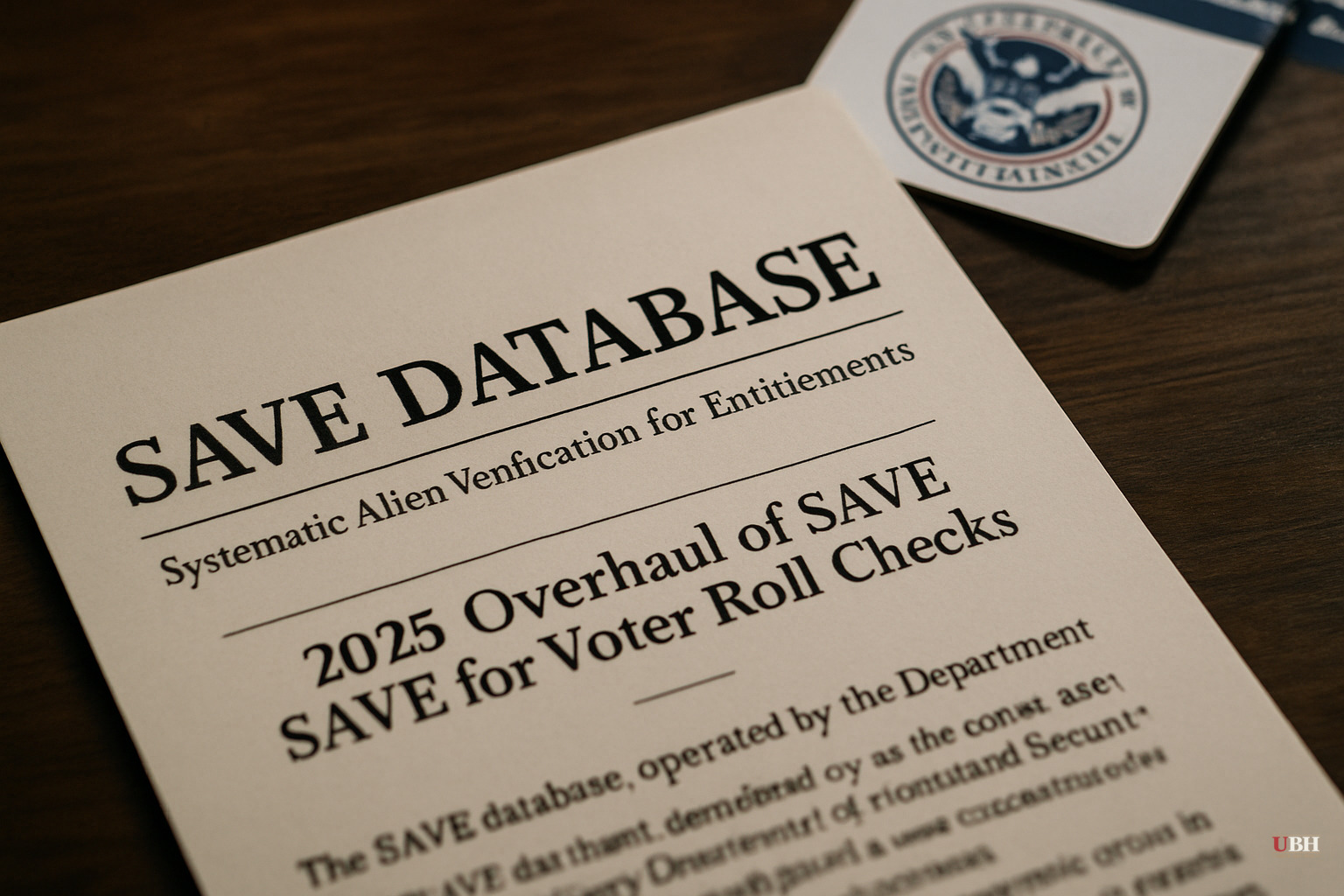
Since the Trump administration's voter-roll enforcement effort began escalating in 2025, courts have now blocked multiple pillars of that strategy. Monday's ruling is the latest in that series.
U.S. District Judge Sparkle Sooknanan, a Biden appointee sitting in Washington, D.C., issued a 75-page ruling blocking the Trump administration from using its overhauled version of the Systematic Alien Verification for Entitlements — the SAVE database — to check whether registered voters are U.S. citizens. The case is League of Women Voters et al. v. DHS, No. 25-3501.
What the Court Actually Found
The judge did NOT throw out the SAVE program. SAVE has existed since 1986 and will continue to be used to verify immigration status for federal benefits. What Sooknanan blocked is the 2025 overhaul that expanded the system to include Social Security Administration records, allow bulk searches of millions of records at once, and let state and local officials query it to flag potential noncitizens on voter rolls.
According to CBS News, which reviewed the opinion, Sooknanan found the administration violated three laws: the Social Security Act, the Privacy Act of 1974, and the Administrative Procedure Act. She wrote that federal agencies had "haphazardly combined and repurposed the private information of millions of Americans, including citizenship data that they knew to be unreliable."
The inaccuracy problem is not hypothetical. Votebeat, which covers election administration, reported that the judge cited Texas specifically — the state used the modified database, and it flagged actual U.S. citizens as noncitizens. Those voters had their registrations cancelled based on bad data.
The Administration's Position
DHS General Counsel James Percival blasted the ruling on X, writing: "It's amazing how hard the Left will fight to stop us from solving problems they insist do not exist." Neither DHS nor the DOJ responded to media requests for comment on the ruling itself, according to Reuters reporting carried by the Daily Signal.
The administration's core argument, as previously stated by a USCIS spokesman to Breitbart News, is that the expanded SAVE system was necessary "to ensure America's elections are reserved exclusively for American citizens." DHS also argued it was well within its authority to modernize the database under the executive order framework.
Federal law does bar noncitizens from voting in federal elections, and no credible source disputes that a functional verification mechanism would serve a real purpose if it worked accurately.
The Strongest Case for the Administration
Critics of the ruling argue that the judge's decision effectively prevents the government from doing something that most Americans support: confirming that only citizens vote. Sen. Rick Scott, R-Fla., has cited polling suggesting broad bipartisan support for voter ID and citizenship verification. If the SAVE database were accurate, the legal objections rooted in the Privacy Act and Social Security Act might still apply, but the practical harm to voters would be minimal.
The filibuster math in the Senate also means the SAVE America Act — which would mandate photo ID, proof of citizenship, and an end to mail-in voting in federal elections — cannot pass without either 60 votes or eliminating the filibuster. Proponents argue courts are doing the blocking that Senate procedural rules won't let them counter legislatively.
But the Data Problem Is Real
The ruling doesn't rest entirely on theoretical privacy harms. It rests on documented errors. States actively cancelled voter registrations based on the flawed database, according to both Votebeat and CBS News. Eligible voters lost their registration because a federal agency combined datasets it knew were unreliable.
Justin Levitt, a Loyola Law School professor and former Biden White House adviser on voting rights, told Votebeat the ruling "stops the bleeding" for voters who might otherwise face additional hurdles to cast a legal ballot. The underlying factual predicate he's describing, voters being wrongly flagged, is documented in the court record.
Daily Wire's framing of the ruling as a block on "a common-sense voting safeguard" omits the court's specific findings about known data inaccuracies. A safeguard that incorrectly removes citizens is not functioning as a safeguard.
The Senate Standoff
Monday's ruling lands as Senate Republicans are in open conflict over what to do next. Sen. Mike Lee, R-Utah, said publicly over the weekend that establishment Senate Republicans were telling colleagues behind closed doors to stop discussing the SAVE America Act even while advocating for it publicly on Fox News and at donor events, according to the Daily Signal. Senate Majority Leader John Thune's office denied those reports.
Trump is scheduled to attend a closed-door Senate Republican lunch this Wednesday at Scott's invitation to discuss the legislation's path forward. Scott wants to break the bill into pieces — separate votes on voter ID, citizenship requirements, and voter roll sharing — to force Democrats on record ahead of November. Lee posted that Trump "is not giving up on the SAVE America Act."
The administration is considering whether to appeal to the U.S. Court of Appeals for the D.C. Circuit, the Daily Wire reported. If three other federal judges have already blocked related executive orders on citizenship verification and mail ballot restrictions, the appellate path is uncertain and the calendar is tight: November 3 is less than five months away.
Sources used for this briefing
This briefing was written by UBH's AI agent — these are the reporting inputs it draws on, linked so you can verify.


