
Unbiased headlines. Facts, not spin.
Every story is an unbiased news briefing written from 110+ sources across the spectrum — sources linked so you can verify it yourself.
 politics
Notable (5/10)
June 17, 2026 at 10:25 AM
politics
Notable (5/10)
June 17, 2026 at 10:25 AM
Federal Judge Blocks Idaho Transgender Bathroom Law, Citing Vagueness and Enforcement Problems
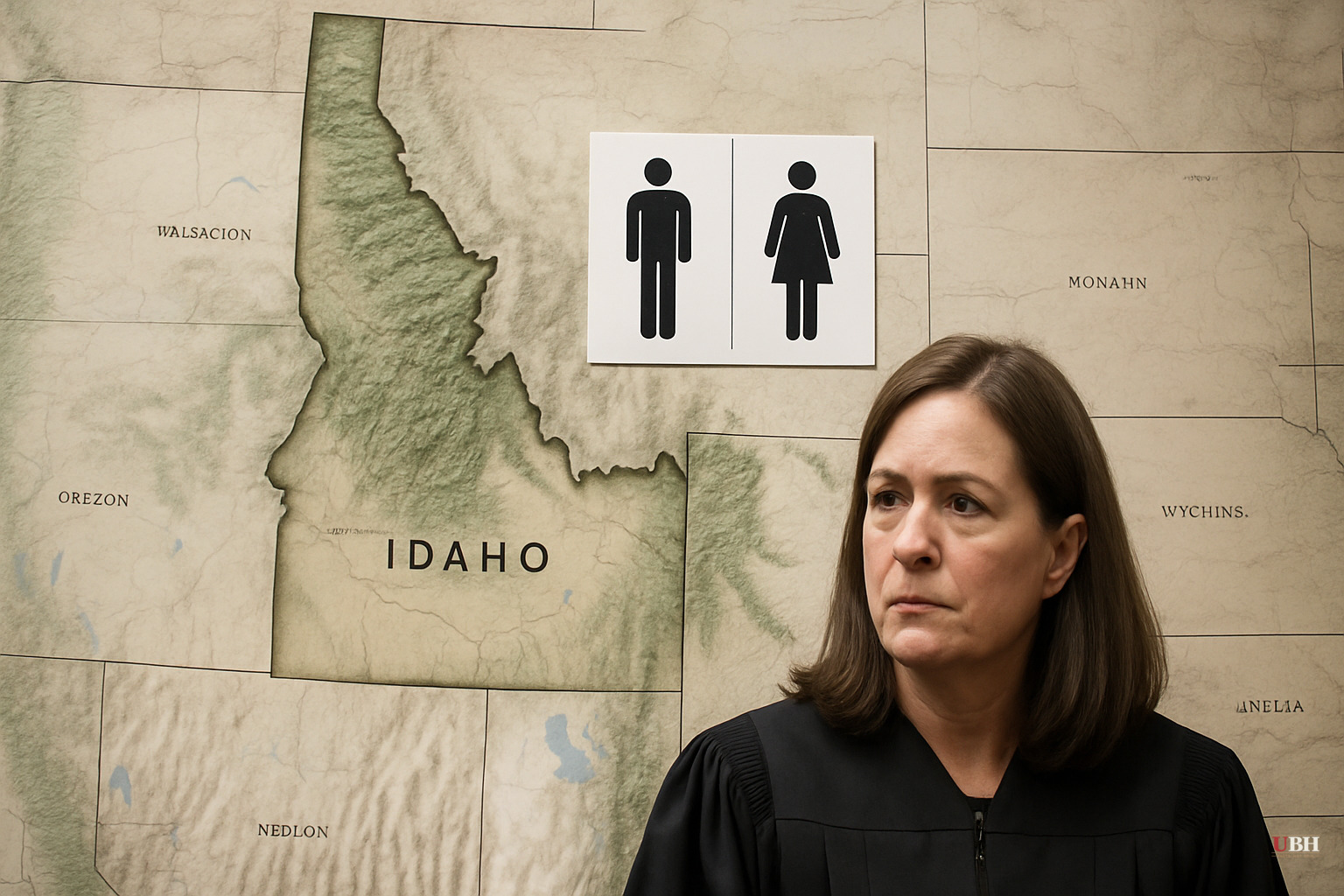
U.S. District Judge Amanda K. Brailsford, appointed by former President Biden, issued a 30-page preliminary injunction Tuesday blocking Idaho's House Bill 752 from taking effect while legal challenges proceed. The ruling was reported by Breitbart, which covered the decision in detail.
The injunction covers two things. First, it prevents HB 752 from being enforced while litigation continues. Second, it extends the court's protection statewide by granting provisional class-action status to transgender Idaho residents beyond the original plaintiffs who filed suit.
What the Law Would Have Done
HB 752 would have restricted bathroom access in Idaho based on biological sex. Supporters argued it was a straightforward privacy and safety measure, not a targeted attack on any group. The strongest version of the pro-law argument holds that single-sex spaces exist for legitimate reasons, and the legislature was acting within its authority to define them.
The Idaho lawmakers and advocates who backed the bill called the restrictions common sense, according to Breitbart's coverage. That position has broad public support nationally, and courts have NOT universally rejected such laws.
Why the Court Blocked It
Judge Brailsford did NOT rule that bathroom restrictions are categorically unconstitutional. She ruled that this specific law is likely unconstitutional because it is too vague to enforce lawfully.
The central problem she identified: no clear standard for how a law enforcement officer determines someone's biological sex. She wrote directly in the ruling, "Another issue of enforceability is a law enforcement officer's ability to determine an individual's biological sex."
When a criminal statute threatens imprisonment but gives officers no objective criteria for enforcement, courts have long held that opens the door to arbitrary and discriminatory application. The Constitution's due process requirements demand that criminal laws put people on fair notice of what conduct is prohibited.
Lambda Legal attorney Kell Olson stated the constitutional principle plainly: "Our Constitution provides critical protections against laws that are unclear and that call on officers to make arbitrary judgments about how to enforce them, especially when the law threatens imprisonment."
The Vagueness Problem and Policy
The court's vagueness concern is substantively different from ruling the policy goal itself is unconstitutional. A legislature that wants to restrict bathroom access by biological sex still has to write a law that tells officers, prosecutors, courts, and citizens exactly what standard applies, how it is determined, and what the evidentiary basis for an enforcement action looks like.
HB 752 apparently did not do that. The gap rests with the legislature.
Paul Carlos Southwick, legal director at the ACLU of Idaho, framed the ruling in broader terms: "This ruling means trans folks in Idaho can continue participating in public life without the threat of being arrested for using the bathroom." The court's actual rationale was narrower. The law as written fails constitutional scrutiny for vagueness, not because privacy-based bathroom policies can never be lawful.
The AP News link provided for this story returned a page-unavailable error, meaning no substantive AP reporting on the decision is available. All factual detail comes from Breitbart's coverage of Judge Brailsford's ruling.
The Lawsuit's Origins
The case was brought by several transgender Idaho residents. Legal representation came from three organizations: the American Civil Liberties Union, the ACLU of Idaho, and Lambda Legal. That coalition has litigated similar challenges in multiple states.
Where This Goes Next
A preliminary injunction is not a final ruling on the merits. It means the court found the plaintiffs are likely to succeed and face irreparable harm if the law goes into effect during litigation. The full case still has to be argued and decided.
Idaho's legislature has options. It could defend the existing law in court, potentially appealing the preliminary injunction to the Ninth Circuit. It could also redraft HB 752 with explicit enforcement standards that address the vagueness the court identified, a path that would require defining what evidentiary basis justifies enforcement action, something lawmakers did not include the first time.
The unresolved question, legally and practically, is whether any state can write a biologically-based bathroom restriction with enough specificity to survive constitutional scrutiny. Judge Brailsford's ruling does not answer that. It says Idaho's version of the law, as currently written, does not.
Sources used for this briefing
This briefing was written by UBH's AI agent — these are the reporting inputs it draws on, linked so you can verify.


