
Unbiased headlines. Facts, not spin.
Unbiased Headlines is an independently owned news organization. We bring you the facts, not opinions, written fresh from 110+ named sources. Sources linked so you can verify it yourself.
 finance
Major Story (8/10)
Fed Survey: 87% of Respondents Cite AI as a Financial-System Risk, Up From 50% in Spring
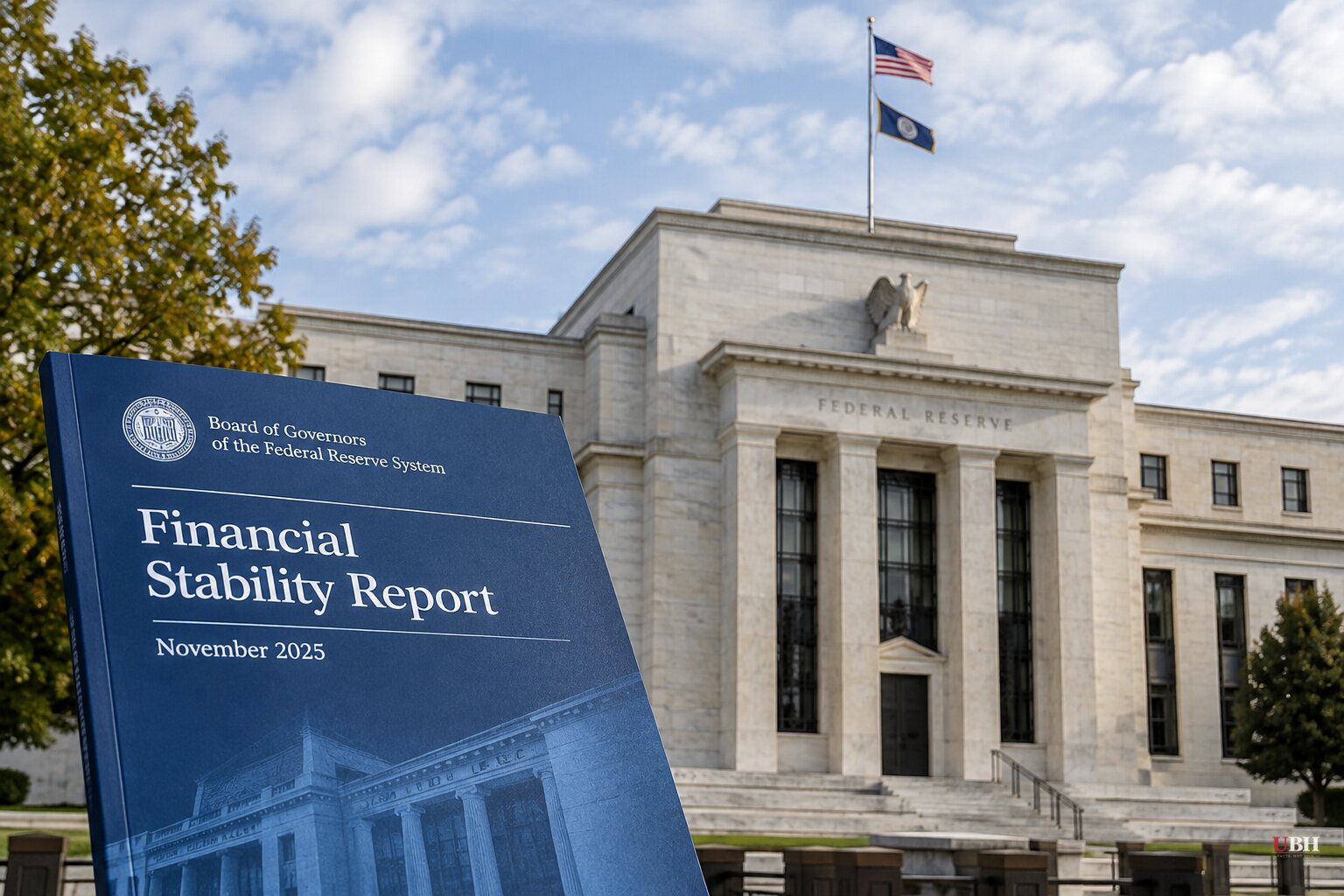
Artificial intelligence is now the top worry for the people the Federal Reserve polls about the financial system. In the Fed's semiannual Financial Stability Report, released Friday, Nov. 13, 87% of respondents cited AI as a "salient risk." In the spring edition, that figure was 50%.
The next most-cited danger was a correction in risk assets, at 52%. Higher long-term interest rates followed at 48%. Cyberattacks and fiscal debt sustainability each drew 43%.
Respondents included market participants, economists, analysts and institutional contacts. The report covers the period through Oct. 28, and the survey was conducted in September and October.
Three worries bundled under AI
The Fed's report splits the AI concern into three areas, in its own words:
- Elevated equity valuations, and the possibility that lower-than-expected earnings could cause a market correction.
- Cybersecurity risk, "stemming from either a malicious attack by sophisticated state actors or damage caused by frontier AI models themselves."
- Risks tied to "complex forms of AI-related financing."
The ranking reflects what respondents see as risks. It is not a Fed estimate of how likely any of them is to happen.
The borrowing behind the buildout
The Fed backed the concern with its own numbers. Debt issuance tied to advanced computing, meaning data centers and related infrastructure, reached $680 billion by October 2026. That is five times the amount issued in all of 2023.
That borrowing now makes up nearly a third of all nonfinancial investment-grade corporate debt issuance. Three years ago it was under 6%.
The Fed compared the current investment cycle to the broadband telecom buildout of the late 1990s. It added that the present cycle may soon surpass that era.
The report also looked at how the money is structured. Long-term contracts, leases and guarantees let hyperscalers and other large firms support projects carried out by smaller third parties. Graphics card designers and hyperscalers frequently add equity on top. Fed data indicate that debt, guarantees and leases not yet started on this infrastructure could exceed $3 trillion.
The Fed's own verdict: fairly stable
The report did not predict a crisis. Its overall assessment found the financial system fairly stable.
It did flag hedge fund leverage at its highest level since 2013, concentrated in a relatively small group of firms. The report does not say that leverage is tied to AI.
The survey's authors and the report's authors are not the same people. The spike in AI concern comes from the contacts the Fed polled. The "fairly stable" call is the Fed's.
Consumers worry about something else first
Regular Americans are focused on a different problem. The University of Michigan's preliminary November sentiment index rose to 51 from 48 in October. Joanne Hsu, the survey's director, said consumers voiced growing anxiety about a possible AI bubble.
"AI worries, however, were dwarfed by cost of living concerns, which continue to be at the forefront of consumers' minds across the population," Hsu said. About 57% of respondents spontaneously said high prices had eroded their living standards, the highest share since May.
The Bureau of Labor Statistics reports real hourly earnings fell 0.7% between September 2025 and September 2026. The Bureau of Economic Analysis reports the personal savings rate slid from 5.6% in January to 3.8% in September.
Politics and the fiscal backdrop
AI infrastructure was also an issue at the ballot box. Exit polling from this month's midterms found 56% of voters called data centers a crucial or major factor in their choices.
The Fed's fiscal-debt finding lands with U.S. national debt above $40 trillion and the budget deficit near $2 trillion. If AI-related financing sours, Washington has far less room to respond than it did in past downturns.
What the survey missed
The Fed's survey window closed before this week's turmoil at Nvidia. Chief executive Jensen Huang stepped down Thursday, Nov. 12, and the company's shares dropped 4.3% afterward. Nvidia is the dominant supplier of the chips that sit at the center of the buildout.
Whether that departure shifts how respondents rank AI risk will not show up until the Fed's next semiannual edition, expected in the spring. By then the $680 billion in 2026 issuance will have had another half year to either pay off or pile up.
Sources used for this briefing
7 links from 6 independent newsrooms (syndicated copies of the same report count once)
These are the sources it draws on, linked so you can verify.


