
Unbiased headlines. Facts, not spin.
Unbiased Headlines is an independently owned news organization. We bring you the facts, not opinions, written fresh from 110+ named sources. Sources linked so you can verify it yourself.
 finance
Major Story (8/10)
Event date: November 16, 2026 ·
Fed Puts Potential AI Obligations at Seven Tech Giants Above $3 Trillion, Outside Reported Debt
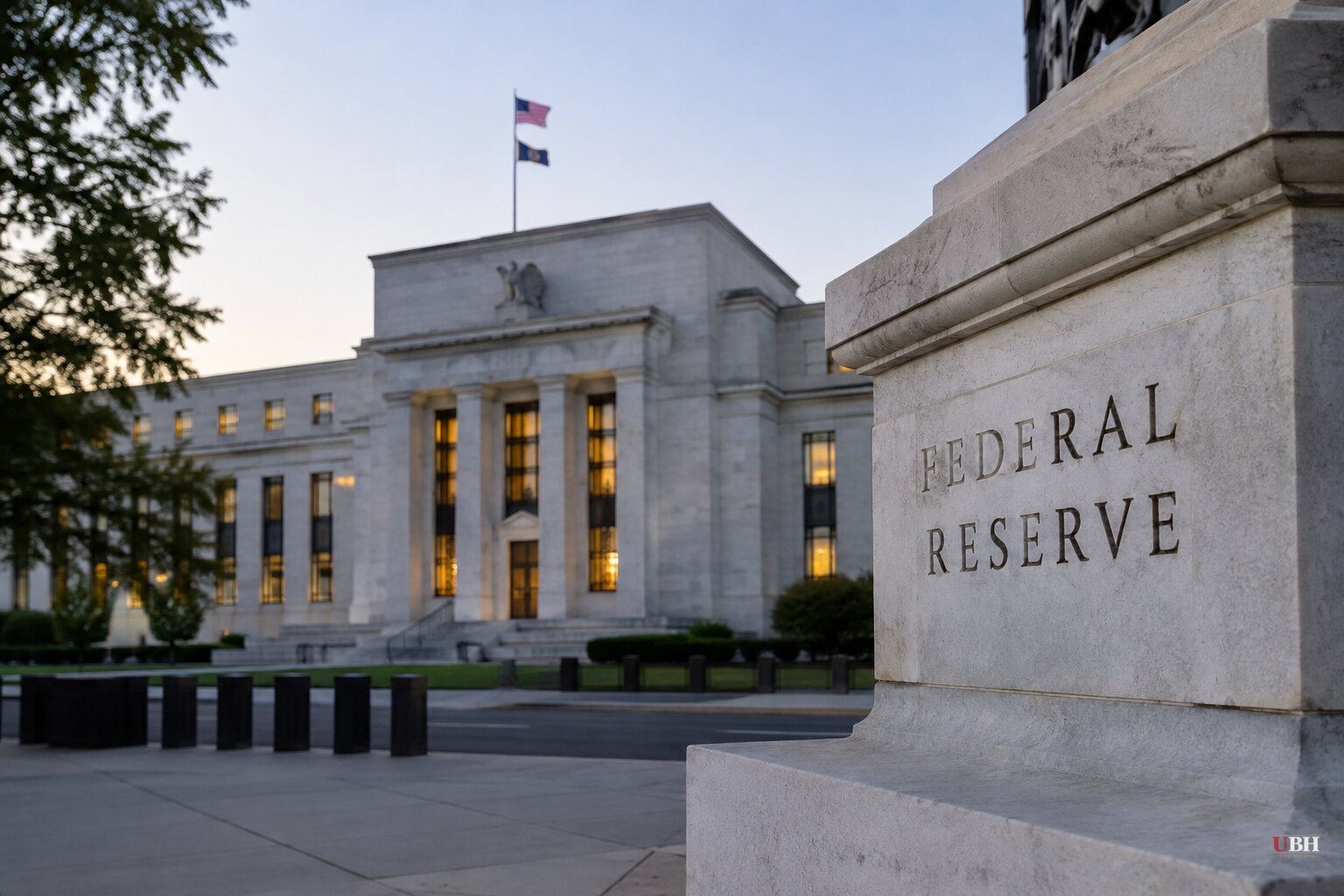
Since the Fed's November Financial Stability Report landed, and after Governor Michael Barr laid out its findings in a Monday, Nov. 16 speech in Milan, one number has stood out: more than $3 trillion in commitments by seven AI giants that sit outside their reported debt.
The report carries a new section, "Leverage in the Data Center Buildout." None of the five earlier editions going back to 2024 had one.
What the Fed counted
The section covers Amazon, Alphabet, Broadcom, Meta, Microsoft, Nvidia and Oracle. It tallies roughly $1 trillion in leases that are signed but haven't started, and more than $2 trillion in take-or-pay contracts and residual value guarantees.
Barr put the "potential maximum nominal value" of those obligations above $3 trillion. He said the seven firms' on-balance-sheet debt "is expected to exceed $800 billion before year's end."
The Fed itself flags a limit on the comparison. The off-balance-sheet figures are undiscounted and "not directly comparable" with debt. Barr said the same: presenting them before discounting "complicates comparisons."
The borrowing is already large. Debt issuance tied to advanced computing passed $680 billion by October, against $130 billion for all of 2023. Its share of nonfinancial investment-grade corporate issuance went from under 6% in 2023 to about 31% this year. The Fed puts outstanding public debt tied to advanced computing above $1.1 trillion and says private credit deals make the full total harder to measure.
Where the risk lands
The report says the structures let strong-credit companies back weaker-credit projects "without having an immediate, direct effect on the balance sheets" of the big firms. Data center developers use the leases to finance construction. The riskier slices of that debt end up with high-yield bond funds, life insurers, business development companies and other private debt vehicles.
The largest U.S. bank holding companies have "close to $1 trillion of exposure" to large tech firms, data center developers, AI-related special purpose entities, private credit vehicles and utilities, according to the Fed.
Barr also singled out more than $100 billion in equity investments by hyperscalers and GPU makers in AI labs and cloud startups. He called it "circular financing": the big firm invests, and the startup uses the money to rent or buy compute from that same firm. The investments are a small share of the larger companies' balance sheets, Barr said, but "critical for the smaller firms receiving the investments."
He warned that the opacity "can exacerbate selloffs when investor sentiment shifts, as it is hard to know where risk resides." A sharp reversal in AI investment, he said, could trigger rapid deleveraging and "self-reinforcing fire sales," with hedge-fund leverage a key concern. Leverage in equity strategies has risen, partly through large dealers' prime brokerage services.
The Fed's own caveats
The Fed is not predicting a bust. Barr said he remains optimistic about AI's long-term potential and that Fed policymakers "do not target levels of financial markets." He added: "Given the still-limited amount of debt backing the current boom, I'm less concerned about direct losses."
He also compared hyperscalers' cumulative capital spending and debt issuance since 2020 with the telecom broadband cycle that began in 1995. They have not surpassed it yet, Barr said, but "they may do so soon."
The companies named have not answered on the record. Amazon, Alphabet, Broadcom, Meta, Microsoft and Oracle did not immediately respond to Fortune's requests for comment.
Markets are already nervous
The Fed surveyed 23 contacts at broker-dealers, banks, investment funds and advisory firms in September and October. Some 87% named AI as a salient risk to the financial system, up from 50% in the May survey. A broad correction in risk assets came next at 52%.
The spending is showing up in company results. Microsoft reported Oct. 28 that first-quarter fiscal 2027 revenue rose 19% to $92.3 billion, above consensus estimates. Capital expenditures on property and equipment hit $39.4 billion, nearly double the $19.4 billion a year earlier. Its fiscal 2026 free cash flow was $66.99 billion, down 6.46% from 2025. The next day it announced a $25 billion corporate debt issuance.
Shares of Microsoft, Alphabet and Amazon all closed lower after their latest earnings, with Alphabet and Amazon hit harder. Both of those companies forecast higher AI capital spending in 2027.
A political risk to the buildout
Financing isn't the only pressure. Texas, projected to overtake Virginia as the largest U.S. data center market, elected Democrat Gina Hinojosa governor in the Nov. 3 midterms. Hinojosa backs a data center moratorium, and investment bank Jefferies estimates 13.3 gigawatts of announced Texas developments could be at risk under one. Ohio voters faced 21 data center ballot questions across 18 communities.
Brittany Kaiser, CEO of Alpha Compute, told Fox News Digital the results "make us and our investors pause and think if we should be investing somewhere else." She argued for "common-sense regulations, not sweeping bans or moratoriums."
What comes next
Warsh said Monday that Fed Board staff have started modeling AI scenarios, ranging from a growth boom to an AI disappointment. The Fed has not published those results.
The report's data runs through Oct. 28. It is still unknown how much of the $3 trillion in potential obligations will ever be drawn on, or who holds the paper if AI demand falls short.
Sources used for this briefing
7 links from 7 independent newsrooms (syndicated copies of the same report count once)
These are the sources it draws on, linked so you can verify.


