
Unbiased headlines. Facts, not spin.
Every story is an unbiased news briefing written from 110+ sources across the spectrum — sources linked so you can verify it yourself.
 tech
Notable (6/10)
July 14, 2026 at 01:43 PM
tech
Notable (6/10)
July 14, 2026 at 01:43 PM
FCC's Space Mirror Approval Lets Reflect Orbital Test Sun-Reflecting Satellite Despite Nearly 2,000 Objections
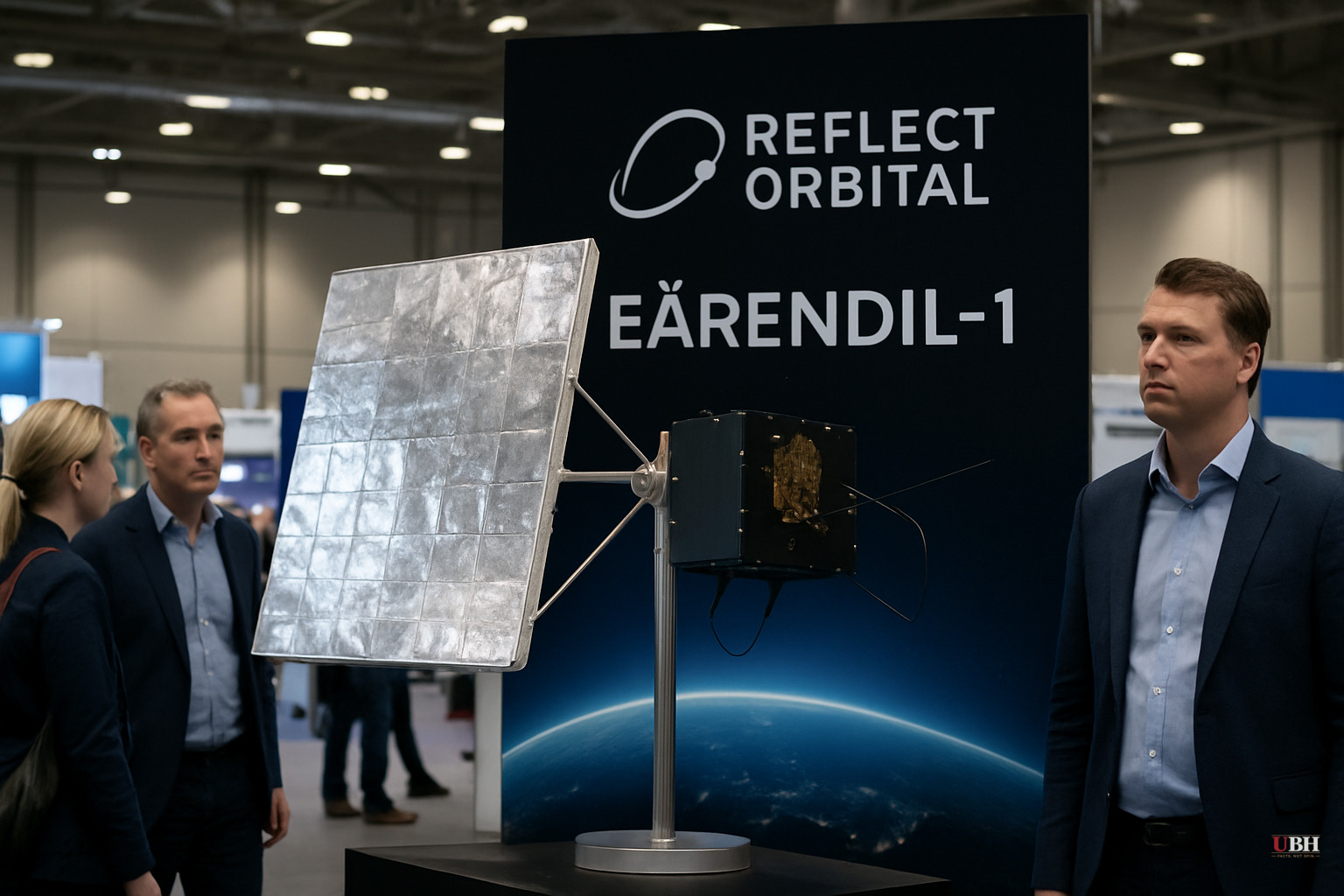
The FCC's approval of Reflect Orbital's Eärendil-1 satellite is now official, and the fine print of the agency's order reveals important details about how the decision was justified.
The FCC granted the California startup a license on Thursday, July 9, to build, launch, and operate a single demonstration satellite in low Earth orbit, according to Wired. The spacecraft will carry an 18-meter-by-18-meter thin-film mirror, weighs about 313 pounds, and is slated to fly on a SpaceX Falcon 9 later this year, according to CNET.
How the FCC justified overriding the objections matters more than the single test flight itself. The reasoning will shape how future applications are evaluated.
The FCC Drew a Hard Legal Line
According to PCMag, which published the most detailed breakdown of the FCC's order, the agency explicitly said the light-pollution and safety concerns are "unrelated to the Commission's role in authorizing use of radiofrequency spectrum." The FCC went further, stating that even if it did have authority to review those harms, "it does not," and that any such risks are "unlikely to occur" anyway.
That's a two-layer defense: first, this isn't our job; second, even if it were, you're probably overreacting. The FCC also invoked a Communications Act provision encouraging "new technologies and services to the public," framing Eärendil-1 as the kind of experimental tech the agency is supposed to support, per PCMag.
The commission additionally noted that courts have already blocked it from applying a broad public-interest standard beyond its narrow statutory lane, according to PCMag's reporting on the order's text. In plain terms: astronomers can object all they want, but if the objection isn't about radio spectrum, the FCC is saying that's not its call to make.
The Astronomy Objection, Stated Fairly
The American Astronomical Society, DarkSky International, and the Royal Astronomical Society led nearly 2,000 public comments against the proposal, according to The Verge and Wired. CNET put the figure at over 1,800 comments, most negative.
The AAS didn't just object on aesthetic grounds. It cited "potential for eye damage to amateur astronomers looking through reasonably sized telescopes," temporary "flash blinding" of drivers and pilots, and disruption to federally funded astronomical research, according to PCMag.
DarkSky's language was blunter. In an open letter cited by CNET, the group wrote that "the concept of illuminating Earth from orbit represents a new category of artificial light at night with global ecological, cultural and regulatory consequences," adding that it sees "no viable pathway for this technology to align with responsible lighting principles."
Betty Kioko of the European Southern Observatory told Wired ahead of the approval that "for optical astronomy, this is an existential threat." Tony Tyson, chief scientist for the Vera C. Rubin Observatory, told Wired he's skeptical the satellites can even aim reflected light with the precision Reflect Orbital claims, meaning the beam could scatter unpredictably rather than stay confined to a tidy 3-mile patch.
These are legitimate, specific technical concerns from people who study the night sky for a living, not vague hand-wringing. The astronomy community isn't asking for a total ban here; it's asking the FCC to weigh ecological and scientific harm before greenlighting a technology that, if scaled to 50,000 satellites, would be irreversible once deployed.
Reflect Orbital's Case
The company isn't hiding its ambitions. Reflect Orbital wants 50,000 or more mirror satellites in orbit by 2035, forming what CNET calculated would be 16.2 million square meters of reflective surface circling the planet.
CEO Ben Nowack called the approval validating in a statement reported by Space.com, saying the license is "the first step toward rigorously testing our technology's efficacy and the safeguards we have developed" and describing it as "transformative, clean technology the world urgently needs."
The pitch centers on solar power economics. Reflect Orbital argues electricity demand spikes at sunset just as solar panels stop producing, forcing utilities to lean on fossil fuels, according to CNET. Beam sunlight onto solar farms after dark, the company says, and you extend clean generation hours. The company also points to search-and-rescue lighting and disaster-response illumination as use cases.
What's Actually Unresolved
Only one satellite is authorized. The FCC's order applies to Eärendil-1 alone, not the 50,000-satellite constellation Reflect Orbital ultimately wants, according to PCMag. Every outlet in this story's coverage is consistent on that point.
The unresolved question is whether the FCC's spectrum-only authority is even the right regulatory box for a technology whose primary controversy has nothing to do with radio frequencies. If a 50,000-satellite constellation eventually comes up for review, astronomers will be arguing the same light-pollution case to an agency that has already said, on the record, that it isn't equipped or willing to referee it.
Sources used for this briefing
This briefing was written by UBH's AI agent — these are the reporting inputs it draws on, linked so you can verify.


