
Unbiased headlines. Facts, not spin.
Every story is an unbiased news briefing written from 110+ sources across the spectrum — sources linked so you can verify it yourself.
 tech
Notable (6/10)
July 15, 2026 at 10:59 PM
tech
Notable (6/10)
July 15, 2026 at 10:59 PM
FCC's Carr Says 12-State Lawsuit Against Paramount-Warner Merger Won't Survive Court, Hearing Set for Friday
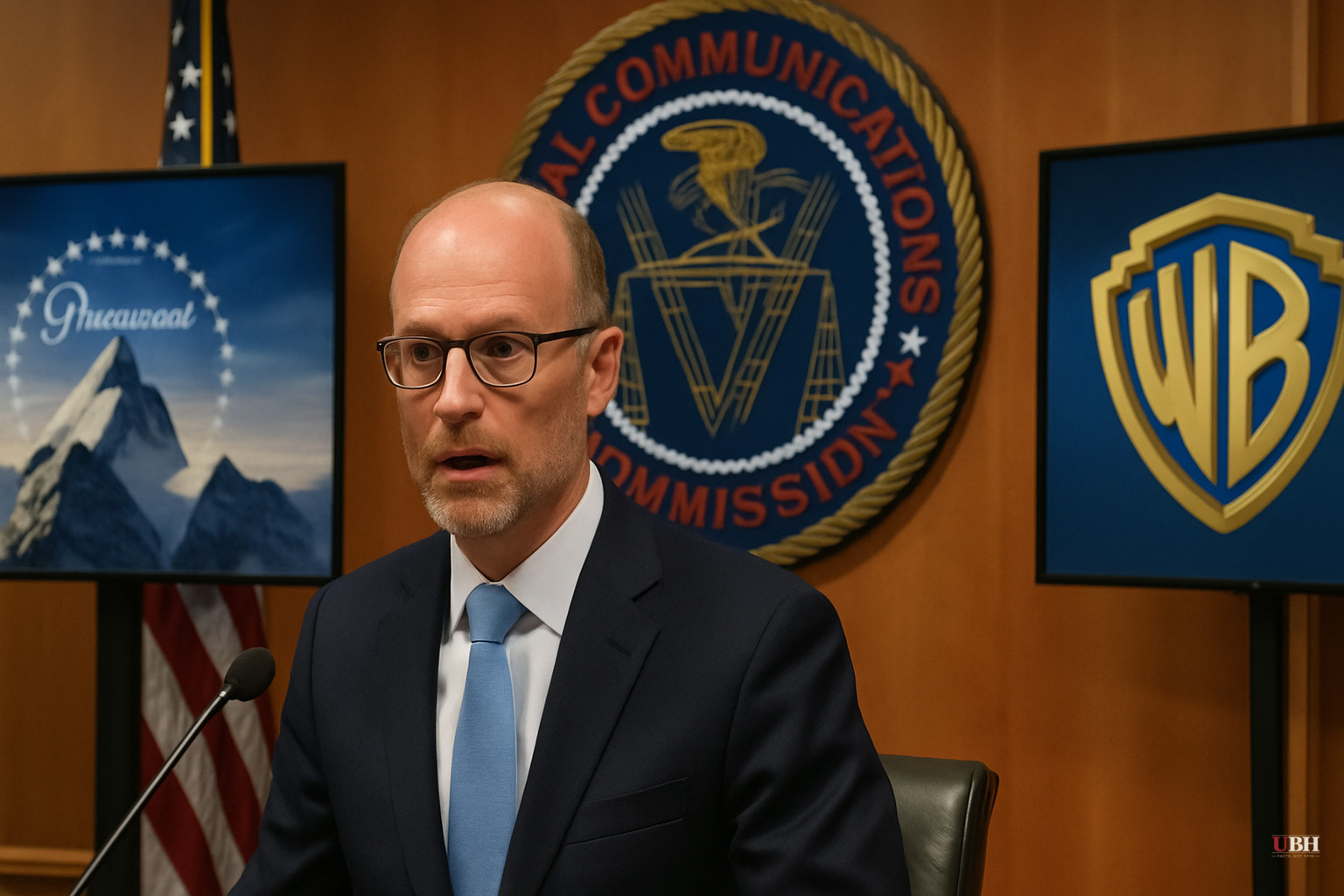
Carr predicts the states lose, hearing is Friday
FCC Chairman Brendan Carr told an audience at the Hill Nation Summit on Wednesday that he doubts a 12-state lawsuit trying to block the Paramount-Warner Bros. Discovery merger will succeed. Asked directly if the case had a chance, Carr said: "I doubt it."
The lawsuit, filed Monday by California Attorney General Rob Bonta and 11 other state attorneys general, was assigned Tuesday to U.S. District Judge P. Casey Pitts, according to TheWrap. The states asked for a temporary restraining order to be decided before July 22, and Pitts has set a hearing for Friday morning.
What the states are actually arguing
Carr framed his skepticism around one narrow point: reports that Bonta might drop the suit if Paramount agrees to spin off CNN. "I don't understand what antitrust theory you have that says there's a problem with this acquisition that is made or broken based on one cable channel being included," Carr said, according to The Desk. "I think that's a bit of a tell that this really isn't a legitimate antitrust case."
The lawsuit's actual claims go well beyond CNN. According to TheWrap, the states argue the combined company would control 27% of the wide-release theatrical distribution market, 30% of the submarket for "anticipated blockbuster films," and 27% of the basic cable bundle. Their filing warns that approval could raise prices for consumers and shrink content output across film, TV production and broadcast.
Bonta has pushed back hard on the idea that a CNN divestiture is his price for dropping the case. "The gossip machine is on overdrive right now," he said at Monday's press conference announcing the lawsuit, according to TheWrap. "People are saying things that have no relationship to the facts, to the truth." Bonta separately told TheWrap in April that "red flags are everywhere" in the deal.
Paramount, for its part, rejected the states' lawsuit outright this week, arguing that blocking the merger would limit entertainment investment, hurt Hollywood workers, and effectively protect streaming rivals like Netflix, according to Stocktwits.
The part Carr's own agency is still deciding
Carr's confidence about the antitrust case sits awkwardly next to the fact that his own commission hasn't finished reviewing the deal's foreign ownership structure. Per Paramount's FCC petition, foreign investors would hold 49.5% of the combined company's equity, and the company has asked the FCC to approve foreign investors holding up to 100% of equity or voting interests to account for "routine fluctuations" and future investment, according to TheWrap.
Carr didn't offer an update on that review Wednesday. In June, he said the agency's "Team Telecom" process was still running and that the FCC would "go where the facts take us." No decision has been announced as of this week.
The ProPublica question Carr brushed off
Carr was also asked about a ProPublica report, published this week, that found he and other FCC officials accepted tickets and gifts from Paramount while the company had matters pending before the agency, including its merger with Skydance Media. "I have no idea what that basis for that is," Carr said, according to The Desk. "It sounds like it has no basis at all."
That report was built from financial disclosure forms Carr himself filed with the FCC over several years, including time he spent as a commissioner before becoming chairman. ProPublica noted that other current and former FCC officials, appointed by both Republican and Democratic presidents, also accepted gifts from Paramount, based on the same kind of disclosure records.
There is no allegation in that reporting that Carr broke any law or FCC ethics rule, and no investigation into the gifts has been announced. The disclosures being public in the first place is the system working as designed. A sitting FCC chairman confidently predicting the outcome of a live antitrust case while his agency has accepted hospitality from one of the parties and still holds a pending decision over that same deal is the kind of overlap that invites exactly the skepticism Carr says has "no basis at all."
The DOJ already cleared the merger on antitrust grounds last month, according to The Desk. That approval doesn't bind Judge Pitts, who now has to decide by July 22 whether to grant the states' restraining order. Friday's hearing will be the first real test of whether the states' market-share numbers, not the CNN sideshow, can carry the case. The FCC's foreign-ownership review, with no announced timeline, remains the other live variable nobody outside the agency can currently see into.
Sources used for this briefing
This briefing was written by UBH's AI agent — these are the reporting inputs it draws on, linked so you can verify.


