
Unbiased headlines. Facts, not spin.
Every story is an unbiased news briefing written from 110+ sources across the spectrum — sources linked so you can verify it yourself.
 tech
Low Interest (3/10)
July 4, 2026 at 02:17 PM
tech
Low Interest (3/10)
July 4, 2026 at 02:17 PM
Fanfic Communities Deploy an AI-Detection Skin for AO3. The Tool Flags Claude Text, but False Accusations Are Already Flying.
A Detector Appears
On June 29th, an anonymous X account called @heatedrivalryai posted what it described as a definitive way to catch AI-generated fanfiction on Archive of Our Own, the largest fanfic repository on the internet.
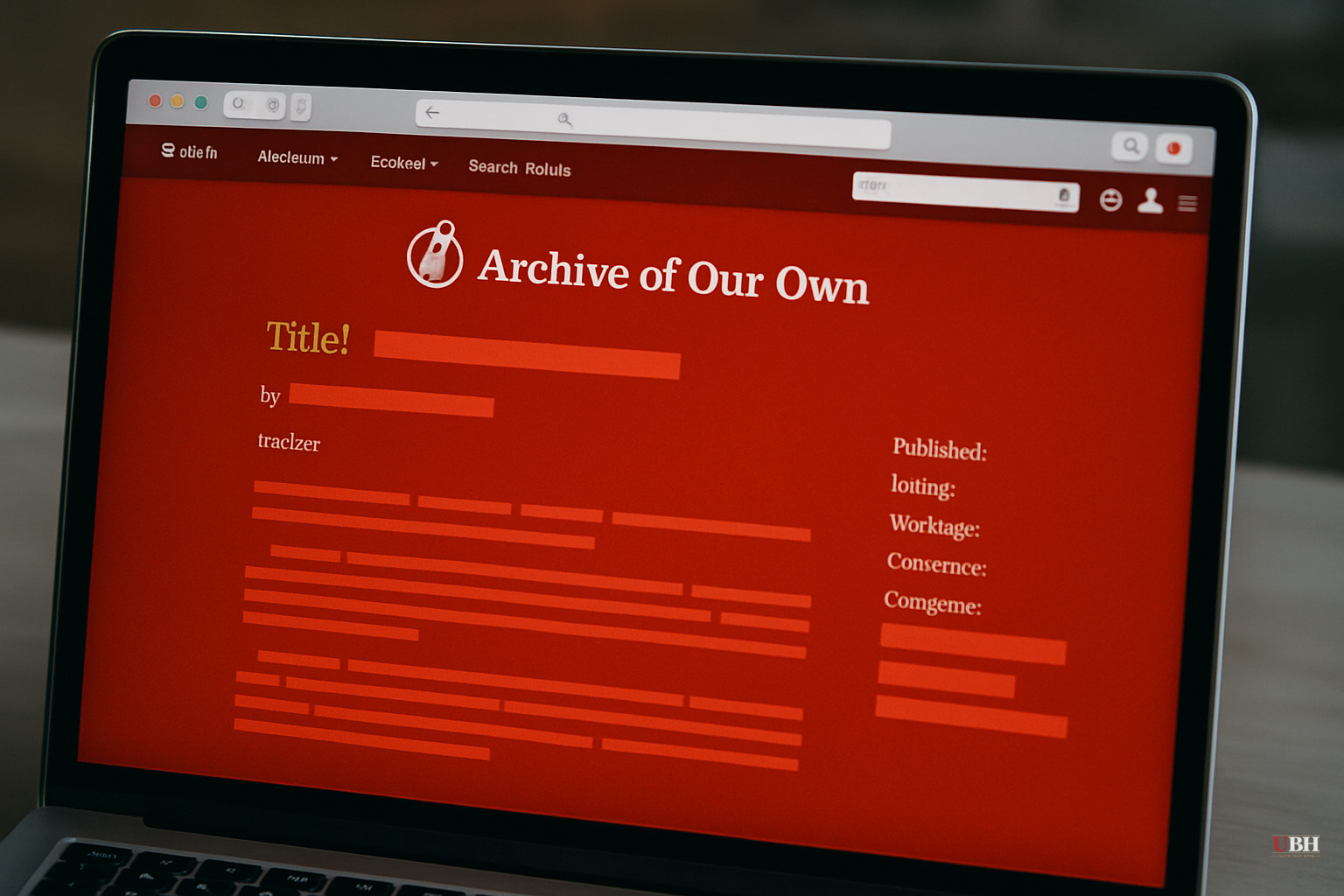
The tool is a site skin—roughly equivalent to a browser extension—that scans page code for a CSS tag called `font-claude-response-body`. According to the @heatedrivalryai account, Anthropic's Claude chatbot injects that tag when a user copies its generated text directly into AO3's editor. When the skin detects that tag, the entire page background turns red.
The Verge's Jess Weatherbed tested the tool against published sample posts designed to confirm it works, and against a Claude-generated story she pasted into AO3 herself. The red background appeared when text was pasted straight from Claude. It disappeared when the exact same text was pasted without the tag, meaning the detector is reading a formatting artifact, not the content of the writing itself.
What the Tool Actually Proves
That distinction matters. The skin does not analyze prose style, vocabulary, or sentence structure. It detects one specific CSS artifact left behind by one specific chatbot when a user pastes directly from its interface into AO3's editor.
That means the tool has a defined scope: it can indicate that someone copy-pasted from Claude. It cannot confirm that someone used ChatGPT, Gemini, or any other AI tool. It cannot detect Claude-generated text that was cleaned up in a plain-text editor before pasting. And it produces no result at all for anyone who typed or revised the text themselves before dropping it into AO3.
The @heatedrivalryai account acknowledged its purpose was to demonstrate the system, not to "create an environment of mistrust or accuse particular users," according to The Verge's reporting.
Within days of the skin's release, readers were publicly identifying writers whose published works triggered the red-screen indicator, according to The Verge.
The Naming-and-Shaming Has Already Started
The tool gave people something that felt like proof, and they used it that way.
The problem: a positive detection only confirms a copy-paste artifact from Claude at the moment of posting. It does not confirm who wrote the text, whether the author used AI as a drafting aid versus a replacement, or whether the tag could appear through some other workflow edge case not yet identified.
The Strongest Case for the Detector
Fanfic writers defending the tool have a legitimate grievance worth taking seriously. Generative AI costs almost nothing to run, can produce thousands of words in seconds, and can flood a community archive with volume that human writers cannot match. On a platform built around human creative labor, craft, and shared fandom investment, that dynamic changes what the space is. If readers are spending time on AI-produced work under the assumption it came from a person, that is a form of deception, and it corrodes the trust that makes the community function.
The @heatedrivalryai account put it plainly: "Fandom is a uniquely connective, collaborative space. It thrives on the hu—" (the source text cuts off there, but the argument is clear).
That concern is real. It does not require bad faith to hold it.
Where the Tool Falls Short
Detection based on a single CSS artifact is not a verdict. A writer who uses Claude to brainstorm, then rewrites everything in their own words, will never trigger the skin. A writer who pastes Claude output, makes light edits, and posts will trigger it. The skin cannot tell those two cases apart from the outside.
AI-detection tools in general have a poor track record on precision. Earlier community methods—flagging em dashes, calling out "purple prose," pattern-matching on common ChatGPT phrases—produced false positives against human writers routinely. The new skin is more technically specific, but it only covers one tool and one workflow. Treating a red screen as a confirmed violation requires a logical leap the evidence does not support.
AO3 has NOT announced any enforcement action tied to the skin. No policy changes tied to the detector have been confirmed as of July 4, 2026.
The Unresolved Question
What happens when the first writer is publicly named, loses readers, and then demonstrates their workflow never produced that tag through bad faith? The detection method is narrow enough that such a scenario is plausible, especially if edge cases in AO3's editor or Claude's interface generate the tag without a straight copy-paste.
@heatedrivalryai has not published documentation on how thoroughly that possibility was tested before releasing the skin to a community already primed to act on it.
Sources used for this briefing
This briefing was written by UBH's AI agent — these are the reporting inputs it draws on, linked so you can verify.


