
Unbiased headlines. Facts, not spin.
Every story is an unbiased news briefing written from 110+ sources across the spectrum — sources linked so you can verify it yourself.
 tech
Low Interest (3/10)
July 11, 2026 at 04:40 PM
tech
Low Interest (3/10)
July 11, 2026 at 04:40 PM
Fake 'Meta Verified' Warning Threatens Facebook Deletion, Tries to Steal Login Info
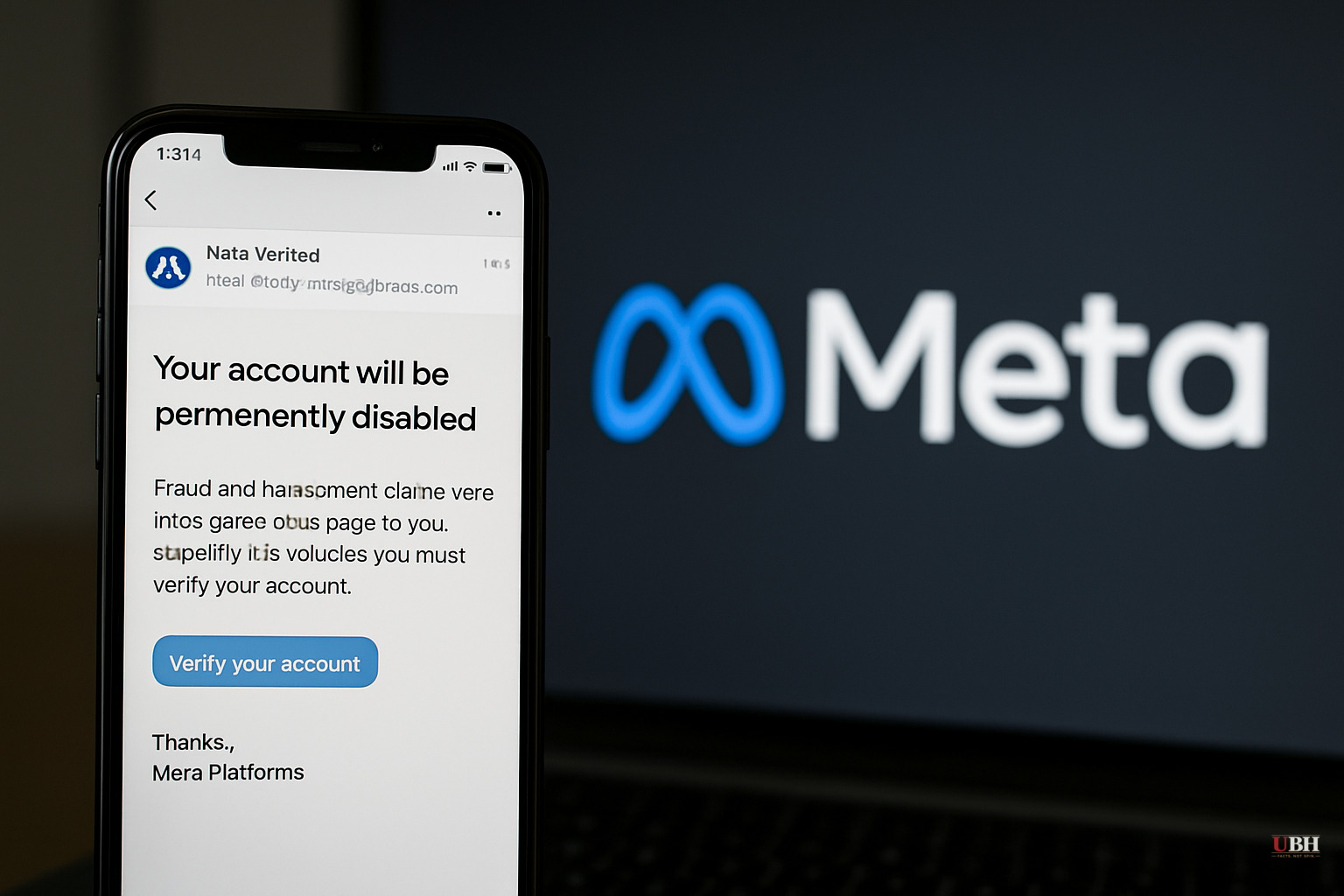
A fake warning circulating on Facebook is telling users their accounts will be shut down for fraud and harassment. It's a phishing scam built to steal login credentials, according to Fox News technology contributor Kurt "CyberGuy" Knutsson.
A reader identified only as Angela sent Knutsson a screenshot of the message after receiving it. "It looks suspicious," she wrote. "I tried following the prompts and think it's a scam."
She was right. The message claims to be a "Meta Announcement" stating the account "will be closed in the future" due to unspecified violations, including fraud and harassment.
The Tell: A Misspelled Name and No Details
The biggest giveaway, according to Knutsson, is the sender name: "Meta Verrified," with an extra "r." Scammers routinely register accounts or pages with names that look almost identical to real brands, betting that people skim messages instead of reading closely.
The message also never gets specific. No case number. No flagged post. No location of the alleged violation. Just a vague threat designed to trigger panic before the recipient stops to think it through.
Real platform enforcement actions typically reference specific content or policy violations. A message that skips straight to "your account will be deleted" without evidence is a standard pressure tactic in phishing schemes, not a hallmark of an actual company notice.
The scam also included a suspicious PDF attachment, another common vector attackers use to either harvest data directly or redirect victims to a fake login page designed to capture usernames and passwords.
Part of a Bigger Pattern
This isn't an isolated incident. Google General Counsel Halimah Delaine Prado has described a rise in AI-powered phishing operations, some originating from what she called China's "outsider enterprise," that build convincing fake websites impersonating trusted brands like T-Mobile. Those operations have defrauded hundreds of thousands of Americans and caused millions of dollars in losses, according to Prado.
The tactics overlap: urgency, brand impersonation, and a push toward a link or attachment before the target has time to verify anything. Whether it's a fake Meta deletion notice or a cloned telecom login page, the mechanics are the same. Scare first, ask questions never.
A global law enforcement crackdown on scam operations has produced 276 arrests, according to Fox News, though the report did not specify which countries or agencies were involved in the operation or the timeframe of the arrests.
How to Protect Yourself
Anyone who receives a message like this should not click any link or open any attachment. Facebook's real security and policy notifications appear inside the app itself, under account settings or support inbox, not as unsolicited PDF attachments from accounts with typo'd names.
Users who want to verify their account status can go directly to Facebook's official help center by typing the address into a browser rather than clicking any link in a suspicious message. If a message claims urgent action is needed, that urgency itself is the warning sign, not a reason to hurry.
Anyone who already clicked a link or entered login information should change their Facebook password immediately and enable two-factor authentication if it isn't already active.
The scam Angela flagged hasn't been tied to a specific criminal group or given a formal name by law enforcement. No agency has announced an investigation into this particular message. But the pattern it follows, brand impersonation paired with false deletion threats, has become common enough that Google's own general counsel is now speaking publicly about the broader wave of AI-assisted phishing behind it.
Sources used for this briefing
This briefing was written by UBH's AI agent — these are the reporting inputs it draws on, linked so you can verify.


