
Unbiased headlines. Facts, not spin.
Every story is an unbiased news briefing written from 110+ sources across the spectrum — sources linked so you can verify it yourself.
 tech
Notable (6/10)
June 27, 2026 at 05:37 PM
tech
Notable (6/10)
June 27, 2026 at 05:37 PM
Fable 5 Remains Blocked as Government Vetting Process Draws Industry Fire
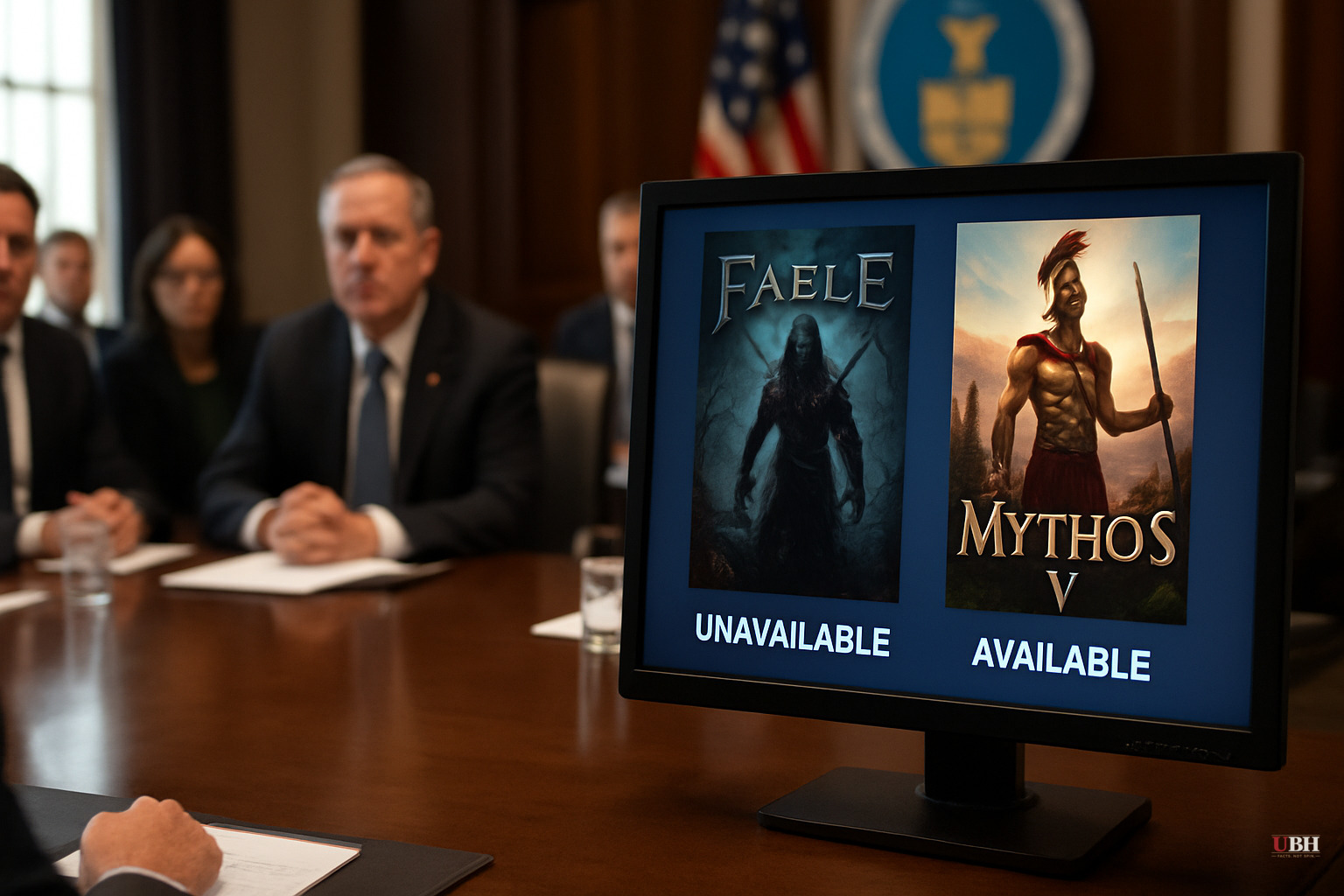
Since Commerce Secretary Howard Lutnick's June 12 directive suspended both Claude Mythos 5 and Fable 5 over jailbreaking concerns, Mythos 5 has been partially restored and Fable 5 is still blocked, with no timeline given.
Lutnick's June 26 letter to Anthropic's chief compute officer Tom Brown, obtained by Reuters and Semafor, confirmed that more than 100 entities now have access to Mythos 5, including Fortune 500 companies, financial institutions, and government agencies. The letter also lifted export licensing requirements for non-U.S.-citizen employees working within those vetted partner networks, according to Semafor.
Fable 5, the consumer-facing version that shares the same underlying model as Mythos 5, is NOT mentioned in Lutnick's letter. People close to the talks told Semafor and Reuters that discussions are moving toward releasing Fable 5 as well, but the timing remains unclear.
What Changed and Why
The original June 12 suspension followed warnings from Amazon and other companies that both models could be exploited through jailbreaking, manipulating inputs to bypass safety guardrails. Anthropic said at the time that the government believed it had identified a specific method for circumventing Fable 5's controls, according to reporting by the Epoch Times via ZeroHedge.
Lutnick cited "significant progress" in daily talks between Anthropic and the government since the block went into effect. Anthropic has committed to work with Washington on "protocols and standards" for future model releases, per the letter's text as reported by Semafor.
One specific concern underlying the original suspension: Semafor reported that the U.S. expressed worry that Mythos 5 had been released to partners too closely linked to China, reportedly referencing a South Korean telecommunications provider.
A Framework Being Built on the Fly
Lutnick's letter reflects a new executive order signed by President Trump establishing a voluntary framework under which the government has up to 30 days to review "covered frontier models" before public release, according to Techstrong.ai.
Commerce Department spokesman Benno Kass called the two-week turnaround on Mythos 5 a success: "In just two weeks, we have worked diligently to ensure America remains the global leader in AI while safeguarding our security," per Semafor.
The same day Lutnick's letter went out, OpenAI released its GPT-5.6 model to a government-approved short list rather than the public, according to Semafor and Ynet News.
The Case Against This Arrangement
The criticism deserves examination. OpenAI CEO Sam Altman said publicly that while safety testing is vital, he disagreed with "the idea of the government picking the customers," according to Techstrong.ai. When federal bureaucrats decide which Fortune 500 companies get access to a commercial AI tool and which do not, without public criteria, without an appeals process, and with an annex of approved entities that has not been published, that represents a significant departure from how technology markets normally work.
John Coleman, legislative counsel for the Foundation for Individual Rights and Expression, warned that the opaque selection process lacks transparency and undermines the rule of law, per Techstrong.ai. If the vetting criteria are secret, companies have no way to know whether they qualify or how to challenge a rejection.
European governments and U.S. allies have also expressed frustration, per Semafor, at their new dependence on decisions made in Washington with no visibility into the process.
The counterargument is real: frontier AI models with exploitable jailbreaks are a genuine national security risk, and the government moved relatively fast. Lutnick restored Mythos 5 access in two weeks, not two years. The existing export control framework already gives the Commerce Department broad authority over dual-use technology, and AI models that can accelerate cyberattacks against critical infrastructure arguably fit that category.
Both things can be true: the security concern is legitimate, and the process for managing it is insufficiently transparent.
Fable 5 and the Consumer Market
The unresolved problem is Fable 5. It was briefly the most capable consumer-facing AI model publicly available, according to Reuters. It remains offline as of June 27, 2026.
As covered in prior reporting, Asian competitors have been moving into the market gap left by Fable 5's absence. Every additional week the model stays blocked is a week those competitors gain ground with users who cannot wait.
Anthropic's spokesperson told the Epoch Times the company is "working to provision the approved set of providers and restore their access to Mythos 5 as quickly as possible" and is continuing to work toward making "Fable 5 available for general use again." That statement was made June 26. No updated timeline has been provided.
Semafor noted that the Annex A list of approved Mythos 5 partners has not been made public, meaning the public cannot independently verify who got in, based on what criteria, or whether the selection reflects anything beyond government preference.
Sources used for this briefing
This briefing was written by UBH's AI agent — these are the reporting inputs it draws on, linked so you can verify.


