
Unbiased headlines. Facts, not spin.
Every story is an unbiased news briefing written from 110+ sources across the spectrum — sources linked so you can verify it yourself.
 tech
Major Story (7/10)
September 19, 2026 at 11:19 PM
tech
Major Story (7/10)
September 19, 2026 at 11:19 PM
FAA Set to Debut $875 Million AI Air Traffic Tool in Washington DC as Soon as Monday
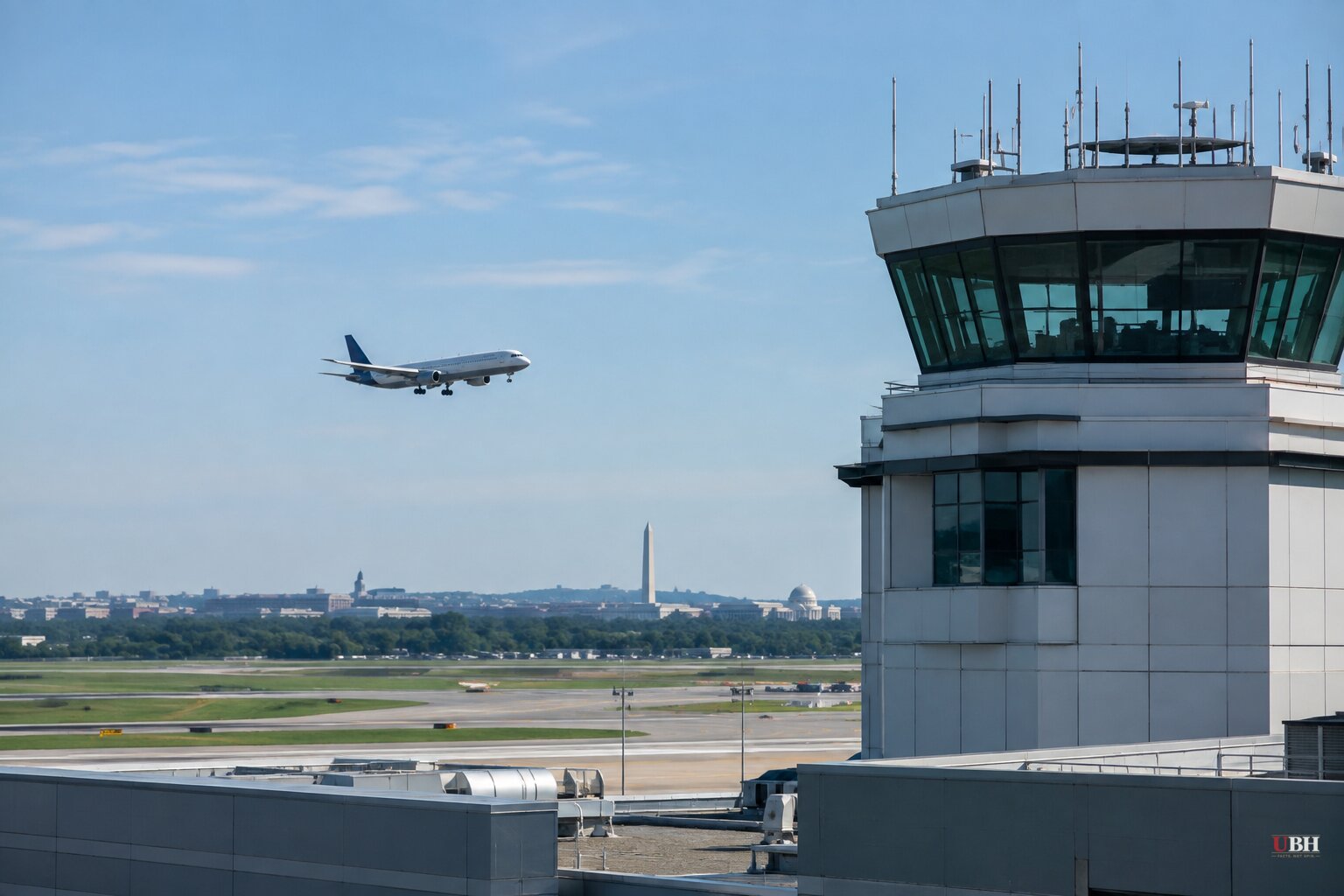
The Federal Aviation Administration is preparing to flip the switch on an AI-powered air traffic tool in the skies above Washington, DC, as soon as Monday, September 21, according to the Wall Street Journal. It's the opening move in what officials describe as a nationwide rollout eventually meant to cover all 29 million square miles of U.S. airspace the FAA oversees.
The software is called SMART, short for Strategic Management of Airspace, Routes and Trajectories. It pulls in airline schedules, weather data, runway capacity, and other operational limits to forecast traffic flow and flag conflicts before they happen, according to the FAA as reported by Ars Technica.
Air Space Intelligence, a Boston-based firm, won an $875 million, 12-year federal contract in June to build SMART along with a companion system called Flow Management Data and Services, which is meant to replace aging infrastructure at the FAA's Air Traffic Control System Command Center in Virginia, Ars Technica reported. Federal officials plan to unveil a central office for the program at the Transportation Department's headquarters on Monday.
What it actually does, for now
Despite talk of SMART eventually becoming the "brain" of the national airspace system, its first job is narrower. Controllers will use it as a decision-support aid during disruptions, producing what the FAA calls "alternative route information" through existing systems, not a hands-off replacement for how controllers already work.
Transportation Secretary Sean Duffy has been explicit about the limits. "AI is a tool, but we do not replace humans in how we manage the airspace," Duffy told CBS News. "Am I gonna replace a controller and have AI manage the airspace? The answer to that is hell no, that's not gonna happen." Duffy has separately asked Congress for $6 billion to $10 billion to expand AI integration, on top of $12.5 billion already allocated for broader infrastructure upgrades, with a target of completing the overhaul by the end of 2028, according to Quartz.
FAA Administrator Bryan Bedford has framed the rollout more bluntly. "The way we manage traffic today is chaotic, and we can do better," he told the Senate earlier this year, adding that the FAA needs to "manage that at the FAA, rather than rely on commercial airlines to simply schedule however they want." That's a notable ask: more federal say over scheduling decisions airlines currently make themselves, a shift worth watching given how it could reshape carriers' control over their own operations.
Industry confusion, then a scaled-back plan
According to Politico's reporting, cited by both Ars Technica and Futurism, airline officials spent weeks confused about how deeply SMART would reach into their operations. Some anonymous airline officials feared the AI might recommend mass flight cancellations or rescheduling to avoid bottlenecks. Their concerns reportedly eased only after the FAA clarified SMART wouldn't change existing procedures for controllers or carriers.
"We've been requesting and talking to [FAA] and saying, 'Let's narrow the scope of this. Start, crawl, walk, run,'" one airline official told Politico. "And I think ultimately that's what they decided to do."
Philip Mann, a former 17-year FAA employee now at Vector Strategic Consulting, told Ars Technica the limited launch was the right call: "SMART's risk was never any single prediction, it is a national-scale system with AI components carrying more unknowns than anything the FAA has fielded. Every cut in scope shrinks the unknowns."
Airlines for America, the trade group for major carriers, called the rollout "one of the most exciting and bold initiatives taken on by the FAA in decades," per Breitbart. Nick Daniels, union chief for the National Air Traffic Controllers Association, told Quartz the tool is "not competition for the controller workforce," pushing back on any notion the software threatens jobs amid the FAA's chronic controller shortage.
The safety backdrop
Not everyone is framing this as an unambiguous win. A Bluesky post from the account emptywheel, shared by Joe.My.God, pointed out that Duffy is launching an AI assist in the very airspace where "there has been a huge crash and two close calls on his watch." That's a fair concern for a reasonable skeptic to raise: introducing a new, unproven decision-support system into the nation's most scrutinized and congested airspace is a real bet, not a routine software update. The FAA's answer is the scaled-back scope itself, a 90-day testing window before any expansion into tasks like spacing arrival times or planning routes days in advance.
ArsTechnica noted it's unclear whether SMART relies on older deterministic models or newer AI approaches, a detail the agency hasn't spelled out publicly. Whether SMART earns the trust to expand past its DC-area debut will depend on how it performs once the FAA's 90-day test clock starts running Monday.
Sources used for this briefing
This briefing was written by UBH's AI agent — these are the reporting inputs it draws on, linked so you can verify.


