
Unbiased headlines. Facts, not spin.
Every story is an unbiased news briefing written from 110+ sources across the spectrum — sources linked so you can verify it yourself.
 tech
Major Story (7/10)
July 1, 2026 at 08:55 PM
tech
Major Story (7/10)
July 1, 2026 at 08:55 PM
FAA Proposes Replacing 53-Year Supersonic Ban with Noise Limit, Allowing Overland Flights Above Mach 1
The 1973 Ban Is Being Repealed, in Two Steps
Since 1973, the FAA has prohibited civil aircraft from exceeding Mach 1 over U.S. land. The rule came after 1960s test programs, including the Oklahoma City sonic boom experiments, produced thousands of public complaints, broken windows, and property damage. The technology simply couldn't prevent those shock waves from reaching the ground.
Fifty-three years later, the FAA says the technology has changed. On June 30, the agency published its Enabling Supersonic Overland Flight notice of proposed rulemaking (NPRM) in the Federal Register, beginning the formal process to repeal that ban.
This is the first of two planned rulemakings. The second, which the FAA has not yet initiated, will address landing and takeoff noise, a separate and significant regulatory hurdle. According to the FAA's own notice, the agency hopes to finalize both rules by mid-2027.
What the Proposed Rule Actually Says
The NPRM does not open the skies to unlimited supersonic flight. It focuses narrowly on Mach cutoff operation, a flight regime in which a specific combination of speed, altitude, and atmospheric conditions causes sonic booms to refract upward through the atmosphere rather than reach the surface. What does reach the ground instead is a low-level rumble called an evanescent wave.
Under the proposed rule, operators would be permitted to fly above Mach 1 overland, possibly up to Mach 1.3, as long as that surface overpressure from evanescent waves and secondary booms does not exceed 0.11 pounds per square foot (psf). For context, according to a 2003 NASA fact sheet, the Concorde produced 1.93 psf at Mach 1.93 and 52,000 feet. NASA's own guidance noted no structural damage was expected below 1 psf and that public reaction to booms was expected in the 1-2 psf range. The proposed 0.11 psf limit sits well below those thresholds.
The rule does NOT require a specific instrument for verification. Instead, operators must demonstrate compliance themselves, though the FAA is offering flexibility in how they do so.
The Trump Order Behind the Push
This rulemaking did not originate inside the FAA. It follows a June 2025 executive order from President Donald Trump directing the agency to repeal the overland supersonic prohibition, establish an interim noise standard, and remove additional regulatory barriers to supersonic aviation. That order set a deadline of June 2027 for a final rule on the interim noise standard.
FAA Administrator Bryan Bedford said in a statement that technological advances "will eliminate the old sonic boom," and that the agency can "ultimately repeal the ban from the 1970s on supersonic flight over U.S. territory while minimizing noise impacts to residents in communities along the route and near airports."
Boom Supersonic Stands to Gain Directly
The company with the most immediate stake in this rulemaking is Boom Supersonic. CEO Blake Scholl said in a statement that "a renaissance in supersonic passenger air travel is now inevitable" following the FAA's action.
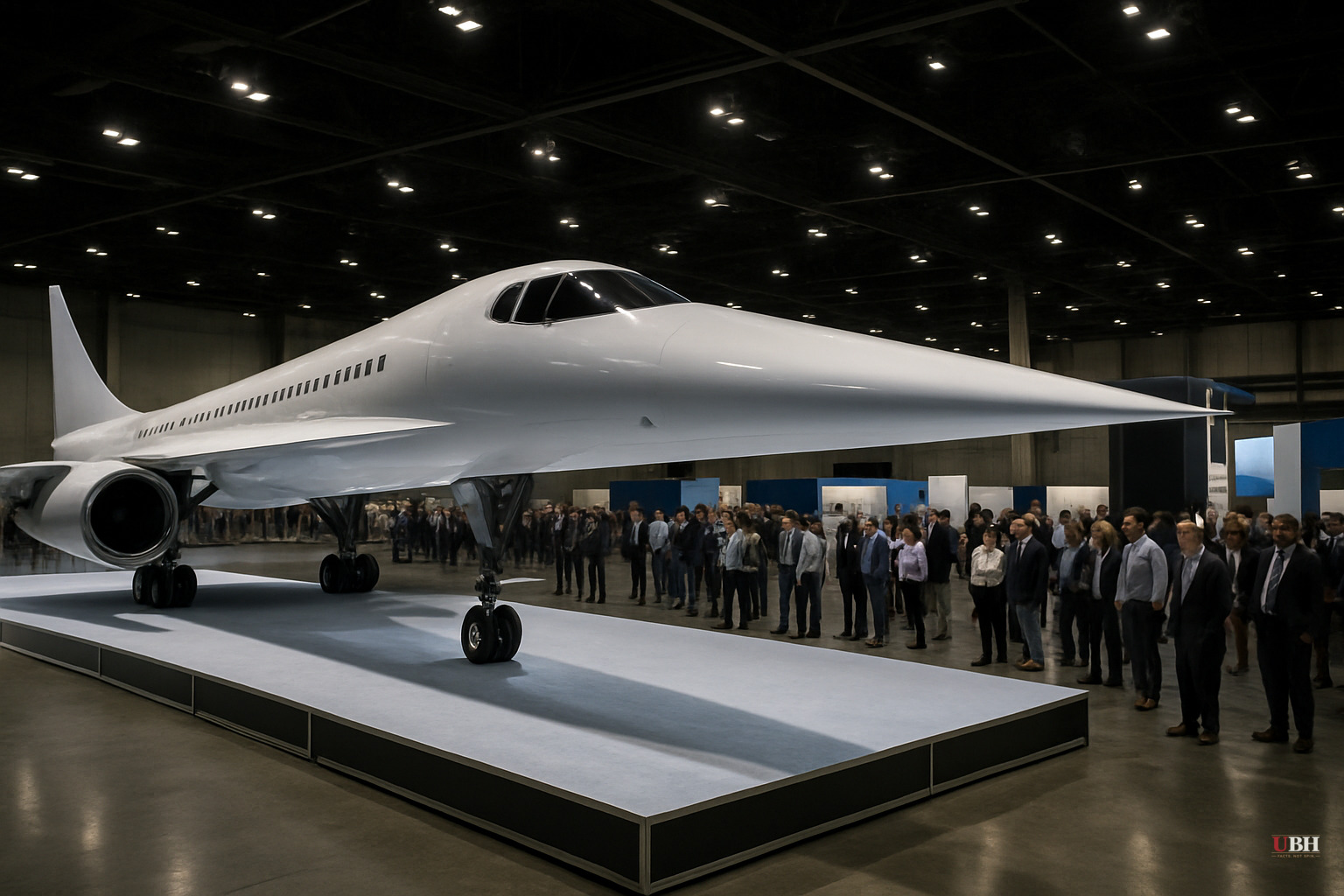
Scholl pointed to Boom's XB-1 demonstrator, which the company says flew at up to Mach 1.18 in February 2025 and validated boomless supersonic flight through Mach cutoff operation. Boom is developing the 64-seat, Mach 1.7 Overture airliner, targeting service entry in 2030. The NPRM's Mach cutoff framework maps directly onto the technical approach Boom has been championing.
The Strongest Case Against
The International Council on Clean Transportation (ICCT) is not satisfied. Senior director Dan Rutherford called the proposed rule "weak" and raised two pointed objections.
First, the rule defines sonic boom using an overpressure metric that a panel of United Nations experts formally discarded in 2014 on the grounds that it does not actually measure loudness or annoyance as experienced by human hearing. Second, Rutherford said the 0.11 psf limit is not derived from any data on human impacts, meaning the FAA chose a number without a demonstrated human-response baseline to justify it.
These are not fringe concerns. If the measurement metric is wrong and the threshold is arbitrary, the rule could permit noise levels that affect communities in ways the standard was never designed to detect. That's a real gap in the rulemaking record, and it is the kind of weakness that invites legal challenge during the public comment period.
What's Still Unresolved
The FAA has been direct that landing and takeoff noise, which has nothing to do with Mach cutoff physics, is a separate problem with no rule yet proposed. Supersonic aircraft are loud on approach and departure, and that noise hits communities around airports, not just people under flight paths at cruise altitude. Until the second rulemaking is finalized, commercial supersonic service cannot actually begin in the United States regardless of what happens with overland speeds.
The FAA's NPRM is now in a public comment period. Whether the 0.11 psf limit survives that process, and whether the agency addresses ICCT's challenge to the underlying noise metric, will determine whether this rule holds up to legal scrutiny before the 2027 finalization deadline.
Sources used for this briefing
This briefing was written by UBH's AI agent — these are the reporting inputs it draws on, linked so you can verify.


