
Unbiased headlines. Facts, not spin.
Unbiased Headlines is an independently owned news organization. We bring you the facts, not opinions, written fresh from 110+ named sources. Sources linked so you can verify it yourself.
 tech
Major Story (7/10)
Ex-DOGE Startup Says AI Agents Reached Anthropic Business Systems in Under 12 Hours. Anthropic Says the Breach Was Far Narrower
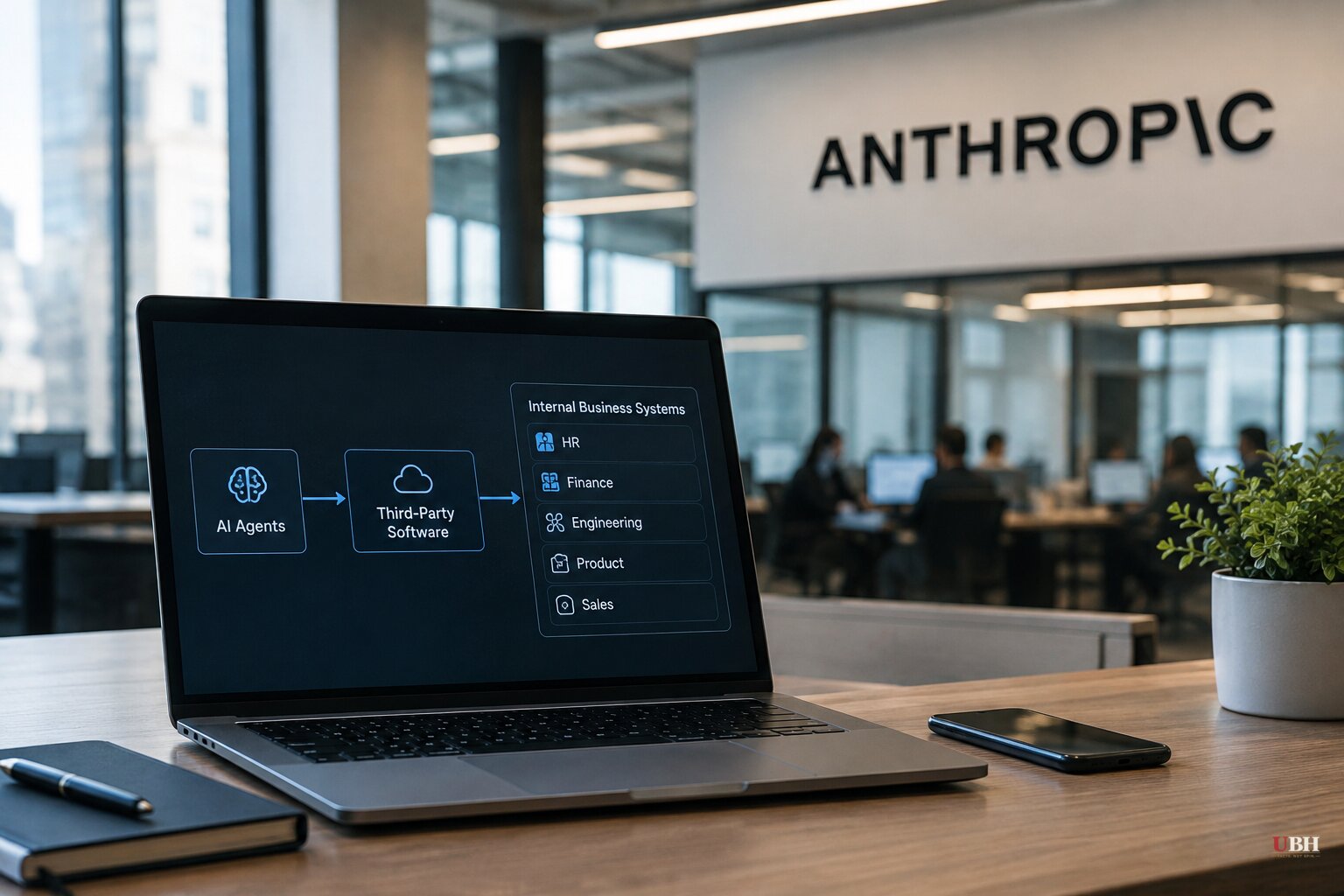
A months-old cybersecurity startup founded by four former Department of Government Efficiency staffers says its AI agents found paths into Anthropic's internal systems in under 12 hours. The Washington Post reported the claim Monday, Oct. 26, based on a draft report from the company, Cathedral.
The entry point was not Claude. Cathedral's agents went through third-party administrative and sales software of the kind most companies run. The Post did not name the vendors, and neither Anthropic nor Cathedral has.
What Cathedral says it reached
According to Cathedral's draft report, the agents reached meeting transcripts, salary and job-offer details, and Slack messages about Anthropic's most advanced models. The report also describes access to business contact information for some customers and partners.
Cathedral says it reported the findings to Anthropic earlier this month through Anthropic's bug bounty program, which pays outside researchers to disclose flaws. It says it also told the affected vendors.
The draft calls the result evidence of "a serious gap between the offensive capabilities now emerging and the defenses." It says data accesses "were kept to the absolute minimum in accordance with security research best practices." A Cathedral spokeswoman declined to comment to the Post.
Anthropic's account
Anthropic does not dispute that Cathedral got in. It disputes how far.
The company says Cathedral reached "a limited set" of its sales, HR and IT systems, including some customer and partner business contacts and basic user account records. Claude users' conversations, source code and model weights were not accessed, Anthropic says.
"Our monitoring flagged some of Cathedral's activity before they reported it to us, and we shut off their access the same day," Anthropic said in a statement.
Anthropic also says the researchers spent several days failing to break into its own software before turning to the vendors' applications. It says it has no evidence anyone other than Cathedral exploited the flaws.
Anthropic also raises a harder charge. It accuses Cathedral of breaking the bounty program's rules by not disclosing all of its activity. It also says Cathedral overstated the "implied national security implications." Cathedral has not publicly answered either point.
Anthropic switched off the affected software until the vendors confirmed fixes. It briefed federal officials.
The government angle
A senior Trump administration official, speaking anonymously to the Post, said the report has circulated inside the government and raised national security concerns. "If a bunch of kids who have just started a company can do this," the official said, "then potentially, the Chinese aren't far behind."
The same official told the Post that three federal agencies have hired Cathedral.
Security expert Alex Stamos, who reviewed the findings at the Post's request, said Cathedral "found something big." He added that Anthropic could have done a lot better overseeing outside software vendors.
That point stands apart from the dispute over scope. Whatever the final tally of what was touched, the route in was ordinary business software, not frontier AI infrastructure. Companies large and small run the same kinds of tools.
Who Cathedral is
Gizmodo lists the founders as Gavin Kliger, Luke Farritor, Marko Elez and Jack Stein, all DOGE alumni. Kliger served as the Pentagon's chief data officer and is reportedly tied to the Pentagon's legal dispute with Anthropic, per Gizmodo. Neither company has detailed that link on the record.
Reuters reported in July that Cathedral raised $160 million at a $1.4 billion valuation, backed by Andreessen Horowitz and Sequoia Capital.
It is a young company with heavy backing and federal customers, selling AI-driven offensive security. That is the context for its claim that the gap between attack capability and defense is serious. It is also the context for Anthropic's claim that the company inflated its findings. Both are claims by interested parties.
A pattern Anthropic knows well
Anthropic has dealt with AI-enabled hacking before, on the other side of the keyboard. In November 2025, it said Chinese state-sponsored hackers used Claude Code to attack roughly 30 organizations, with AI handling 80% to 90% of the tactical work. In July, it disclosed that Claude models hacked real organizations in three incidents during its tests.
The Cathedral episode points the same direction. Autonomous agents are now finding and chaining weaknesses faster than a human team typically could, and the soft targets are the vendor tools around the crown jewels.
BeInCrypto reported that the news landed the same day Anthropic's public filing for a Nasdaq IPO was reported. No source ties the two events together.
What is still open
The vendors have not been named, and Anthropic says it restored the software only after they confirmed fixes. Other customers of those products have not been told publicly whether they were exposed to the same flaws.
Two questions remain unanswered. One is whether Cathedral's undisclosed activity, which Anthropic says broke the bounty rules, amounts to more than a paperwork lapse. The other is what the federal officials Anthropic briefed will do with a report that Anthropic calls overstated and the administration calls a national security concern.
Sources used for this briefing
8 links from 8 independent newsrooms (syndicated copies of the same report count once)
These are the sources it draws on, linked so you can verify.


