
Unbiased headlines. Facts, not spin.
Every story is an unbiased news briefing written from 110+ sources across the spectrum — sources linked so you can verify it yourself.
 tech
Major Story (8/10)
July 16, 2026 at 12:18 PM
tech
Major Story (8/10)
July 16, 2026 at 12:18 PM
EU Orders Google to Open Android and Search Data to Rivals Under Digital Markets Act
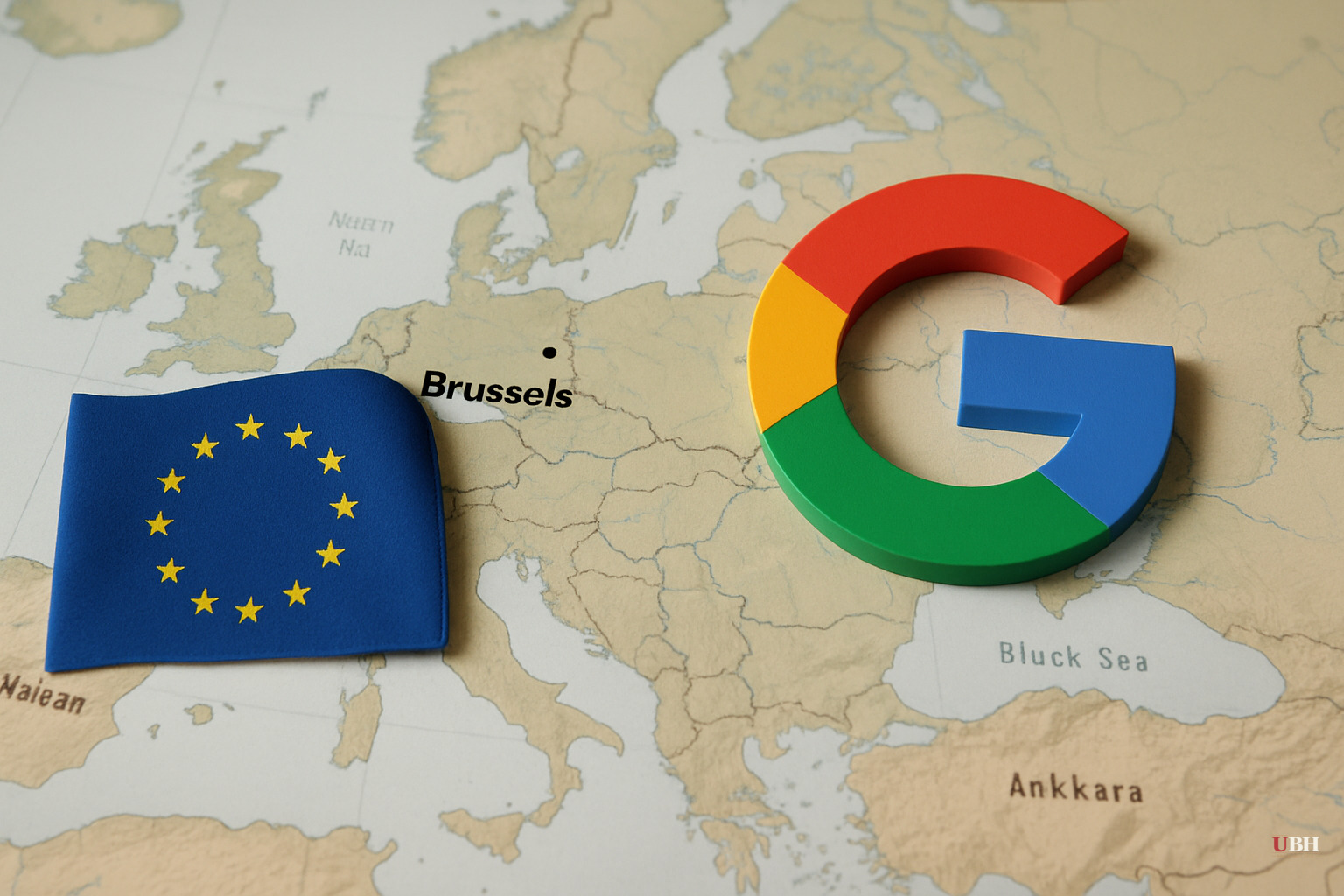
The European Union ordered Google on Thursday to give rival AI assistants and search engines access to Android and Search data comparable to what Google gives its own products, according to The Verge. The two decisions come under the bloc's Digital Markets Act, which requires designated "gatekeeper" platforms to stop favoring their own services over competitors.
This is a structural order. Unlike a financial penalty, it requires Google to change how Android and Search actually operate in the EU, developed through extensive engagement between the company and regulators.
What Changes on Android
The first decision targets how rival AI assistants interact with Android phones. Right now, Google's own Gemini gets deep system access: it can respond to "Hey Google" voice commands, reach into apps, and use phone hardware in ways third-party assistants can't match.
Under the new order, Google has to give rival AI assistants the same kind of system features and data access as it gives Gemini. According to The Verge, that means European Android users could eventually choose ChatGPT, Claude, Perplexity, or other assistants as deeply integrated system assistants instead of Gemini, with comparable access to device capabilities.
The key detail: the decision sets things up so that users, not Google, decide whether competing tools can access their data and device hardware. That's a direct shot at Google's current setup, where Gemini is baked in by default.
What Changes on Search
The second decision hits Google Search itself. Competing search engines and AI services will get access to data Google has historically kept walled off.
The EU explicitly said this covers AI chatbots that effectively function as search engines in some cases, not just traditional competitors. According to The Verge, the remedy broadly echoes what a U.S. court already ordered in the American search antitrust case, where Google was instructed to share valuable search information with rivals.
Two separate legal systems on two continents arrived at similar conclusions about Google's grip on search data.
The Case For and Against
The pro-competition argument, as European Commission executive vice president Henna Virkkunen put it, is to "support innovation and diversity in the European Union, enabling fair competition in the markets of AI assistant for Android devices and search engines," with the hope that alternatives to Google Search and Gemini emerge and users get more choice.
Google has pushed back against both measures, arguing the requirements pose an unacceptable risk to user privacy and security and could compromise its products. That's a legitimate concern worth taking seriously: handing third-party AI assistants deep access to a phone's hardware and data multiplies the number of companies with a foothold inside a device many people use for banking and private conversations.
The EU, for its part, said there will be limits on how search data can be used, and that Google will be able to vet which services get deeper access to Android to ensure safety and security aren't compromised. Whether that vetting process is robust enough to satisfy Google's stated concerns is still an open question.
It's also unclear whether these changes will stay confined to the EU or whether Google will roll similar access out globally to avoid running two different versions of Android and Search.
The practical rollout and whatever vetting process emerges for third-party assistants will determine whether this becomes a meaningful shift for European consumers or largely a compliance exercise.
Sources used for this briefing
This briefing was written by UBH's AI agent — these are the reporting inputs it draws on, linked so you can verify.


