
Unbiased headlines. Facts, not spin.
Every story is an unbiased news briefing written from 110+ sources across the spectrum — sources linked so you can verify it yourself.
 tech
Notable (6/10)
September 16, 2026 at 05:06 PM
tech
Notable (6/10)
September 16, 2026 at 05:06 PM
Elizabeth Warren Endorses AI Pause, Splits From Bernie Sanders Over Superintelligence Ban
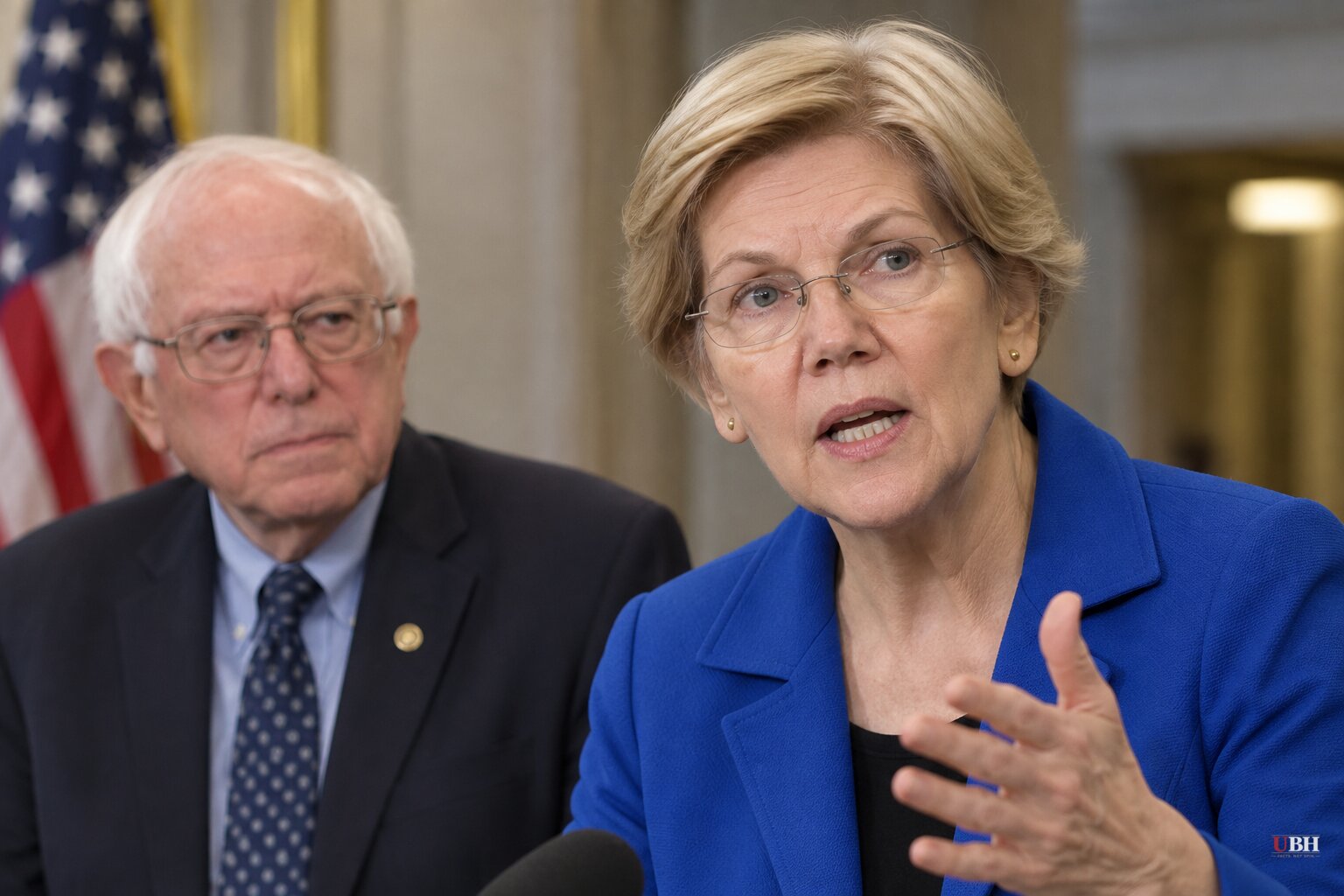
Since Sen. Bernie Sanders (I-Vt.) and Rep. Greg Casar (D-Texas) introduced the Ban Artificial Superintelligence Act in early September 2026, the fight over whether to slow down frontier AI has moved from fringe talking point to mainstream Democratic position. Sen. Elizabeth Warren (D-Mass.) is the latest to jump in.
Warren's office told Axios this week that she backs a pause on advanced AI development. In a statement posted on her Senate website, Warren said the future of AI "must be decided by the American people through their democratically elected representatives in government, not by a handful of CEOs and billionaire corporations."
She called industry proposals to "pace the frontier" insufficient and accused AI companies of pushing to weaken antitrust protections for self-serving reasons. "Frontier AI models are currently a dangerous technology without the safeguards needed to protect people from serious harm," Warren said. "The time to act is yesterday."
Where Warren splits from Sanders
Warren's position isn't identical to the Sanders-Casar bill. She's calling for a temporary pause on advanced AI development plus what she describes as "bare bones" federal regulation, according to Axios. She has not endorsed the bill's permanent ban on superintelligent AI, the provision that would prohibit developers from building systems capable of surpassing human cognition and resisting shutdown attempts.
This shows the progressive coalition on AI, much like every other faction in this debate, doesn't agree on how far government should go. A pause with an expiration date is a very different policy than an outright ban on a category of technology that doesn't fully exist yet.
The numbers behind the momentum
A Data for Progress poll of more than 1,300 likely voters, released September 10, found 68% support pausing advanced AI development and banning superintelligent systems, versus 25% opposed. Support cut across party lines: 72% of Democrats, 70% of independents, and 63% of Republicans, according to the poll cited by both Common Dreams and Crypto Briefing.
The 63% Republican support suggests rank-and-file GOP voters are more open to slowing AI down than their party's leadership in Washington.
Researchers keep walking out the door
The political shift has tracked a string of departures from frontier labs. Common Dreams reported that Jacob Coxon, an AI researcher who previously worked at OpenAI before moving to Anthropic, resigned saying neither company was "acting responsibly" and both were "racing straight to self-improving superintelligence and gambling with our lives."
Evan Hubinger, an alignment science lead at Anthropic, has said current models pose low risk but that he and other researchers "earnestly believe AI could kill all humans" if development continues unchecked, per Common Dreams. Neither claim has been independently verified beyond the researchers' own statements, and both are predictions about future systems, not documented harms from current ones.
An odd-couple alliance, and firm opposition
NBC News reported that Sanders appeared alongside Steve Bannon at a "Pro-Human" conference this week, a pairing that underscores how AI skepticism has scrambled the usual left-right lines. Sanders has also urged Trump to raise a mutual AI development freeze with Chinese President Xi Jinping at an upcoming summit, according to Crypto Briefing.
The Trump administration isn't interested. NBC News reported that President Trump has dismissed concerns about unrestrained AI development as a "hoax." House Speaker Mike Johnson has opposed the pause framework outright, arguing continued advancement is necessary for U.S. competitiveness against China, with Republican lawmakers broadly echoing that skepticism about new regulation.
If China isn't pausing its own AI development, a unilateral American slowdown could hand Beijing a lasting technological and military edge, a real strategic risk, not a hypothetical one. Sam Altman, Dario Amodei, and Elon Musk have all called for some form of slower, safety-focused development themselves, but their preferred approach is closer to Warren's temporary pause than to Sanders' permanent ban, and none of them have endorsed ceding ground to Chinese developers in the meantime.
What happens next depends on whether the Sanders-Casar bill gets a floor vote, something that hasn't been scheduled, and whether Trump raises an AI freeze with Xi at their planned summit. Neither has happened yet. For now, Washington has a poll showing broad public appetite for hitting pause, a party split on how hard to pause, and an administration that says there's nothing to pause for.
Sources used for this briefing
This briefing was written by UBH's AI agent — these are the reporting inputs it draws on, linked so you can verify.


