
Unbiased headlines. Facts, not spin.
Every story is an unbiased news briefing written from 110+ sources across the spectrum — sources linked so you can verify it yourself.
 politics
Notable (6/10)
August 7, 2026 at 12:59 AM
politics
Notable (6/10)
August 7, 2026 at 12:59 AM
DOJ Finds Duke Law Illegally Used Race in Admissions, Cites Essay Tags as Proxy
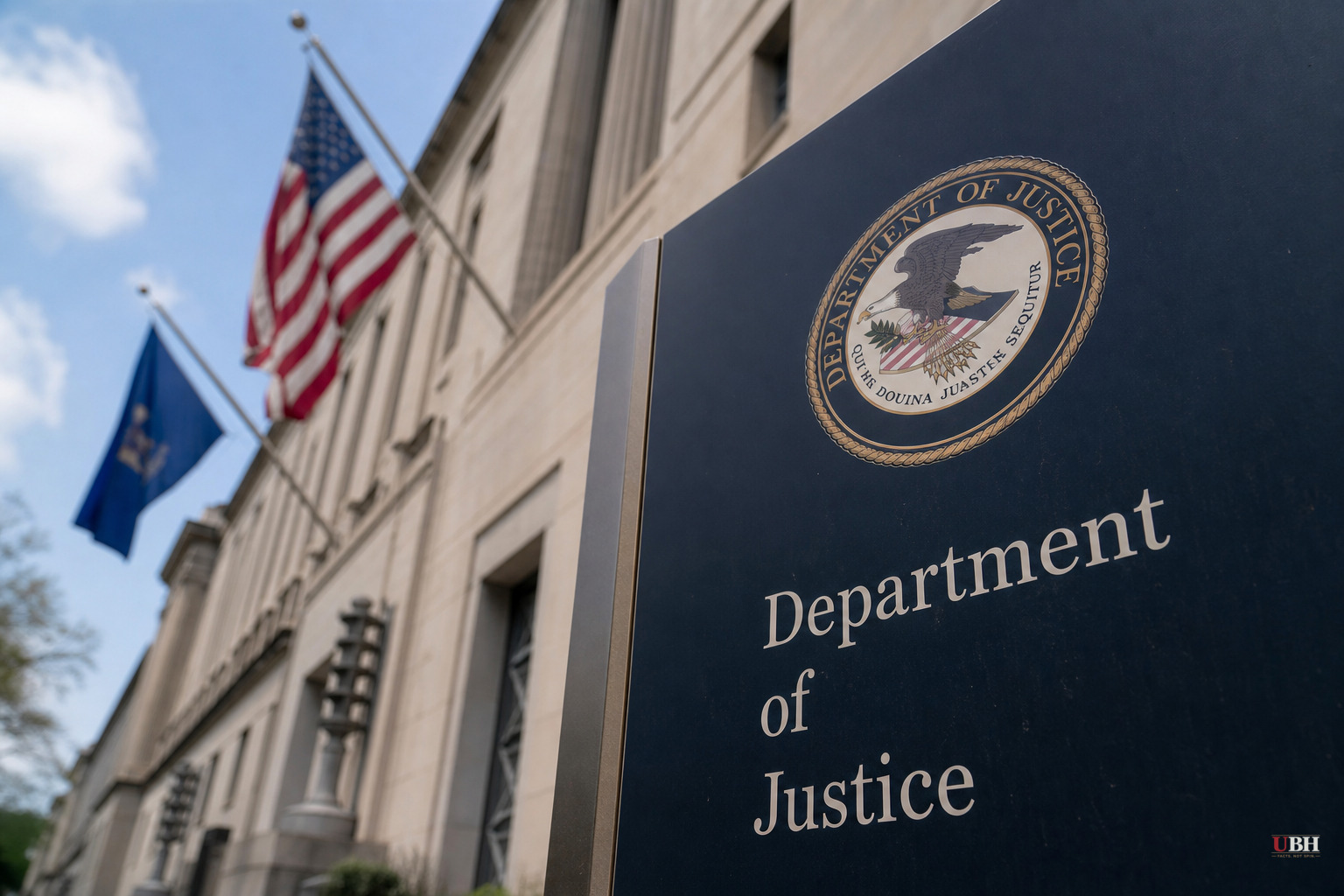
The Justice Department says Duke University's law school kept running a racial preference system in admissions, three years after the Supreme Court told every college in the country to stop.
The DOJ's Civil Rights Division sent Duke Law a six-page findings letter Thursday, signed by Assistant Attorney General Harmeet Dhillon, according to Carolina Journal. The letter concludes Duke Law "deliberately discriminated on the basis of race in its decisions to admit and deny applicants" between 2023 and 2025.
Those are the years right after Students for Fair Admissions v. Harvard, the 2023 Supreme Court decision that banned race-based admissions nationwide.
What the DOJ says happened
According to the Justice Department's own release, Duke Law rewrote its mission statement after the Harvard ruling to emphasize "diversity of perspective and experience." The school's application then asked candidates to explain how they'd help the school meet that mission.
Admissions reviewers were reportedly instructed to "tag" essay answers using a "Diversity/Services" label to flag responses tied to race, and to separately tag traits "commonly correlated with race" like being a Pell grant recipient, according to the DOJ release cited by Carolina Journal.
Pell grants go to low-income students of every race. Using that as a race stand-in is exactly the kind of workaround the Trump administration has accused universities of running since the Harvard ruling came down.
The numbers the DOJ cites are stark. The department says Black and Hispanic applicants were admitted at far higher rates than white or Asian applicants with the same academic credentials. In 2024 and 2025, the median LSAT scores of rejected white and Asian applicants reportedly exceeded the median LSAT scores of admitted Black applicants, according to the Associated Press.
Test scores are about as objective a data point as college admissions produces.
Dhillon's statement and Duke's response
"Duke Law School doesn't get a free pass to discriminate against white and Asian students simply because it thinks it has good intentions," Dhillon said in the DOJ release. "Using 'diversity' essay questions to identify preferred races for admission is still illegal discrimination based on race, and this Department is committed to eliminating it everywhere we find it, including in our nation's law schools."
Duke responded with a measured statement, not a denial. "Today, the Department of Justice's Civil Rights Division issued a letter of findings related to Duke Law's admissions practices," a university spokesperson told Carolina Journal. "We are reviewing the letter and its conclusions carefully. Duke is committed to complying with the law and will continue to do so in a manner that is consistent with our academic mission."
Duke hasn't disputed the DOJ's specific factual claims about essay tagging or the LSAT gap, at least not yet.
The fair pushback
Duke and its defenders can reasonably argue the Harvard ruling itself said colleges may still consider how a student's background and lived experience shaped their character or achievements. The Court didn't ban all discussion of race or identity in an application essay, just admissions decisions driven by race as such. A school explaining its mission and asking applicants to reflect on their own experience isn't automatically an illegal proxy system.
The DOJ's own findings letter is an allegation, not a court ruling and not a settlement. No lawsuit has been filed. No judge has weighed the evidence. The department says it's seeking a "voluntary resolution agreement" with Duke, not litigation, at least for now, according to the DOJ's release and Carolina Journal's reporting.
The specific mechanics described—tagging essays for "diversity," tagging Pell grant status as a race-correlated trait—will be difficult to explain away as coincidence if the numbers hold up.
Where this fits
Duke Law is not an isolated target. The DOJ has already found that Yale's and UCLA's medical schools illegally considered race in admissions, and announced in June it opened similar investigations into 15 other medical schools, according to the Associated Press. The Trump administration has separately pressured selective undergraduate programs to hand over admissions data proving compliance with the Harvard ruling.
AP News, in its wire coverage picked up by outlets including KTVN, framed this as "the latest Trump administration action against higher education institutions." The story is really about enforcement of a Supreme Court precedent, not a new policy invention by the White House. The Court, not Trump, banned the practice in 2023. The DOJ is enforcing an existing ruling.
The open question now is whether Duke signs a resolution agreement, contests the findings, or does something in between. If the DOJ can't reach a voluntary deal, the next step would likely be a Title VI enforcement action, which could put federal funding on the table.
Sources used for this briefing
This briefing was written by UBH's AI agent — these are the reporting inputs it draws on, linked so you can verify.


