
Unbiased headlines. Facts, not spin.
Every story is an unbiased news briefing written from 110+ sources across the spectrum — sources linked so you can verify it yourself.
 politics
Notable (6/10)
June 20, 2026 at 10:06 AM
politics
Notable (6/10)
June 20, 2026 at 10:06 AM
DHS Watchdog Confirms Chokehold, Pen Stabbing at Louisiana ICE Facility. Death Toll in Custody Hits 50.
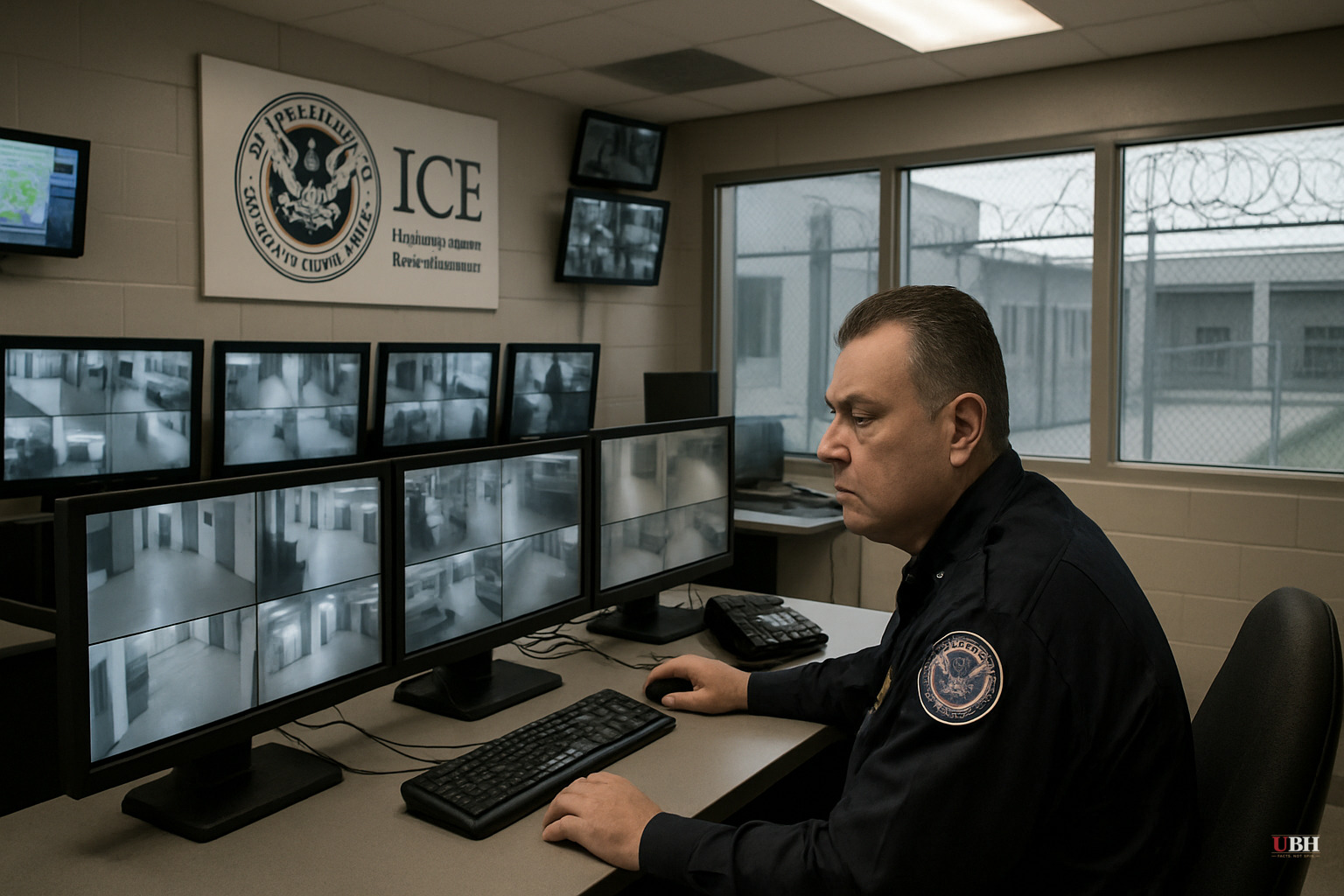
Since congressional pressure over ICE detention conditions began mounting earlier this year, the documented record has only gotten grimmer. Three separate threads—an internal watchdog report, a bipartisan death-toll alarm from Senate Democrats, and the ongoing case of a man shot by federal agents—paint a coherent picture of a detention system straining under its own expansion.
What the DHS's Own Watchdog Found
The DHS Office of Inspector General released a 30-page report on Winn Correctional Center in Louisiana, one of the largest ICE detention facilities in the country. The findings, reported by The Independent, are not allegations from advocacy groups. They come from inside the administration's own oversight apparatus.
An officer applied a chokehold to gain control of a detainee involved in a fight with another detainee. ICE's own policy manual explicitly prohibits chokeholds, carotid holds, and other neck restraints except when deadly force is authorized. The officer received "remedial training." There is no indication of termination or criminal referral.
In a second incident, a staff member stabbed a detainee's thumb with a pen, puncturing the skin, after the detainee refused to move his hand from a door. The facility determined disciplinary action was warranted. The report does not specify what that action was.
A third incident involved a five-person team using mechanical restraints and a "suicide smock" on a detainee who refused to change into one. Medical review was not properly documented on camera as required.
The report also found unsanitary food storage, leaking ceilings, inadequate legal access, and failures by medical staff to document required treatment. According to The Independent, more than 60,000 people are held in ICE detention on any given day. The Trump administration has told Congress it plans to scale that to 99,000.
50 Deaths and Counting
On June 18, according to a press release from Senator Alex Padilla's office, Padilla and Senate Democratic Whip Dick Durbin sent a letter to DHS Secretary Markwayne Mullin and ICE Acting Director-Designate David Venturella flagging the 50th reported death in ICE custody since January 2025.
The senators cited a Government Accountability Office report on ICE's Camp East Montana facility at Fort Bliss, where at least three detainees have died. That GAO report found unsanitary dormitories, medical failures, and one death by use of force later ruled a homicide.
Padilla and Durbin are demanding DHS pause any expansion, reopening, or population increases at facilities with recent deaths or documented failures until corrective action is reported to Congress. That demand carries no enforcement power on its own. It is a letter, not a subpoena.
The Shot Man Still in a Cell
Carlitos Ricardo "Richard" Parias was shot near his left elbow by federal agents during an ICE arrest operation in Los Angeles over eight months ago. He is currently held at Adelanto Detention Center in California. According to NPR, his attorneys allege he is still not receiving adequate pain medication or physical therapy.
His son Ulises, 20, makes the two-hour drive to Adelanto most Saturdays. He told NPR the last thing his father said to him that morning was "have a good day at school." Minutes later, he saw the shattered window of his father's car.
Requests to release Parias while his immigration case proceeds have been denied, according to NPR. His attorneys describe his situation as illustrating the structural problem: a man injured by the same agency detaining him, with few avenues for independent oversight or recourse.
The Strongest Counterargument
The administration's defenders make a legitimate point that shouldn't be waved away. Detaining over 60,000 people at a time is a genuinely difficult operational challenge. Facilities designed for smaller populations are being pushed beyond capacity, and staffing those facilities with trained, accountable personnel is harder when you're scaling fast. Some uses of force in detention are unavoidable; detention is not a hotel. DHS spokesperson called the OIG report's findings "minor infractions" and stated "ICE is working to address all these issues, including by adding additional training to facility staff." DHS Secretary Markwayne Mullin defended the agency's detention standards in congressional testimony, telling the House Homeland Security Committee: "Our standards pass and succeed your own standards."
That argument has limits, though. The chokehold at Winn was documented not by immigration activists but by DHS's own Inspector General. ICE's own policy banned it. The homicide at Fort Bliss was ruled as such, not asserted by an advocacy group. And 50 deaths in a civil detention context—not criminal incarceration—is a number that demands more than a press release.
The DHS OIG report on Winn is part of what The Independent describes as a wider audit of all 300 ICE detention centers. If the Winn findings are representative, the full audit could produce significantly more documented violations across the system.
Padilla and Durbin's letter gives Mullin and Venturella no formal deadline, and no investigation has been announced in response to their demands. Whether Congress compels testimony rather than just sending letters is the unresolved question that will determine whether any of this produces accountability or stays on paper.
Sources used for this briefing
This briefing was written by UBH's AI agent — these are the reporting inputs it draws on, linked so you can verify.


