
Unbiased headlines. Facts, not spin.
Every story is an unbiased news briefing written from 110+ sources across the spectrum — sources linked so you can verify it yourself.
 politics
Notable (6/10)
June 21, 2026 at 01:29 AM
politics
Notable (6/10)
June 21, 2026 at 01:29 AM
DHS Reports Nearly 900,000 Deportations Since January 2025, With May Flight Numbers at a 17-Month High
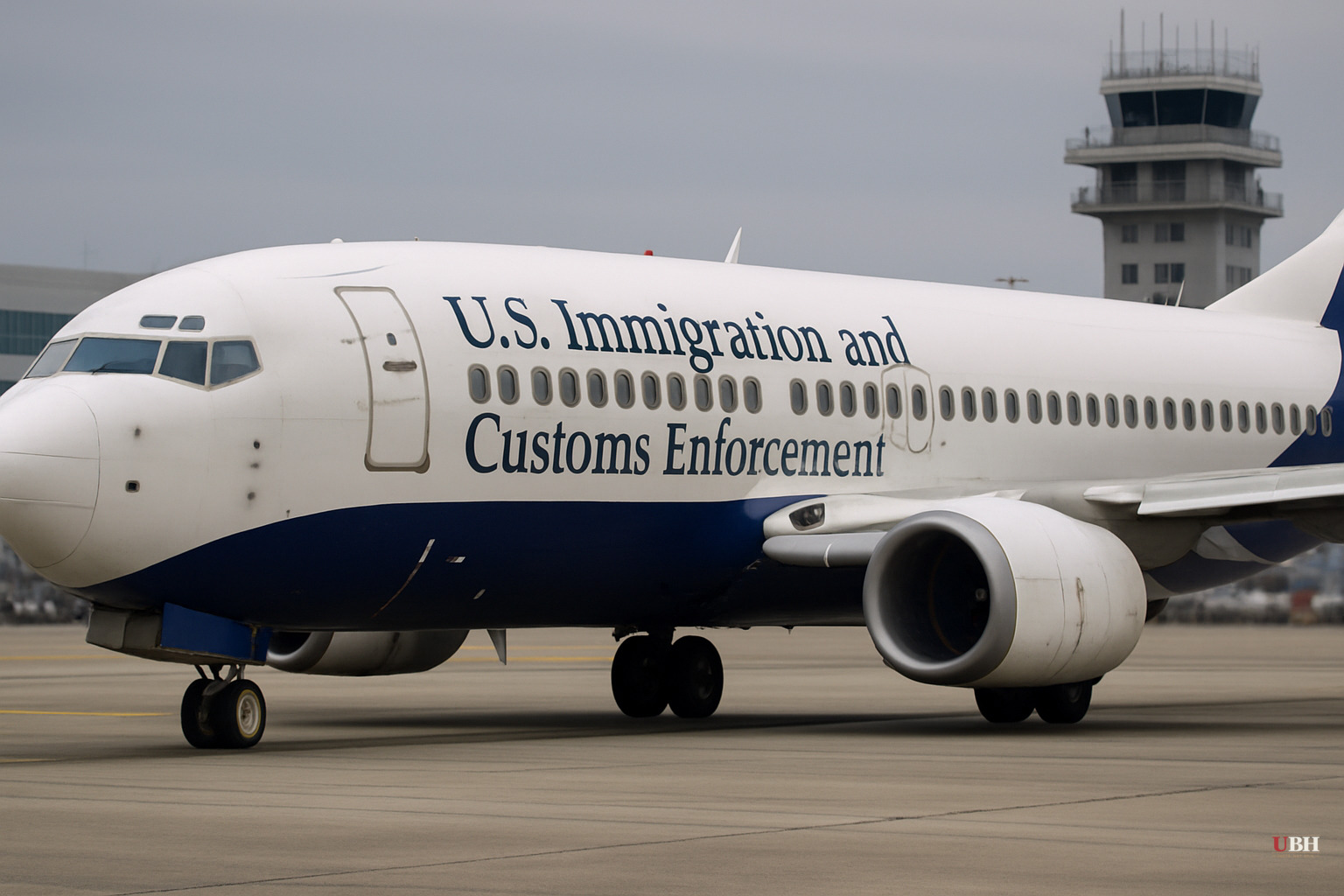
Since the Trump administration launched its enforcement push in January 2025, deportation flight volume has climbed steadily, reaching what DHS is calling a record pace as of May 2026.
According to data tracked by the ICE Flight Monitor project, housed at Human Rights First, approximately 296 international removal flights departed in May 2026. That's more than double the 126 removal flights recorded in February 2025, the administration's first full month in office, and the highest monthly removal-flight total since the project began tracking in 2020. Across the full 17-month period from January 20, 2025 through early June 2026, DHS says it has conducted roughly 3,000 deportation flights and removed close to 900,000 people. Acting ICE Director David Venturella confirmed the 900,000 figure to Breitbart News in early June.
For context on how the trajectory developed: a Human Rights First report published September 11, 2025 documented that August 2025 alone saw at least 1,393 total immigration enforcement flights, averaging 45 per day, covering both removals and domestic detention transfers. That was then the single-month record. By May 2026, the domestic transfer operation had expanded dramatically. According to CiberCuba, which cited the ICE Flight Monitor data, domestic ICE flights moving detainees between facilities rose from roughly 250 per month in 2024 to over 1,300 in May 2026.
The destination list has broadened too. Human Rights First documented removal flights to at least 66 countries by late August 2025, including first-time flights to Greece, Pakistan, Azerbaijan, Kazakhstan, and Rwanda. Central America still accounts for 40 to 60 percent of all international removal flights each month, followed by interior Mexico and South America, according to CiberCuba.
DHS leadership has been cited alongside Trump in DHS's public messaging on the policy. An earlier DHS press release credited to Kristi Noem's tenure cited 527,000 formal removals and over 1.6 million voluntary departures at that point, and quoted Assistant Secretary Tricia McLaughlin projecting the administration was on pace to surpass 600,000 formal deportations in Trump's first year back in office.
DHS is advertising a larger figure: 2.2 million people it says have "self-deported" or left voluntarily since January 2025, aided in part by the CBP Home app, which offers a free flight and incentives of up to $2,600 per person. An earlier version of the app offered $1,000, as stated in the DHS press release.
Mark Krikorian, executive director of the Center for Immigration Studies, a restrictionist-leaning think tank, told CiberCuba he doubts the 2.2 million self-deportation figure. "I think they are exaggerating what they're doing," Krikorian said, arguing the number who actually used the app is probably only a few thousand. DHS has not published a detailed breakdown distinguishing app-facilitated departures from broader voluntary exit estimates.
The strongest civil liberties objection to the current enforcement level is not that deportation is illegal. It's that the scale and speed of the operation make meaningful due process nearly impossible. Human Rights First President Uzra Zeya said in the September 2025 report that behind every flight are "families torn apart, people disappeared without due process." The organization has specifically flagged multi-country removal flights, where individuals remain shackled across multiple stops over several days before reaching a final destination, as raising serious human rights concerns. Critics also point to the $170 billion DHS budget infusion as evidence of a structural escalation that courts and Congress have struggled to keep pace with.
The Trump administration's response is that 70 percent of ICE arrests involve individuals charged with or convicted of a crime in the United States, and that the enforcement focus is on, in DHS's words, "murderers, rapists, pedophiles, drug dealers." That 70 percent figure appears in a DHS press release, but DHS has not published the underlying methodology or definitions of "criminal" in that context, and Human Rights First has argued the categories are drawn broadly.
One specific community worth tracking: ICE arrests of Cuban migrants increased 463 percent between late 2024 and early 2026, according to CiberCuba. In the first five months of 2026, 612 Cubans were deported via 18 direct flights to Havana. That adds to 1,370 deported across all of 2025, meaning the pace has accelerated sharply this year.
The key unresolved question is whether the 2.2 million self-deportation figure DHS is publicizing will survive independent audit. Krikorian's skepticism is notable because the Center for Immigration Studies generally supports aggressive enforcement, which makes his challenge to the administration's own math worth watching. If the real voluntary-departure number is a fraction of what DHS claims, the headline removal total of 900,000 formal deportations, while still historically large, would represent a significantly smaller share of the illegal population than the administration's combined figures suggest. No independent audit of the self-deportation data has been published as of June 20, 2026.
Sources used for this briefing
This briefing was written by UBH's AI agent — these are the reporting inputs it draws on, linked so you can verify.


